Hot-dip galvanizing plant
Environmentally neutral processes
Properties of zinc
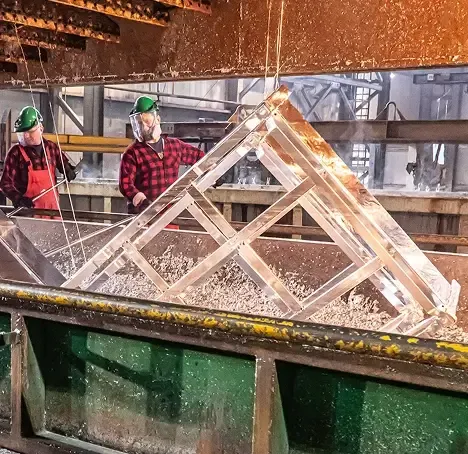
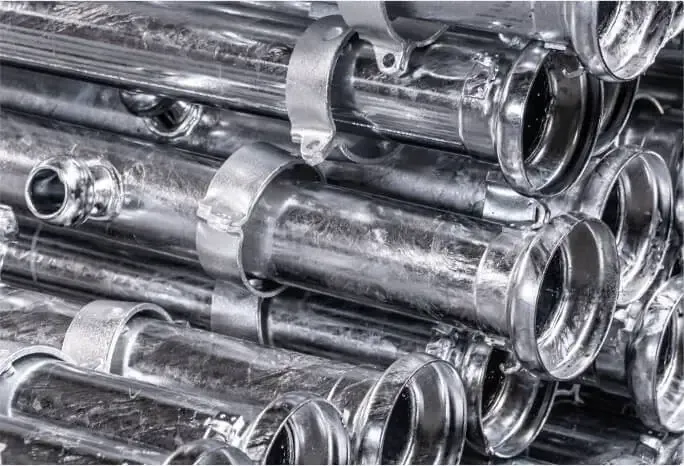
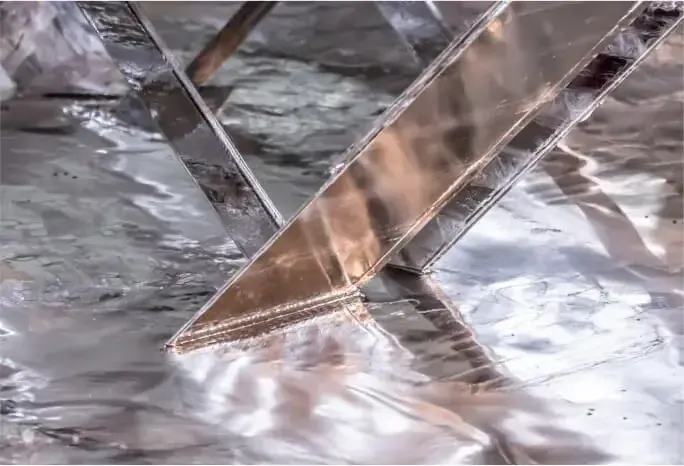
Zinc is a natural metallic element. It is present in the natural environment both in air and soil and in water bodies. Zinc is harmless to the environment and even essential for the proper development of living organisms. It is suitable for recycling. Due to the properties of zinc, its layer on the surface of steel effectively protects it against corrosion. The main method of applying a zinc layer – galvanizing, besides electrogalvanizing, is hot-dip galvanizing.
Why is it worth using hot-dip galvanizing?
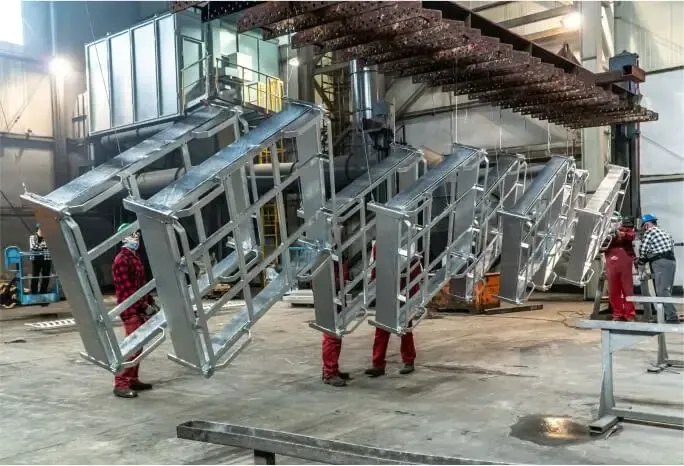
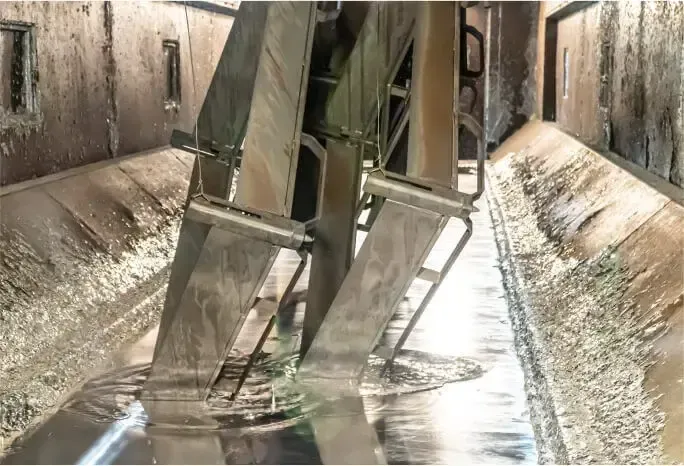
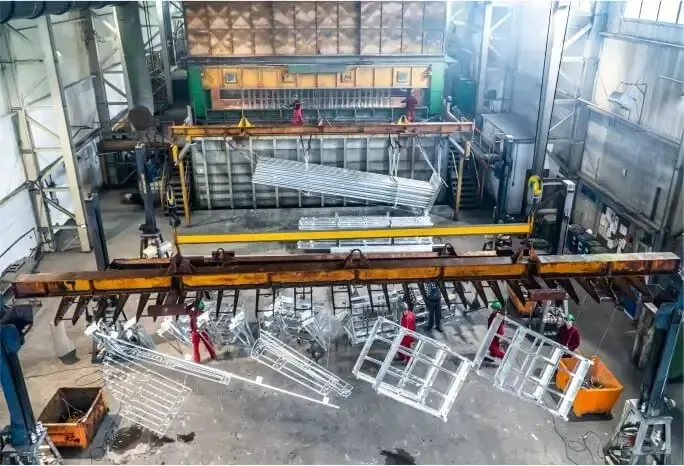
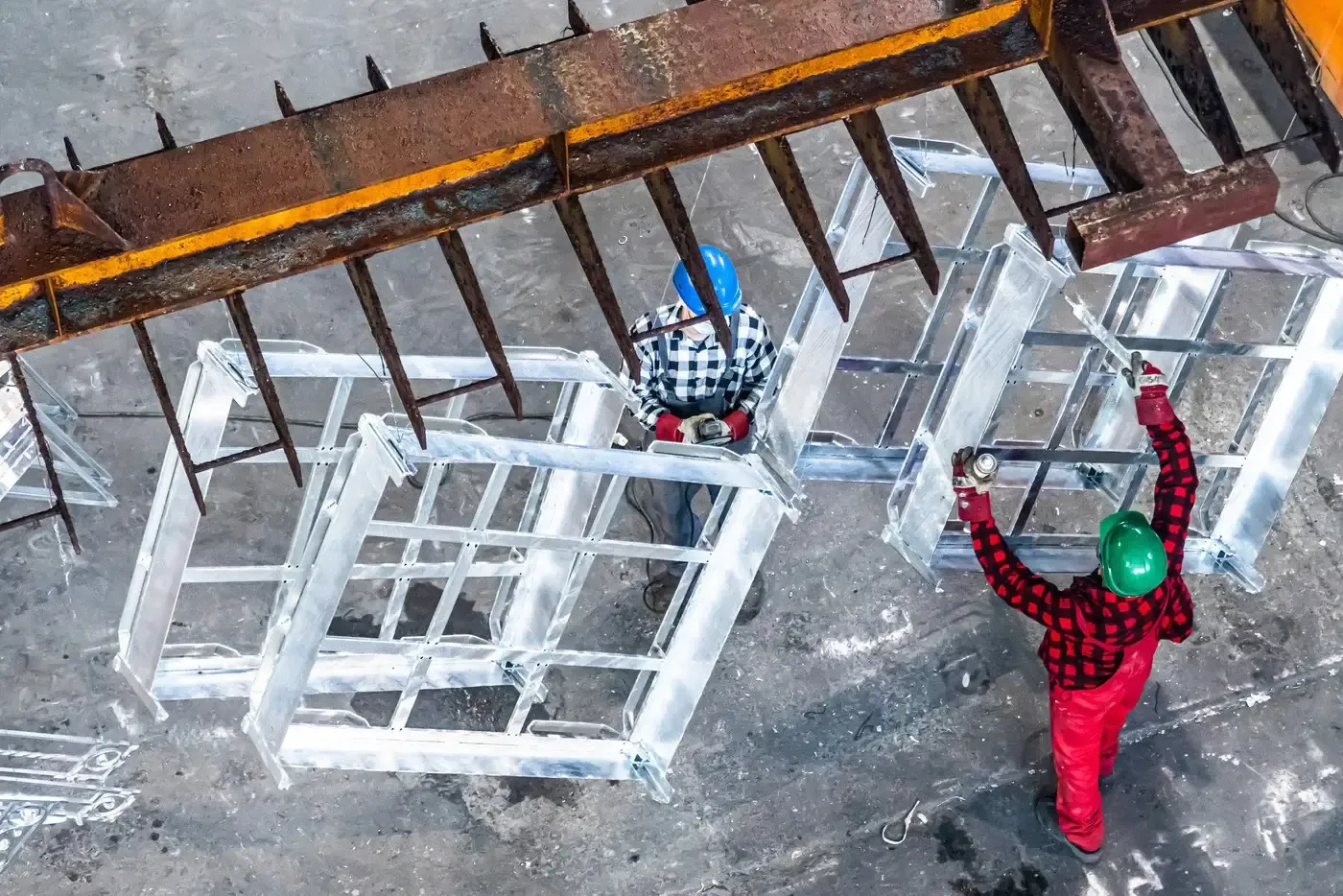
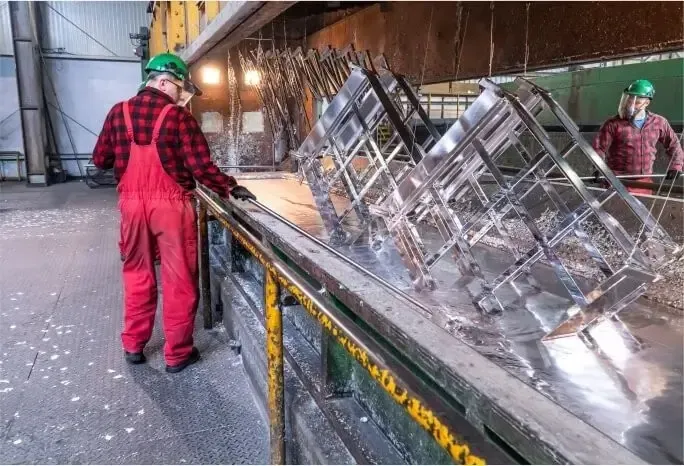
Hot-dip galvanizing is used mainly for large steel structures exposed to atmospheric factors. Depending on the thickness of the galvanized elements, the resulting zinc layer is from 50 to over 100 micrometres thick. During the use of a galvanized structure not protected by a paint coating, the zinc layer decreases. The average loss of the zinc layer on a structure used in non-aggressive conditions is 1–2 µm/year. Hence the average durability of a zinc coating is 30 years and can reach even 100 years. The hot-dip galvanizing process is not a metallurgical process, therefore it is not harmful to the surroundings.
New deadlines
Up to 3T, completion within 10h after consultation with the Sales Department.
Send inquiry
Hot-dip galvanizing – why is it worth using?



Gallery
Conditions for accepting the structure
If you plan to subject your structure to the hot-dip galvanizing process, be sure to check whether it meets the required conditions.
Zakład Wyrobów Metalowych STRUMET SP. z o. o.
| Guidelines | Description |
| 1. Chemical composition | Hot-dip galvanizing enables covering steel structures with an anti-corrosion layer of zinc with a silicon (Si) content of less than 0.03 % or in the range of 0.15% – 0.25 %. |
| 2. Surface condition | The surface of the structure should be free from scale, thick layers of rust, welding spatter, welding slag, silicone anti-spatter agents, paint contamination, grease and oil. |
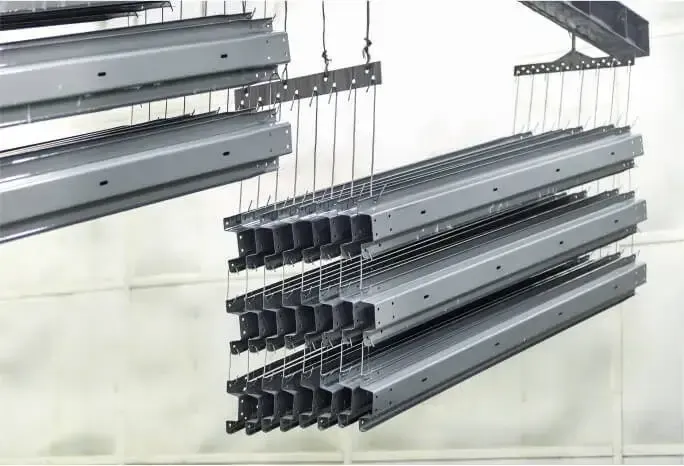
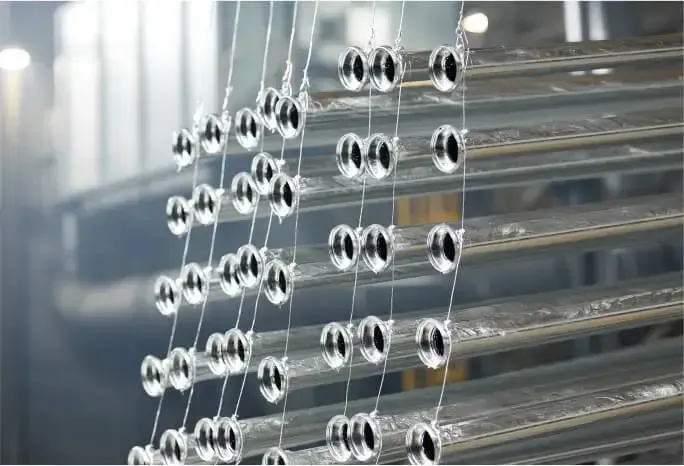
| 3. Construction features | Structures should be capable of being suspended using wires or chains under a beam. The structure's shape should allow liquid zinc to flow freely into all spaces and out of the structure. The ratio of materials of different thicknesses welded together should not exceed 4:1. Galvanizing structures with large areas of thin, unreinforced sheet metal should be avoided due to the risk of waviness. |
| 4. Dimensions of the structure | The structure's dimensions must be smaller than the working dimensions of the galvanizing tank – 10.2 x 1.4 x 2.7 m (length x width x depth). If two dimensions are close to the limit, prior consultation is required. |
| 5. Vent holes | Structures made of closed-section elements should have vent holes to allow the free inflow of liquid zinc during immersion and its free outflow during emergence from the zinc bath. The table below lists the size and number of vent holes in structural elements.
Vent holes can be made as triangular or semicircular cutouts in the profile walls. The following drawings illustrate the principles for vent hole placement. 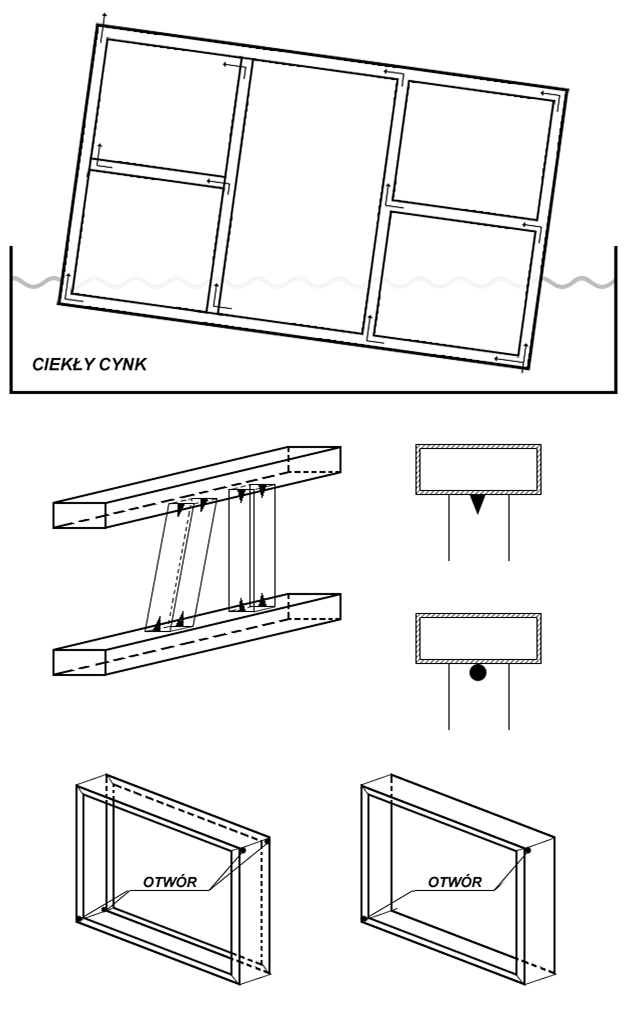 |
| Internal dimensions of the closed profile in mm less than: | Minimum diameter of holes in mm at opposite ends of the profile and their number: | ||||
| Round | Square | Rectangular | 1 | 2 | 3 |
| 15 | 15 | 20 x 10 | 8 | - | - |
| 20 | 20 | 30 x 15 | 10 | - | - |
| 30 | 30 | 40 x 20 | 12 | 10 | - |
| 60 | 60 | 80 x 40 | 20 | 12 | 10 |
| 80 | 80 | 80 x 60 | 20 | 18 | 12 |
| 100 | 100 | 120 x 80 | 25 | 20 | 12 |
| 120 | 120 | 160 x 80 | 30 | 25 | 16 |
| 160 | 160 | 200 x 120 | 40 | 25 | 16 |
| 200 | 200 | 260 x 140 | 50 | 30 | 16 |
Contact form regarding the implementation of a galvanic zinc plating order
Contact us – we will prepare an offer tailored to your needs!
Contact form
Our solutions for industry
A comprehensive offer for market leaders