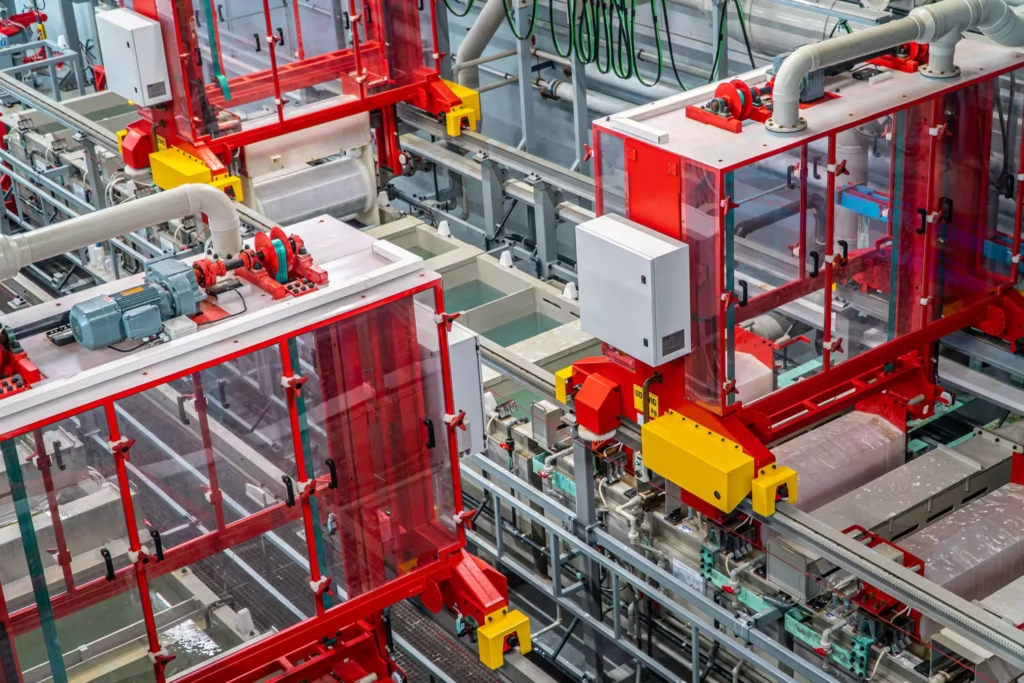
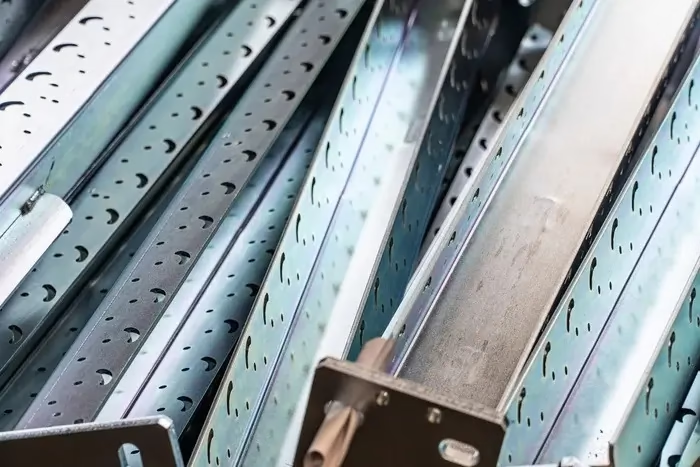
Galvanizing steel This is one of the most effective corrosion protection systems because the zinc layer not only isolates the metal from the environment but also acts as a sacrificial anode, absorbing corrosion reactions if the coating is damaged. In practice, this means long-term protection without the need for maintenance.
However, there are situations in which the zinc layer must be removed. Removing galvanization from steel is performed primarily before welding, during the regeneration of structural elements, in processes requiring direct contact with raw steel and before selected painting systems with increased adhesion requirements.
To do this correctly, you need to understand what material structure you are dealing with.
What is galvanization and why does it protect steel?
In case of hot-dip galvanizing The steel element is immersed in liquid zinc at a temperature of approximately 445-455°C, where a diffusion reaction occurs between the iron and zinc. This creates not a conventional coating applied to the surface, but a system of Fe-Zn alloy layers with varying iron contents, permanently bonded to the substrate.
A typical coating structure includes:
- gamma layer (Γ),
- delta layer (δ),
- zeta layer (ζ),
- the outer layer eta (η) – almost pure zinc.
The thickness of the hot-dip coating in industrial practice is usually in the range of 50-150 µm, although depending on the chemical composition of the steel (especially the content of silicon and phosphorus) it may be greater.
When should you remove galvanizing from steel?
Zinc melts at 419°C and boils at approximately 907°C. During arc welding, the temperature in the weld zone exceeds 1500°C, which means that the zinc evaporates intensively.
In practice, this leads to:
- the formation of porosity in the joint,
- reduction in the strength of the connection,
- gas inclusions,
- emission of zinc fumes, which can cause so-called metal fever.
Therefore, in the area of planned welding removal of zinc coating is a technological requirement, not an option.
Mechanical removal of zinc from steel
- Zone grinding
The most commonly used method is grinding using an angle grinder with a flap disc or ceramic disc. Zinc, being a soft metal, is relatively easy to remove, but the depth of processing must be controlled to avoid damaging the structural steel cross-section.
In practice, a layer of 20-30 mm width around the planned weld is removed.
- Sandblasting
Sandblasting galvanized steel allows for uniform coating removal from larger surfaces. The process uses abrasives of appropriately selected fractions, and parameters – such as operating pressure (usually 6-8 bar) – must be adjusted to the coating thickness.
Sandblasting has the added advantage of preparing the surface for further processes, giving it the roughness profile required by painting systems.
Chemical removal of zinc
Chemical removal of zinc from steel is based on the reaction of zinc with acids, most often dilute hydrochloric acid. The reaction proceeds according to the following scheme:
Zn + 2HCl → ZnCl₂ + H₂↑
The resulting hydrogen is released as a gas, and the zinc goes into solution as zinc chloride.
The process requires careful control of the solution concentration (typically 5-15%) and immersion time to prevent etching of the steel. After completion, the surface must be neutralized and thoroughly dried.
This method works well for details with complex geometry and thin coatings.
Electrolysis as a method of zinc removal
Electrolysis enables precise zinc removal using direct current. The element acts as one of the electrodes, and the process occurs in an electrolyte solution.
The method allows:
- control the rate of coating removal,
- limit interference with steel,
- maintain high accuracy with precision components.
It is most often used in workshop or industrial conditions for components requiring particular precision.
Which zinc removal method should I choose?
Choosing the right method should not be left to chance because removing galvanization from steel always involves interfering with the protective layer previously created in a controlled technological process. It's worth basing the decision on several realistic criteria: coating thickness (whether we're dealing with hot-dip galvanized 70–120 µm or a thin electrolytic layer), the size of the component, the area to be cleaned, and the purpose of the further processing.
If galvanization is being removed locally before welding, the most sensible solution is a mechanical method – it's quick, precise, and allows for limited intervention to the work area. For larger surfaces where uniform cleaning is necessary, sandblasting is more effective, as it simultaneously prepares the surface for subsequent technological processes.
Chemical removal of zinc works well for elements with complex geometry, where access for mechanical tools is difficult, electrolysis It is used where high precision and process control are required, especially for details of high technological value.
The most important thing is that the method is suited to the purpose – it is not always necessary to remove the entire coating, often a controlled cleaning of a fragment of the structure is sufficient.
Precautions when removing zinc plating
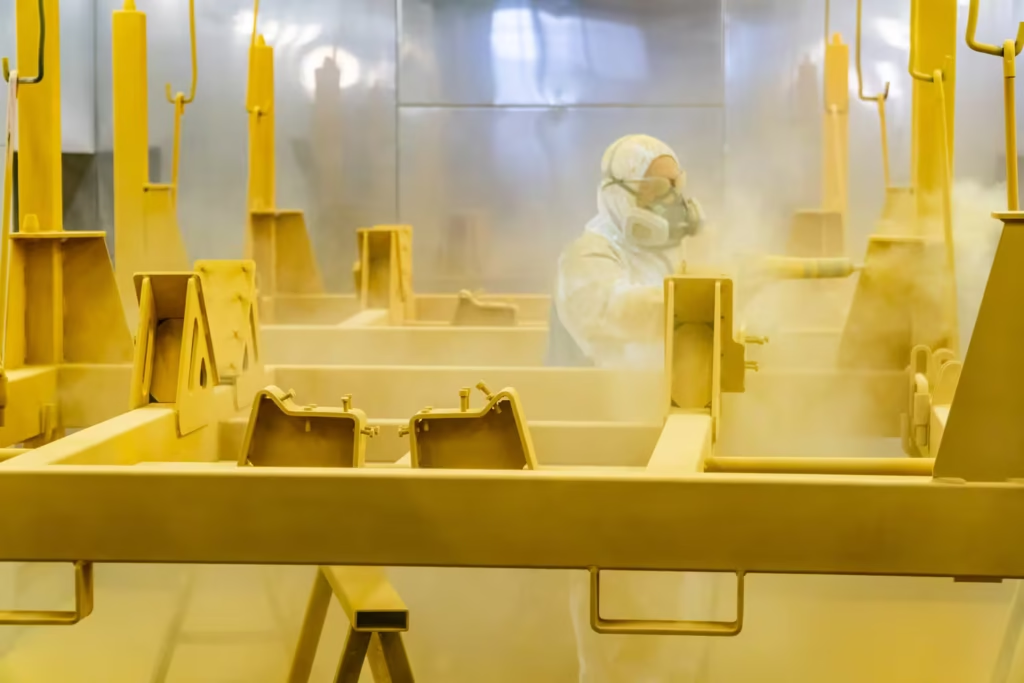
Working with galvanized steel requires awareness of the risks, especially when it comes to high temperature or chemical reactions. Grinding produces fine zinc dust, and welding galvanized steel produces fumes that can be harmful without proper ventilation. Therefore, the workplace should be well ventilated, and for intensive work, it's best to use a local exhaust system.
The use of protective gloves, goggles, and filtering masks is not an exaggeration, but rather a technological standard. In the case of chemical methods, it is crucial to control the solution concentration, protect skin from contact with the acid, and properly neutralize and dispose of waste in accordance with applicable environmental regulations.
How to prepare steel after removing the zinc coating
Once the zinc layer is removed, the steel is left without anti-corrosion protection and reacts very quickly with moisture in the air. Therefore, the surface should be thoroughly cleaned of any remaining dust, chemical reaction products, or abrasive particles, and then degreased with a suitable agent.
If the element is not going to be welded, painted or subjected to further processing immediately, it is worth protecting it temporarily anti-corrosion primer or store in a dry environment. Even exposure to moisture for several hours can lead to the formation of a corrosive coating, which will further reduce the quality of the surface.
Summary – technological approach matters
Removing galvanization from steel It's a process that should be tailored to the purpose of subsequent processing. Mechanical, chemical, and electrochemical methods effectively remove the zinc layer, but each requires parameter control and technological awareness. In industrial practice, it's crucial not only to remove the coating itself, but also to assess whether interfering with the protective layer is truly necessary and whether it will impact the durability of the entire structure.
IN Strumet We treat galvanizing as a consciously conducted step, so we analyze every coating intervention with the element's future use in mind. We know when galvanizing should be removed locally and when it's best to modify the technological process to maintain continuous corrosion protection. This approach allows us to combine work safety with the long-term durability of steel structures.
FAQ
- How to remove galvanization from steel before welding?
Galvanization must be mechanically removed in the weld zone using a grinder or sandblasting to avoid harmful fumes and weld defects. - Does galvanization need to be removed before painting steel?
Not always, because often matting and a suitable primer for galvanized surfaces are enough. - What is the fastest method of removing zinc?
The quickest method for larger elements is sandblasting or shot blasting. - Can galvanization be removed with sandpaper?
Yes, but it will work mainly for small areas or local cleaning. - Is chemical zinc removal safe?
It is effective, but requires strict health and safety regulations and adequate ventilation. - Does sandblasting remove the zinc coating completely?
Yes, with appropriately selected abrasive blasting parameters the zinc layer can be completely removed. - How to protect steel after removing galvanization?
Steel should be immediately protected with anti-corrosion primer or zinc paint. - Is electrolysis effective in removing zinc?
Electrolysis can remove zinc, but is rarely used in industrial practice due to the cost and complexity of the process.