A heat-affected zone below 0.5 mm, welding speeds of up to 10 m/min and dimensional tolerances on the order of ±0.05 mm - these are parameters that no conventional method achieves simultaneously. Laser welding is not, however, the answer to every job. It requires precisely cut parts, clean surfaces and a justified production volume. In this article we compare laser with MAG, MIG and TIG on a technical level - with concrete data, without marketing oversimplification - so that the reader can make an informed assessment of whether and when this technology makes sense in their case.
What Is Laser Welding and How Does It Differ from Conventional Methods?
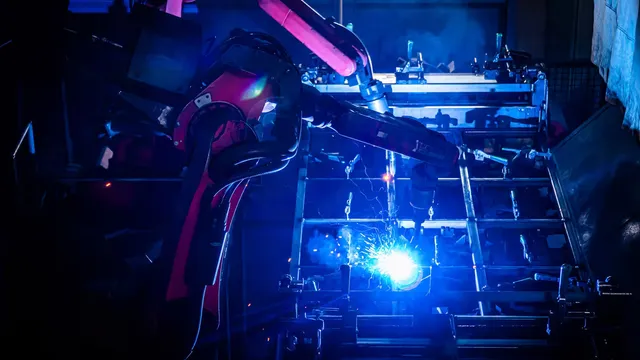
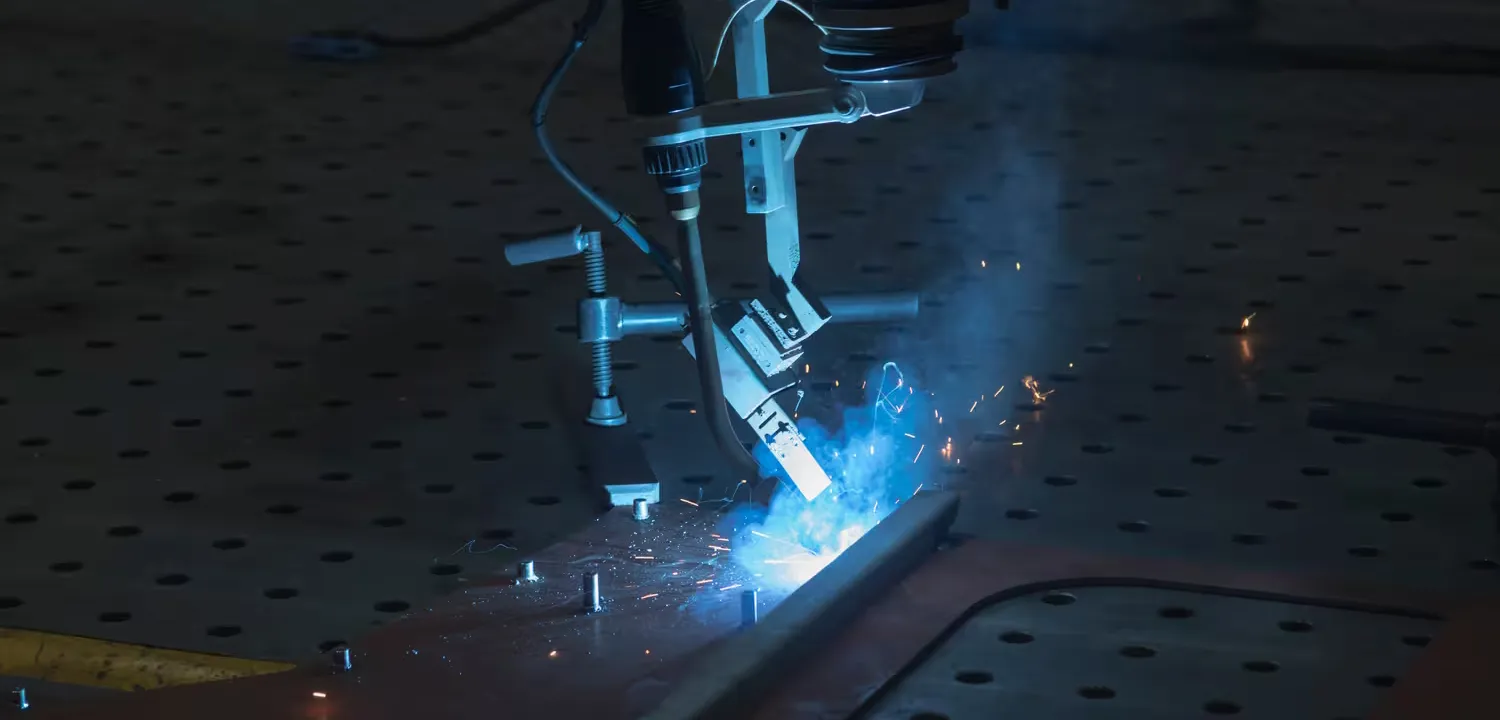
Laser welding involves concentrating a laser beam at a focal point 0.1-0.6 mm in diameter, which makes it possible to reach a power density on the order of 10⁶-10⁷ W/cm². The metal melts and solidifies almost instantly, forming a weld with a high depth-to-width ratio (the keyhole effect).
Conventional methods work differently:
- MAG/MIG - heat comes from an electric arc between the electrode wire and the material. Wide fusion zone, large thermal distortion, often requiring grinding of the weld reinforcement.
- TIG - more precise than MAG/MIG, but slow and labor-intensive; requires a skilled operator.
- Laser - the beam is guided automatically, with no filler material or with only minimal use of it, at a welding speed 3-10× higher than TIG.
The key difference lies in the way energy is delivered. The laser concentrates it in a micro-area and in a fraction of a second, whereas a traditional electric arc heats a much larger area over a longer time.
Laser Welding of Metals - Precision, Repeatability and a Narrow Heat-Affected Zone
The technical heart of the laser's advantage lies in the parameter HAZ (Heat Affected Zone). In MAG welding this zone is several millimeters; in laser welding it is usually 0.1-0.5 mm. In practice this means minimal distortion of the part, preservation of the mechanical properties of the base material near the weld and no need for straightening after the process.
Penetration depth at the same power is several times greater than in TIG - 3-6 kW lasers weld materials up to 6-8 mm thick in a single pass. The dimensional tolerances of the finished joint routinely fall within ±0.05-0.1 mm.
In series and automotive production, repeatability also matters. Robotic laser heads work with constant parameters throughout the entire shift, eliminating the variability of the human factor. This translates directly into compliance with ISO 3834 and acceptance by TÜV or IATF 16949 auditors.

➤ You will find more about automation in welding in the article on the evolution of welding robots.
Laser Welding of Steel - Applications in the Production of Load-Bearing Structures and Packaging
Carbon steel (S235, S355) and stainless steel (304, 316L) are materials in which the laser works exceptionally well. High beam absorption in ferritic and austenitic steels makes it possible to obtain welds 0.3-2 mm wide with full penetration and an almost mirror-like face appearance - without grinding. In stainless steel, the narrow HAZ eliminates the risk of sensitization at the grain boundaries and susceptibility to intergranular corrosion.
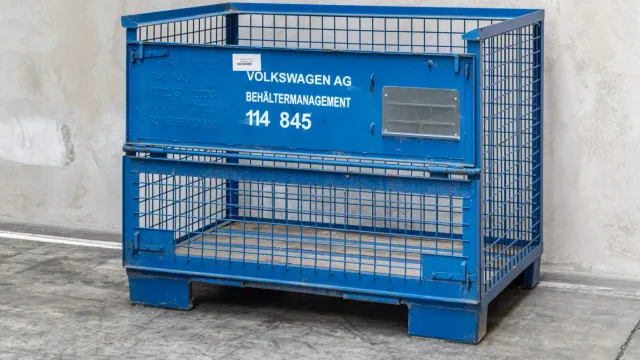
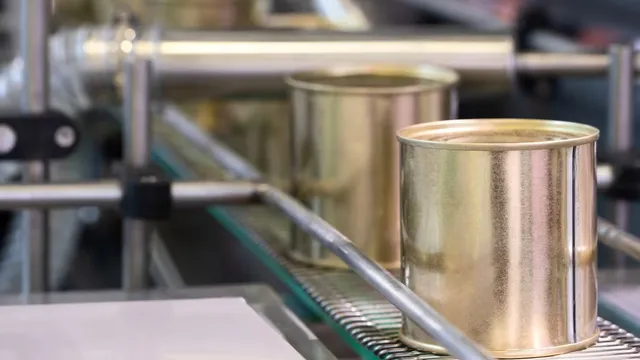
Strumet uses laser welding, among other things, in the production of metal containers for the automotive industry - components where surface appearance, dimensional accuracy and resistance to dynamic loads must be guaranteed at the same time.
Laser Welding of Aluminum - Challenges and Advantages over TIG/MIG
Aluminum is more difficult: its thermal conductivity of ~205 W/m·K (versus ~50 W/m·K for steel) quickly carries heat away from the welding zone. Added to this are the Al₂O₃ oxide layer (melting point ~2050°C), a tendency toward weld porosity and the risk of hot cracking.
A laser in pulsed mode or with power modulation controls the heat balance precisely. The result is welds with porosity below 1% - a requirement of aerospace standards (EN 4179) - and joint strength at the level of 85-95% of the base material for 5xxx and 6xxx alloys. This is a result that is hard to achieve with the MIG method.
Laser Welding - Advantages and Disadvantages in the Context of Industrial Production
The greatest operational advantage of laser welding is the elimination or significant reduction of finishing work. Laser welds on stainless steel and aluminum often require neither grinding nor polishing, which in series production translates directly into shorter cycle time and lower unit cost. Minimal thermal distortion means, in turn, that parts after welding keep their dimensions without additional straightening. Finally, process repeatability makes it possible to maintain constant parameters throughout the entire production shift, which is hard to achieve with manual TIG.
The main barrier is the entry cost (although this problem is solved by, for example, industrial cooperation). In addition there is the requirement for part preparation - the gap between the joined edges should not exceed 0.05-0.1 of the material thickness, which forces precise laser cutting or blanking before welding. At thicknesses above 10-12 mm the laser loses its advantage over MAG without the use of hybrid techniques.
| Aspect | Laser welding | MAG/MIG/TIG |
| HAZ | 0.1-0.5 mm | 2-8 mm |
| Welding speed | 1-10 m/min | 0.2-1.5 m/min |
| Part distortion | Minimal | Significant |
| Investment cost | PLN 200-800 thousand | Low-medium |
| Joint fit-up requirements | Gap ≤0.1 mm | Tolerant |
| Surface cleanliness | Critical | Less important |
| Operating cost | Low | Medium |
When Does Laser Welding Really Pay Off? Criteria for Choosing a Technology
Laser is the best option when:
- Production volume is high or repeatable - amortization at series from a few thousand pieces per year.
- The material is stainless steel, carbon steel, aluminum or titanium alloys - appearance and minimal HAZ are critical.
- Material thickness is 0.5-6 mm - laser is faster and more accurate than TIG; below 0.5 mm it displaces it almost completely.
- Strict dimensional control is required - tolerance of ±0.1 mm and below, zero acceptance of distortion.
- Cycle time has economic significance - an assembly line with a 60 s takt cannot wait for multi-pass TIG.
- The weld geometry is complex - a laser head on a robot freely follows curvilinear paths.
Traditional methods remain the optimal choice when:
- Production is one-off with high variability of geometry and the budget does not justify the investment.
- The material is thicker than 10-12 mm with no requirements for a low HAZ.
- Tolerances and gaps between edges exceed 0.3 mm.
It is worth basing the decision on an analysis of total cost of ownership (TCO). Laser pays for itself through reduced finishing costs, scrap and labor time - items that are often underestimated at the quoting stage.
FAQ - Most Frequently Asked Questions About Laser Welding
Is laser welding suitable for low-volume production, or only for mass production?
Economically, laser is best justified at series from a few hundred to several tens of thousands of parts per year. In small series it is used when quality requirements - precision, low HAZ, appearance - rule out other methods; the unit cost is higher, but technologically justified.
What materials can be joined by the laser method - is it possible to weld different metals?
Laser makes it possible to join different metals: steel to stainless steel, copper to brass or selected aluminum alloys to titanium - with an appropriate choice of parameters and filler material. This is harder than in TIG, but feasible and used, among others, in electronics and medicine.
How does laser welding compare with MAG/TIG in terms of weld strength?
A properly made laser weld achieves 85-100% of the strength of the base material - comparable to TIG and often better than MAG, where the wide HAZ weakens the zone next to the weld. The key is the quality of joint preparation and control of process parameters.
Does laser welding of metals require special surface preparation of the parts?
Yes - surfaces must be free of oil, rust and coatings, and the gap between edges should not exceed 0.05-0.1 of the material thickness. In practice this means the need for precise laser cutting or blanking of parts immediately before welding.
Does your project require precise, aesthetically pleasing welds while maintaining tight dimensional tolerances? Strumet has its own machine park and experience in laser welding of steel and aluminum for demanding industries. Contact us, describe your order, and we will select the process parameters and assess feasibility even before the quote.