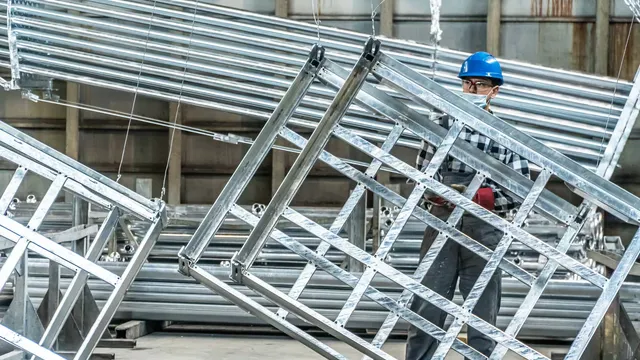
A zinc coating is formed by the direct reaction of iron with zinc that takes place during hot-dip galvanizing. At Strumet we look at this stage in very practical terms, because this is where steel starts to behave differently in real operating conditions. Immersing a component in liquid zinc creates a metallurgical bond, not a thin surface layer that can easily be damaged or separated from the substrate.
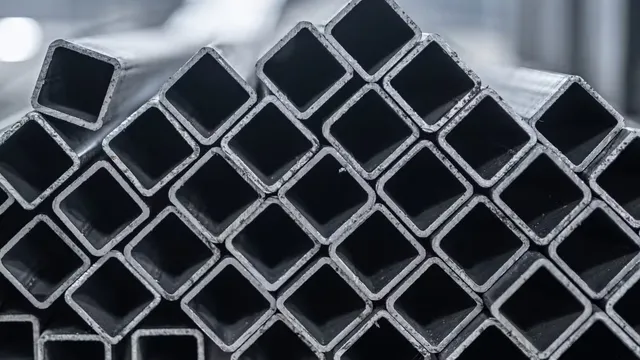
A zinc coating formed in the hot-dip galvanizing process covers the entire component, not just its outer surfaces. Zinc reaches the interiors of closed profiles, process holes and hard-to-reach areas. In practice this means that protection works across the entire cross-section of the structure, also where in other technologies protection would simply not reach. The zinc coating performs two functions at once. On the one hand, it is a physical barrier that separates the steel from moisture and air. On the other, it works electrochemically, taking over the corrosion process. Zinc is consumed gradually, and the steel remains protected even when minor damage appears on the surface. It is this mechanism that makes hot-dip galvanized structures withstand long-term service in harsh conditions so well.
How a Zinc Coating Forms - From the Bath to the Finished Product
In hot-dip galvanizing we immerse components in molten zinc at a temperature of 445-455°C. Contact of the steel with the liquid metal triggers intense diffusion, as a result of which zinc atoms penetrate the structure of the iron.
This process is very fast, but its outcome depends on several parameters that we control at every stage at Strumet. Immersion time, bath temperature and the chemical composition of the steel determine the thickness and structure of the coating. A longer time and higher temperature favor more intensive growth of the alloy layers, while a shorter immersion yields a thinner, more uniform coating. Unlike mechanically applied coatings, hot-dip galvanizing creates a layer permanently bonded to the steel. The coating does not flake, does not delaminate and remains continuous also in places exposed to mechanical loads.
Layered Structure of the Zinc Coating - The Structure Under the Microscope
A zinc coating is not uniform. Under the microscope, several characteristic iron-zinc alloy layers are clearly visible, growing from the steel side toward the outer surface. The deepest alloy layers are characterized by high hardness, often exceeding the hardness of the steel itself. They are responsible for resistance to abrasion and mechanical damage. The outer layer, built mainly of pure zinc, remains more ductile and takes on the role of electrochemical protection. This arrangement means that the zinc coating retains the ability to absorb impacts in the outer layer, while having high mechanical resistance of the alloy layers. In practice this means good resistance to damage occurring during transport and installation, and stable behavior of the coating in long-term service under the influence of moisture, temperature fluctuations and weather.
Appearance of the Zinc Coating - Why Is Zinc Sometimes Matte or Shiny?
Right after galvanizing, a zinc coating most often has a bright, metallic luster. Depending on the steel grade, silicon content and bath temperature, however, the surface may take on a grayer, more matte shade. A change in appearance does not mean a drop in quality. On the contrary, in many cases a matte coating is associated with more intensive development of the alloy layers. During service, the coating naturally ages and gradually dulls under the influence of air, forming a stable protective patina.
A change in color does not adversely affect corrosion-protection properties, and in practice it often indicates that the reaction of zinc with steel proceeded correctly.
Factors Affecting the Thickness and Quality of the Zinc Coating
The final result of galvanizing is influenced by many elements, which we analyze already when accepting a structure into the process. The chemical composition of the steel, including the silicon and phosphorus content, has a direct impact on the growth rate of the alloy layers.
The surface roughness obtained during mechanical preparation is also important. A surface that is too smooth limits the initiation of diffusion, while an excessively uneven one promotes uncontrolled coating growth. Bath temperature and immersion time make it possible to control coating thickness deliberately, matched to the purpose of the component and the conditions of its later service.
The Effect of Silicon on Galvanizing - the Sandelin Effect
A special case is steel with an elevated silicon content. In a certain concentration range the so-called Sandelin effect occurs, in which the reaction of zinc with iron proceeds exceptionally intensively. In practice this leads to a very thick, gray and uneven coating, which despite its high mass may show greater brittleness. For this reason, at Strumet we analyze the chemical composition of the steel every time and adjust the process parameters to limit the undesirable effects of excessive diffusion.
High-Temperature vs. Standard Galvanizing - Differences in Technology
We carry out standard hot-dip galvanizing at temperatures of about 445-455°C. For certain components, such as bolts, nuts or precision parts, we use high-temperature galvanizing, reaching about 560°C. The higher temperature accelerates the diffusion reaction and makes it possible to obtain a controlled coating thickness while maintaining the proper assembly tolerances. A coating obtained in this process usually has a more matte appearance and a different layered structure.
Electrochemical Protection - What Happens After the Coating Is Scratched?
One of the greatest advantages of a zinc coating remains cathodic protection. When the zinc coating is locally damaged, zinc reacts faster than steel and it takes over the corrosion process. As a result, the steel remains protected even when the coating is mechanically breached. Over time, zinc corrosion products fill the scratch and limit the access of moisture and oxygen, which slows further degradation of the material and allows the coating to retain its protective properties.
Resistance to Mechanical Damage - Hardness of the Layers
A zinc coating copes well with mechanical loads thanks to its layered structure. The outer zinc layer absorbs the energy of impacts and small deformations, while the inner Fe-Zn alloy layers are characterized by very high hardness, often greater than that of structural steel. In practice this means that the coating does not crack on impact and effectively protects the steel against deeper damage.
Durability of the Zinc Coating and Corrosivity Categories
In moderate environmental conditions, a zinc coating retains its properties for 30-50 years, and in favorable conditions even longer. The rate at which it is consumed depends on the corrosivity category of the environment in accordance with the PN-EN ISO 12944 standard.
In C4 environments, typical of industrial areas, and in categories C5-I and C5-M, covering aggressive and marine atmospheres, an appropriately selected coating thickness makes it possible to maintain a long service life without the need for additional protection.
The PN-EN ISO 1461 Standard - How to Measure Coating Thickness?
We measure zinc coating thickness in micrometers, most often using non-destructive methods. The PN-EN ISO 1461 standard specifies minimum thickness values depending on the thickness of the steel and the type of component. Typical coatings are in the range of 70-150 µm, which provides effective protection in most structural applications.
The Most Common Coating Defects and Design Errors
Coating quality problems most often result from design errors. Improper vent holes, closed spaces or residues of paints and welding sprays can lead to local defects. Defects of this kind cannot always be eliminated at the process stage, so it is worth taking the requirements of hot-dip galvanizing into account already when designing the structure.
Repairing a Damaged Zinc Coating - Rules and Methods
Minor coating damage can be repaired in accordance with the standards, provided its area does not exceed specified values. We then use zinc-rich paints, thermal spraying or zinc solder sticks, maintaining the required thickness of the repair layer.
Painting Galvanized Steel
We combine galvanizing with painting without any problem, creating a duplex system that clearly increases the durability of the protection. The paint limits the access of moisture and oxygen to the surface, and the zinc coating takes over the protection of the steel also beneath the paint layer, even where minor damage appears. In practice this allows us to significantly extend the service life of the structure, while giving it a specific color and an appearance matched to the project's requirements.
Why Is a Zinc Coating the Best Choice?
A zinc coating provides steel structures with many years of protection against corrosion and good resistance to mechanical loads, even in harsh operating conditions. At Strumet we carry out hot-dip galvanizing so that the zinc coating retains its properties for years of use, without the need for frequent repairs or additional protection.