Why is metal protection so important?
Corrosion costs money. According to the World Corrosion Organization, it costs approximately 3.4% of world GDP per year – in Poland, this amounts to tens of billions of zlotys in damaged structures, installations, and machinery. What makes these numbers so high isn't a lack of available solutions, but rather errors in selection or complete omission of surface protection during the production phase. Anodic and cathodic coatings have been effectively solving this problem for decades, provided one knows when to use which ones.
What are anodic and cathodic coatings?
Both types protect metal against corrosion, but their mechanism of action is completely different.
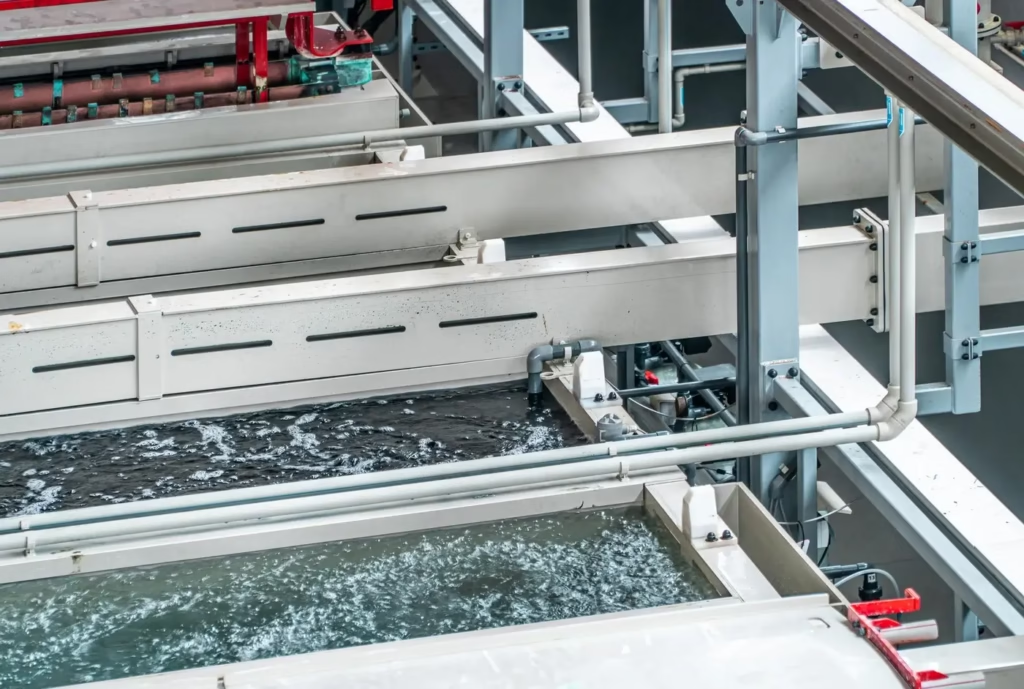
The anodic coating is a layer of aluminum oxide that grows from the surface of aluminum under the influence of an electric current in an acid bath. It's not applied externally; it's formed from the metal itself, which makes it permanently bonded to it and prevents chipping. Cathodic coating works in the opposite way: it's a foreign metal electroplated onto steel, creating a tight barrier between the substrate and the environment. It works great while intact, but after mechanical damage, it loses protection in that area. Hence, a simple rule: anodizing is the domain of aluminum, cathodic coatings are the domain of steel.
Anodic coatings – characteristics, features and properties
Depending on the process parameters, a wide variety of properties can be achieved. Second-degree anodizing produces a thin, decorative layer that readily accepts dyes, hence the numerous colors of anodized aluminum used in electronics, furniture, and lampshades. Third-degree hard anodizing has a thickness of 25-150 µm and hardness similar to corundum, used wherever daily use involves intense abrasion, such as in the machinery, hydraulics, and aviation industries. Level IV anodizing is a solution for truly extreme mechanical requirements.
For mass production, anodizing is relatively inexpensive, requires no maintenance, and offers a wide range of color options. Display cases, sports equipment, ventilation, and window profiles are all areas where this technology has proven its worth for years.
Cathodic coatings
Where conditions are extreme, cathodic coatings are difficult to replace. Zinc, chromium, and nickel are the most commonly used materials, each tailored to different needs.
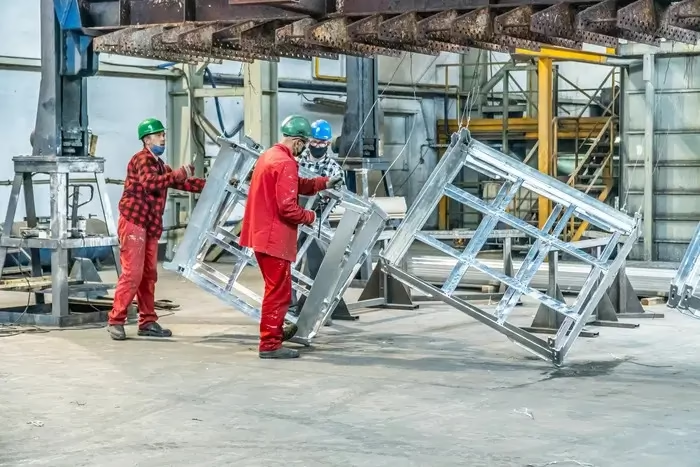
Zinc dominates the protection of structural steel, effective and cheap in both electroplating and hot-dip galvanizing. Hard chrome has been ruling the hydraulics and drives industry for decades., because no other material combines hardness and corrosion resistance so well. Nickel is used where protection and aesthetics are simultaneously important, such as in fittings, precision electronics, and medicine. Cataphoresis, in turn, has become a standard in the automotive industry because it is the only treatment that reaches every nook and cranny of the bodywork, and it is to this that we owe the fact that modern cars rust many times slower than those of thirty years ago.
A weakness of cathodic coatings is their sensitivity to mechanical damage. Scratching exposes the underlying surface and requires prompt repair, as corrosion can develop invisibly beneath the coating.
Key differences between anodic and cathodic coatings
The anodic coating is part of the aluminum and retains its properties even after scratching. The cathodic coating is a barrier on the steel, effective only as long as it remains sealed. This is the most important difference in practice.
In terms of hardness, level III and IV anodizing and hard chrome plating are among the leading commercially available solutions. Aesthetically, anodizing offers color flexibility, while chrome and nickel produce a premium metallic sheen. The cost of anodizing aluminum profiles is lower than chrome plating, although in aggressive environments, the more expensive cathodic coating may prove cost-effective in the long run.
Practical applications: where are anodic and cathodic coatings used?
Anodized aluminum performs best where appearance and maintenance-free durability are key. Display cases, sports equipment, ventilation systems, and consumer electronics are all areas where this technology has been standard for years. The profiles are lightweight and durable, and they withstand daily use without significant wear and tear.
Cathodic coatings are used in harsh environments. Ship hulls, bodywork, pipelines, and industrial tanks are environments where exposure to salt, moisture, and chemicals is constant and intense. Here, a tight barrier is not a luxury, but a necessity, because the cost of the coating is a fraction of the cost of failure.
How to choose the right type of coating?
The base material is the deciding factor in most cases. Aluminum requires anodizing, steel requires cathodic coatings. Then, the operating environment and usage patterns matter. Aggressive conditions and constant contact with water or chemicals indicate cathodic coating. In moderate urban or industrial environments, anodizing or galvanizing is perfectly adequate.
When choosing, it's worth considering the total cost, not just the application cost. A cheaper coating that's replaced regularly can be more expensive than a better one applied once. In many cases, a combination of both technologies is also effective: galvanizing under powder coating or anodizing with additional sealing.
The future of anodic and cathodic coatings
Hexavalent chromium is being gradually phased out by REACH regulations, forcing the industry to seek alternatives. Trivalent chromium and new metallic alloys are making progress, although they still fall short of their predecessors in some parameters.
Nanotechnology is opening up new possibilities here. Anodic coatings with silver nanoparticles are gaining antibacterial properties, and metal-ceramic nanocomposites are achieving hardness levels previously unattainable commercially. Self-healing coatings that release corrosion inhibitors at the point of damage are already operating in aviation and premium automotive applications and are likely to be widely used within the next few years.
FAQ – frequently asked questions about anodic and cathodic coatings
- Are the coatings durable? Hard anodizing lasts for decades, even in demanding conditions. Chrome and nickel coatings, when properly maintained, last the entire product lifecycle. The key is to match the coating to the operating conditions.
- What is the price difference? Anodizing a series of profiles is one of the less expensive finishing processes. Chrome and nickel plating are more expensive in terms of both material and process. Cathode ray tracing requires a significant investment in the processing line and is more cost-effective for larger volumes.
- Can I combine both types? In one structure, yes, but you need to ensure insulation of the contacts between aluminum and steel to avoid galvanic corrosion.
- Are the coatings ecological? Anodizing is safe; aluminum oxide is chemically inert. Chrome plating with Cr6+ is toxic and regulated, and the industry is moving away from it. Cataphoresis on water-based paints has low VOC emissions and is now the environmental standard in the automotive industry.
- How to care for them? Anodized aluminum simply needs to be washed with a mild detergent. Chrome and nickel coatings should be cleaned to remove salt and dirt. If the cathodic coating is damaged, don't delay.
- Is it worth investing? The cost of a coating is a few percent of the component's value. Replacing a corroded component can be many times that amount. A well-chosen coating always pays off.