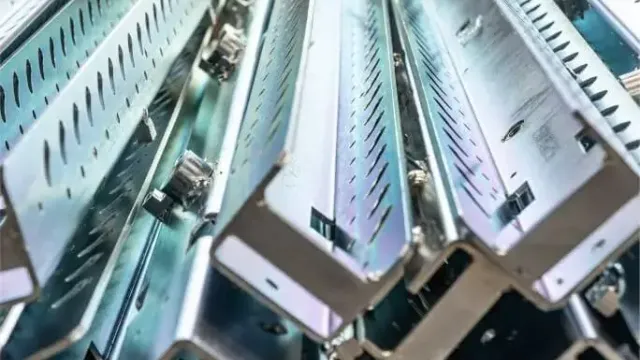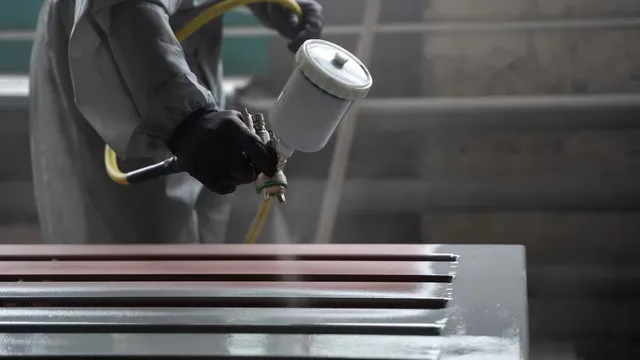
Scratch a galvanized railing and nothing happens. Scratch a tinplated sheet and at that one spot the steel will start to corrode faster than if it had no coating at all. This difference is not due to workmanship or layer thickness, but to the electrochemical potential of the metal on top of the steel. Zinc, tin and chromium reach its surface in similar processes and look similar, yet they protect it in completely different ways. Only one of them keeps working after the coating is damaged.
Why Does Steel Need a Coating of Another Metal?
Atmospheric corrosion of steel is an electrochemical process: microcells form on the surface in which iron goes into solution, and the condition for this process is an electrolyte, that is, a thin film of moisture. That is why the corrosion rate increases with relative humidity and the concentration of pollutants, mainly SO₂ and chlorides. Structural steel does not form any barrier on its own - the rust that forms on it is porous and does not cut off the oxygen supply, so the process advances deeper into the material until the load-bearing cross-section is lost.
A coating of another metal interrupts this mechanism, and it does so in two different ways:
- Anodic (sacrificial) coating - the metal has a lower electrochemical potential than steel, so if the coating is damaged, it corrodes in place of the steel. This is how zinc works.
- Cathodic (barrier) coating - the metal has a higher potential than steel and protects it only mechanically. Damage to such a coating is not neutral: a cell forms in which the steel becomes a small-area anode, and corrosion at that point accelerates. This is how tin and chromium work.
Note the terminology: a zinc coating is anodic, while the protection it gives the steel is called cathodic. These are two descriptions of the same phenomenon from opposite sides of the cell - the name of the technique comes from the role of the protected metal. (Anodic protection is a separate concept, namely shifting the potential into the passive range with an anodic current.)
Zinc - The Standard for Protecting Steel Structures
Zinc (Zn) accounts for the vast majority of anti-corrosion coatings applied to steel. Its electrochemical potential is lower than that of iron, its corrosion products are compact and dense, and the metal itself can be applied by several technologies with completely different costs and scales. On top of that, it is inexpensive and fully recyclable.
Dual Mechanism of Action
Zinc protects steel as both a barrier and a cathodic protector, which makes it a solution tolerant of workmanship errors. The barrier is formed by the coating itself and by the patina, a compact layer of zinc oxides, hydroxides and carbonates that builds up on contact with air and markedly slows further consumption of the metal. Cathodic protection comes into play where the barrier is no longer there: at scratches, drilled holes and cut edges, zinc corrodes as the anode and protects the exposed steel over a distance of a few millimeters.

Zinc Coating Methods
Zinc can be applied to steel in at least 5 ways, and they differ primarily in the thickness obtained, which translates directly into durability. The key difference lies between methods in which the coating is metallurgically bonded to the substrate and those in which it merely adheres mechanically.
| Method | Typical thickness | Characteristics |
| Hot-dip galvanizing | 50 to over 100 µm | Metallurgically bonded coating; structures, large dimensions |
| Zinc electroplating | 3-25 µm | Precise thickness, smooth surface; parts, fasteners |
| Thermal spraying | 100-250 µm | Applied on site; porous coating, requires sealing |
| Sherardizing | 15-60 µm | Diffusion in zinc powder, no distortion; threaded products |
| Zinc flake coatings, zinc-rich paints | 8-40 µm | Supplementary and repair protection |
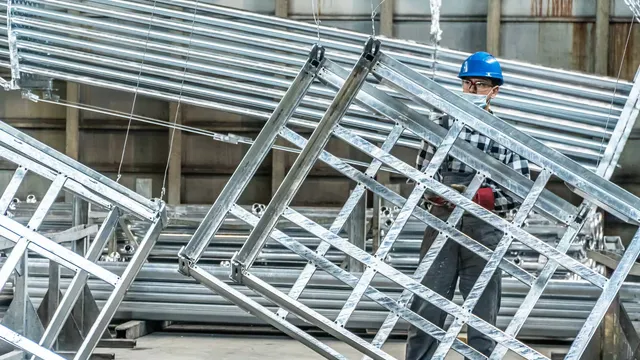
In hot-dip galvanizing, the component is immersed in liquid zinc at a temperature of approx. 450-460°C. Diffusion takes place and an iron-zinc alloy layer forms, topped - after withdrawal from the bath - by a layer of pure zinc. The thickness depends not only on immersion time but above all on the steel composition. The best steels for galvanizing are those with a silicon content below 0.03% or in the range of 0.14-0.25%. At silicon levels of 0.03-0.12%, the so-called Sandelin effect occurs: the Fe-Zn reaction proceeds violently and the coating may consist almost entirely of the alloy phase - gray, rough and prone to flaking.
Tin as an Anti-Corrosion Coating - Where Does It Actually Work?
Tin has the symbol Sn, atomic number 50 and a melting point of about 232°C. It is soft, ductile, chemically inert and does not form toxic compounds - hence its position in the food industry and electronics.
Tin is applied by electroplating or by dipping. Its typical applications share a common denominator: what matters is not so much structural protection (although tinning is one of the methods of preventing corrosion) as chemical inertness or solderability. The most common ones include:
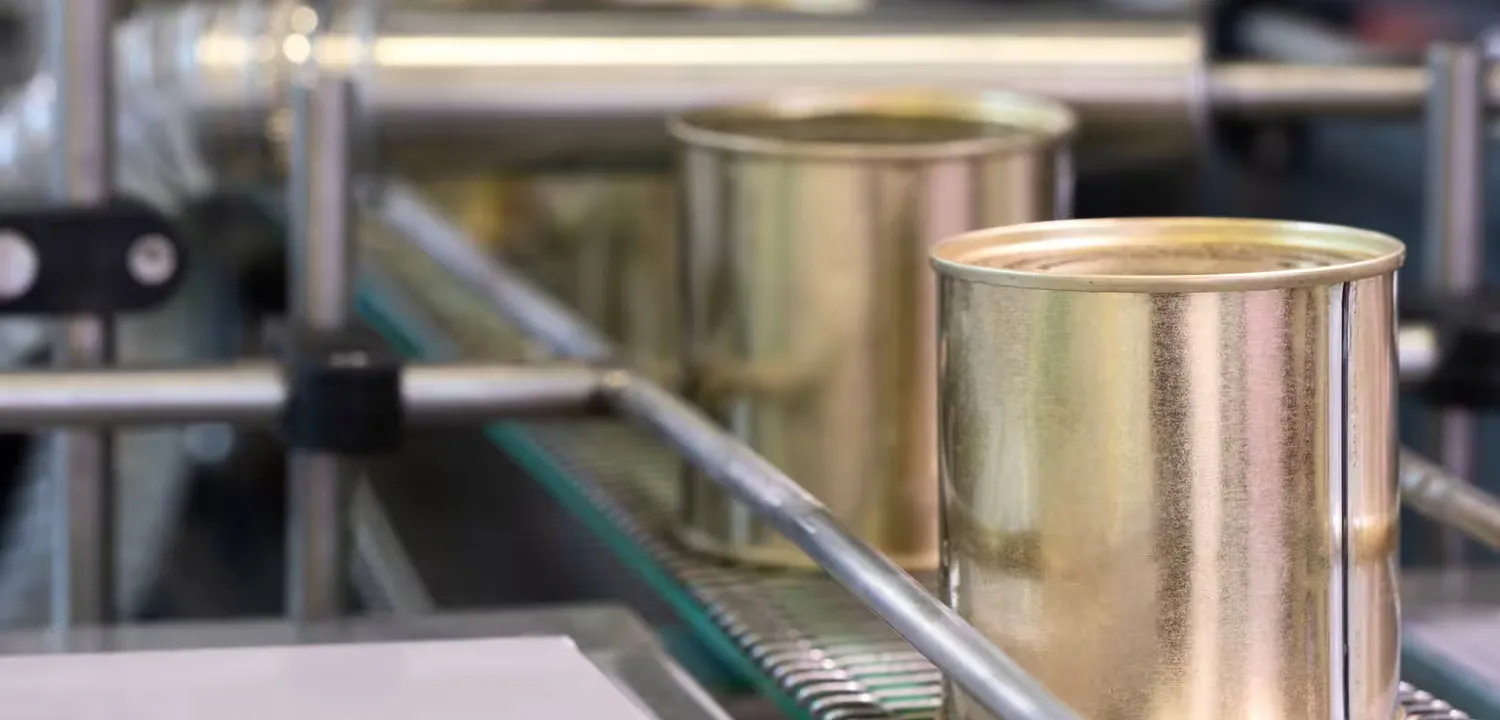
- Tinplate - thin steel coated with tin, the basic material of food cans. Tin does not react with the product and does not change its taste.
- Electronics and electrical engineering - tinning of traces, terminals and wires provides solderability and a stable electrical contact.
- Copper installations - here the arrangement reverses. Relative to copper and brass, tin is an anodic coating, so it protects them actively; relative to iron it is cathodic and works only as a barrier.
- Body tinning - repair filling of sheet metal irregularities with a tin alloy, niche today, mainly used in vehicle restoration.
The use of tin is further limited by two phenomena worth knowing about. The first is the so-called tin pest: below about 13°C, white tin (β) spontaneously transforms into a brittle, powdery gray form (α), and once initiated, the transformation continues to progress. The second is tin whiskers (metal whiskers), single-crystal filaments growing out of the coating and shorting adjacent traces in electronic circuits - the risk increased after lead was phased out of solders, because the addition of Pb effectively suppressed them.
The conclusion for steel structures is unambiguous: tin is not a material for corrosion protection of steel. It does not provide cathodic protection, it is more expensive than zinc and soft, and damage to the coating locally accelerates corrosion of the substrate.
Chromium - Hardness, Dimension and Passivation
Chromium is sometimes lumped together with zinc, although it plays two completely different roles and only one of them actually protects steel from corrosion.
Decorative chromium plating consists of layers on the order of 0.3-1 µm, always applied over a copper-nickel undercoat (the system is described in PN-EN ISO 1456). The chromium coating is microporous and does not constitute a barrier by itself; in this system, nickel is responsible for corrosion resistance, while chromium provides gloss and tarnish resistance. Hard chromium plating - layers from 20 to over 100 µm and hardness above 900 HV on cylinder piston rods, cylinders, molds and shafts - has a different purpose: wear resistance and dimensional restoration.
Chromium works most effectively as an alloying element. At a chromium content of at least 10.5%, steel forms a self-healing passive oxide layer a few nanometers thick and becomes stainless steel. The layer rebuilds itself on contact with oxygen, so a scratch does not permanently expose the substrate.
How to Choose Corrosion Protection for Your Project?
In design practice, the dilemma of "zinc or another metal" usually does not arise - the choice comes down to "which galvanizing method and what thickness."
- Determine the corrosivity category according to PN-EN ISO 9223.
- Compare the design service life with the zinc loss in that category. If the result does not add up, you move to duplex.
- Check the geometry. Welded structures and closed profiles favor hot-dip galvanizing, parts with dimensional tolerances favor electroplating.
- Take the steel composition into account. Silicon and phosphorus affect the appearance and thickness of the coating more than any other parameter.
- Calculate the life-cycle cost. A coating that needs no maintenance for 40 years works out cheaper than a paint system renewed every 8-10 years.

Not sure whether zinc alone will deliver the required service life for your structure? Contact Strumet - we will calculate the coating thickness for your corrosivity category and advise what to pay attention to already at the design stage.
FAQ - Most Frequently Asked Questions About the Differences Between Zinc, Tin and Chromium
Does galvanized steel rust?
Not in the colloquial sense. Zinc oxidizes, forming a patina, and with restricted airflow - white corrosion products, known as white rust. This is a cosmetic defect; iron rust appears only after the zinc at a given spot has been completely consumed.
Can a zinc coating be painted?
Yes, and in categories C4-C5 it is even recommended.
What is the difference between zinc and tin?
They are two different elements, confused mainly because of the similarity of their names in Polish. Zinc (Zn) protects steel cathodically and is the basis of industrial corrosion protection, while tin (Sn) is used for soldering and for coatings on sheet metal and copper.
Does tin protect steel from corrosion?
Only as long as the coating is intact. Without cathodic protection, corrosion at the damaged spot proceeds faster than on unprotected steel, because the exposed steel acts as a small-area anode.
Does chromium plating protect against corrosion?
The chromium coating alone does not - it is too thin and porous. Resistance is provided by the nickel undercoat in the Ni-Cr system or by chromium introduced into the alloy as a component of stainless steel.