According to the Siemens report “The True Cost of Downtime 2024”, one hour of unplanned downtime at a large automotive plant costs an average of $2.3 million, or more than $600 per second. When a missing component stops the line, the manufacturer passes these costs down the supply chain in the form of contractual penalties, charges for sorting defective batches, and a lower supplier rating. In automotive, a part that matches the drawing is only the starting point. Whether a subcontractor stays in the supply chain depends on its ability to document the origin of every material batch, maintain process parameters throughout the entire production run, and protect the customer’s design data.
Why does the automotive industry hold subcontractors to higher standards?
In automotive, a defect in a single bracket can trigger a recall covering thousands of vehicles, so the final manufacturer expects every industrial subcontractor to apply the same rigor that applies in its own plant. In practice, this comes down to four areas:
- Traceability: every part must be linked to the heat and batch of material, process parameters, shift, and workstation. In the event of a complaint, this makes it possible to narrow corrective action down to specific batches instead of recalling the entire shipment.
- Parameter repeatability: the OEM is buying a guarantee that the ten-thousandth unit will be identical to the first. The proof lies in statistical process capability indices; in the PPAP procedure, the typical threshold for special characteristics is a Cpk of at least 1.33 in series production.
- On-time delivery and scalability: deliveries run on a just-in-time basis, and penalties for stopping a customer’s line can exceed the value of the entire order. The subcontractor must also be able to move smoothly from prototypes to series volumes.
- Data security: drawings, CAD models, and prototypes are the manufacturer’s intellectual property, so the end customer also audits the supplier’s information security.
Certifications and standards in the automotive supply chain
Certifications are the first filter, weeding out suppliers unprepared for automotive work before technical discussions even begin. The foundation is a quality management system compliant with IATF 16949, a standard that supplements ISO 9001 with requirements specific to automotive, such as product quality planning, production part approval, and contingency plans. Building on it, each OEM imposes its own requirements on suppliers, published as customer-specific requirements (CSR) on the IATF website. The second pillar is TISAX, the industry standard for information security assessment.
| Certification / standard | What it confirms | Importance for automotive |
|---|---|---|
| IATF 16949 | Quality management system for automotive production | De facto standard in the supply chain and the basis for CSR |
| TISAX | Maturity of the information security system, including design data and prototypes | Without it, an OEM will usually not share confidential documentation |
| ISO 9001 | General quality management system | Entry-level minimum and starting point for IATF 16949 |
| EN ISO 3834-2 | Comprehensive quality requirements for welding | Confirms supervision of the welding process and personnel qualifications |
| EN 1090 | Conformity of execution of steel and aluminum load-bearing structures | Required for structural and load-bearing components |
For welded parts, pay particular attention to the last two rows of the table. EN ISO 3834-2 covers the welding process itself, including qualified welding procedures and welder qualifications. The EN 1090 certification for steel structures, on the other hand, applies to the finished load-bearing structure, and its value depends on its scope, meaning the EXC execution class it covers.
TISAX in practice: scope and assessment levels
TISAX (Trusted Information Security Assessment Exchange) was developed by the German Association of the Automotive Industry (VDA), and the entire system is managed by the ENX Association. The assessment covers physical security of production halls and server rooms, access management for documentation, and separate, stricter requirements for prototypes. The TISAX audit follows the VDA ISA requirements catalog, which is based on ISO/IEC 27001.
Although the industry commonly uses the term “TISAX certificate,” formally the assessment does not result in a certificate. ENX awards the supplier a label valid for 3 years.
Labels are awarded at two assessment levels. AL2 is based on a review of evidence and an interview with the auditor, usually conducted remotely. AL3 is a full assessment with an on-site inspection, required for very high data protection needs and for prototypes.
Metalworking and welding: what to check with a subcontractor
Certifications open doors, but day-to-day cooperation depends on real process mastery. Metalworking for automotive usually includes laser cutting, punching and stamping, press brake bending, and welding. It is essential that all these operations run within a single, supervised quality system, with parameters recorded for every batch. At the very first meeting, ask for process capability data for critical dimensions, the PFMEA, and the control plan. A general claim that “we hold tolerances” gives you no basis for evaluating a supplier.
For welding, check whether the subcontractor has qualified welding procedures (WPQR according to EN ISO 15614-1) for the materials and thicknesses used, and whether its welders hold valid qualifications under EN ISO 9606-1. The sequence of operations also matters. Welding before hot-dip galvanizing produces a continuous coating that also covers the weld, while welding steel that is already galvanized requires removing the zinc from the joint area and then restoring corrosion protection.
Laser or arc welding? How to match the technology to the job
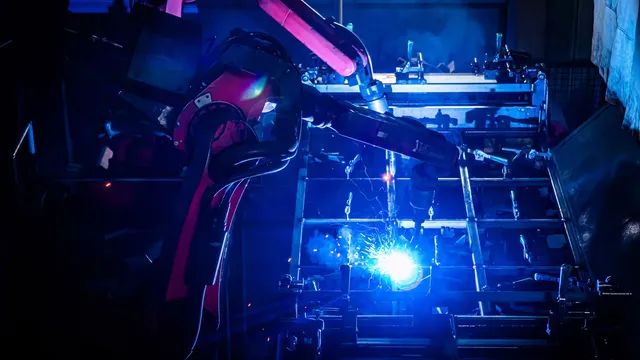
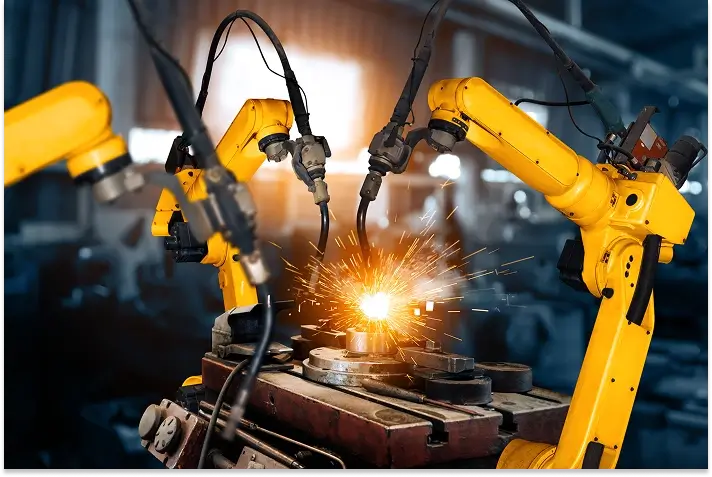
Laser welding delivers high precision and repeatability, and thanks to its concentrated heat source, it causes much less thermal distortion than arc welding with MIG/MAG or TIG methods. This matters a great deal for thin sheet metal and parts with tight tolerances. However, it requires precise edge preparation and fit-up, because the allowable gap in the joint is very small. The choice of technology therefore depends on the nature of production:
- Laser welding pays off when you run large series, need high repeatability, work with thin sheet metal, and must keep thermal distortion to a minimum.
- Arc welding (manual or robotic) is sufficient when you produce short runs or prototypes, join large-size components, or your joints have larger assembly clearances.
A mature partner offers both technologies and selects the right one for each specific part, rather than fitting the job to the only machine on its shop floor.
Corrosion protection: hot-dip galvanizing and zinc electroplating
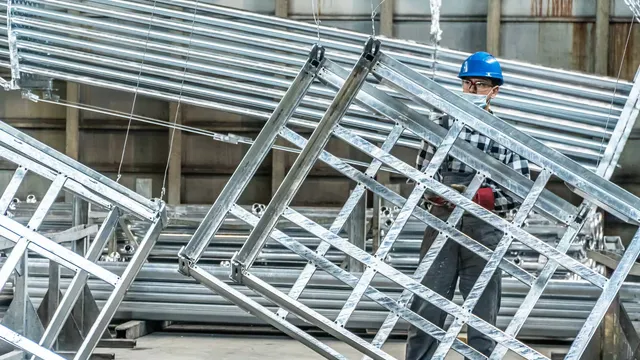
The choice of zinc coating depends on the type of part and its operating environment. In the automotive supply chain, hot-dip galvanizing is used primarily for frames and structural components of commercial vehicles, trailers, and machinery, as well as for plant logistics equipment. Small parts with tight tolerances, such as fasteners or brackets, are usually protected by zinc electroplating.
The coating is selected according to the corrosivity category of the environment, from C1 in heated interiors to C5 and CX in industrial and marine environments. The minimum thickness of a hot-dip coating is specified in EN ISO 1461 and depends on the steel thickness: the average coating thickness ranges from 45 µm for sheet metal thinner than 1.5 mm to 85 µm for steel thicker than 6 mm. Ask your subcontractor about compliance with this standard and for coating thickness measurement reports.
One supplier or several specialized subcontractors?
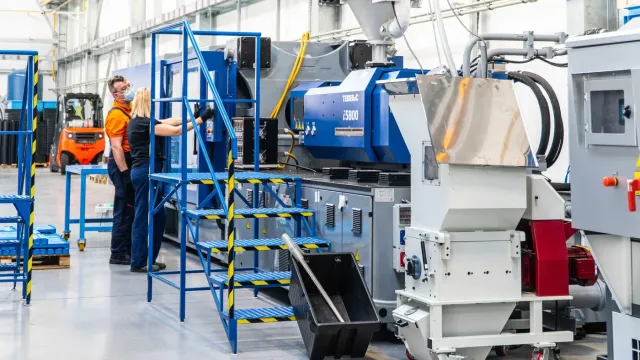
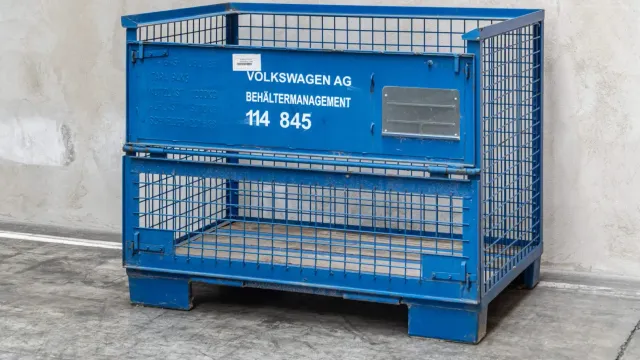
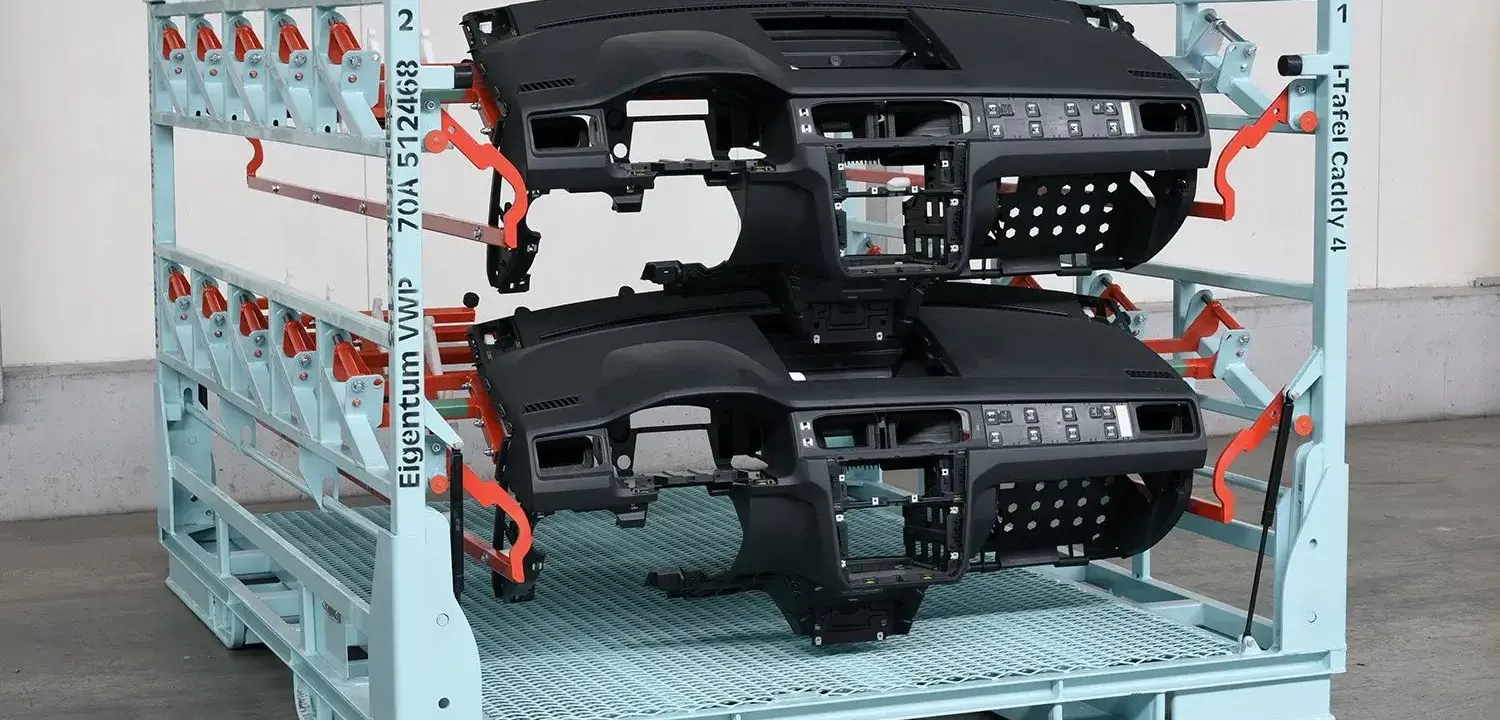
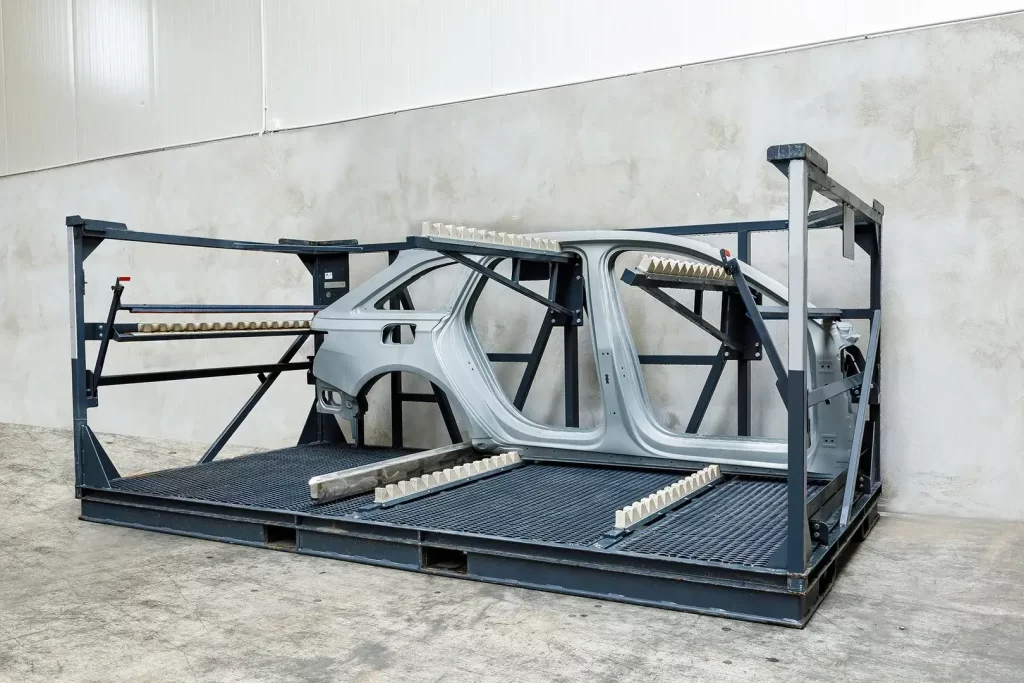
The most frequently underestimated risk in contract manufacturing is logistics between operations. When a part travels from the welding shop to the galvanizing plant and from there to yet another facility, each transport extends lead time, adds cost, and creates another point where documentation continuity can easily be lost. Strumet’s under-one-roof model combines metalworking, welding, and galvanizing with the production of pallets and containers for automotive parts and plastic injection molding. This eliminates gaps between operations and places responsibility for quality on a single entity.
| Criterion | One full-service supplier | Several specialized subcontractors |
|---|---|---|
| Transport between operations | None or minimal, within the plant | Repeated, causing costs and delays |
| Supplier audits | One audit process | A separate audit for each partner |
| Responsibility for quality | One point of contact and accountability | Dispersed, with a risk of shifting blame |
| Response time to changes | Short, with one point of coordination | Longer, dependent on the weakest link |
| Traceability | One documentation system | Data scattered across several systems |
For a purchasing manager, this means fewer contracts, fewer audits, and one address for complaints, plus a shorter overall lead time.
Checklist: verify your subcontractor before signing a contract
Before you make a decision, ask a potential subcontractor specific questions and request documents supporting each answer:
- Certifications: does it hold IATF 16949 or ISO 9001, a TISAX label (at which level, AL2 or AL3?), and for welded parts, also EN ISO 3834-2 and EN 1090? You can verify an IATF certificate by its number on the IATF Certificate Validity Check portal, and the supplier should share its TISAX result via the ENX portal.
- Production capacity: what monthly volume can it sustain, and how much reserve does it have for order growth?
- Automotive references: which OEMs or Tier 1 and Tier 2 suppliers does it already work for?
- Ramp-up time: how long does it take to go from prototype to approved series production, including the PPAP process, and at which PPAP level does it have experience?
- In-house scope: which processes does it perform in its own plant, and which does it outsource?
- Traceability and documentation: how does it record process parameters, and how will it link a finished part to its material batch?
- Contingency plans: what happens to deliveries if a key machine breaks down or utilities are interrupted?
Strumet combines EN 1090, EN ISO 3834-2, EN 15085, and TISAX certifications with metalworking, welding, hot-dip galvanizing and zinc electroplating, transport container production, and plastics processing in a single plant. If you are looking for a partner for an automotive project, explore our industrial contract manufacturing services and send us your technical documentation to receive a quote tailored to your project.
FAQ: common questions about industrial contract manufacturing in automotive
Does a metalworking subcontractor for automotive need TISAX certification?
If it is going to receive design data, drawings, or prototypes marked as confidential by the customer, in practice, yes. OEMs pass the TISAX requirement down to subsequent tiers of the supply chain and specify the required assessment level (AL2 or AL3) in the contract. Without a valid label, participation in new projects is usually impossible.
Is laser welding more expensive than manual welding, and when is it worth choosing?
The hourly cost of a laser welding station is higher due to equipment prices and joint preparation requirements. For large series, thin sheet metal, and high repeatability requirements, laser welding quickly pays for itself through shorter welding times and fewer corrections for distortion. Manual welding remains cost-effective for short runs, prototypes, and large-size components.
How does hot-dip galvanizing differ from zinc electroplating when choosing a subcontractor?
Hot-dip galvanizing creates a thick coating, usually from 50 to 100 µm or more, that withstands aggressive environments, which makes it well suited for structures and frames used outdoors. An electroplated coating is typically 3 to 25 µm thick, looks attractive, and does not significantly change dimensions, so it works well for small parts with tight tolerances, although it provides shorter corrosion protection.
Can one supplier handle both metalworking and transport containers for a single production line?
Yes. A partner with a broad range of services can supply both the components and dedicated containers or pallets for transporting them, designing the packaging around the geometry of a specific part. This simplifies logistics and reduces the risk of parts being damaged on their way to the assembly line.
How long does it take to onboard a new automotive subcontractor, from design to series production?
For simple parts made with existing tooling, it can take a few weeks. If welding fixtures need to be designed, trials carried out, and the full PPAP process completed, onboarding usually takes several months. The timeline depends mostly on part complexity, the required PPAP level, and the subcontractor’s experience in launching series production.