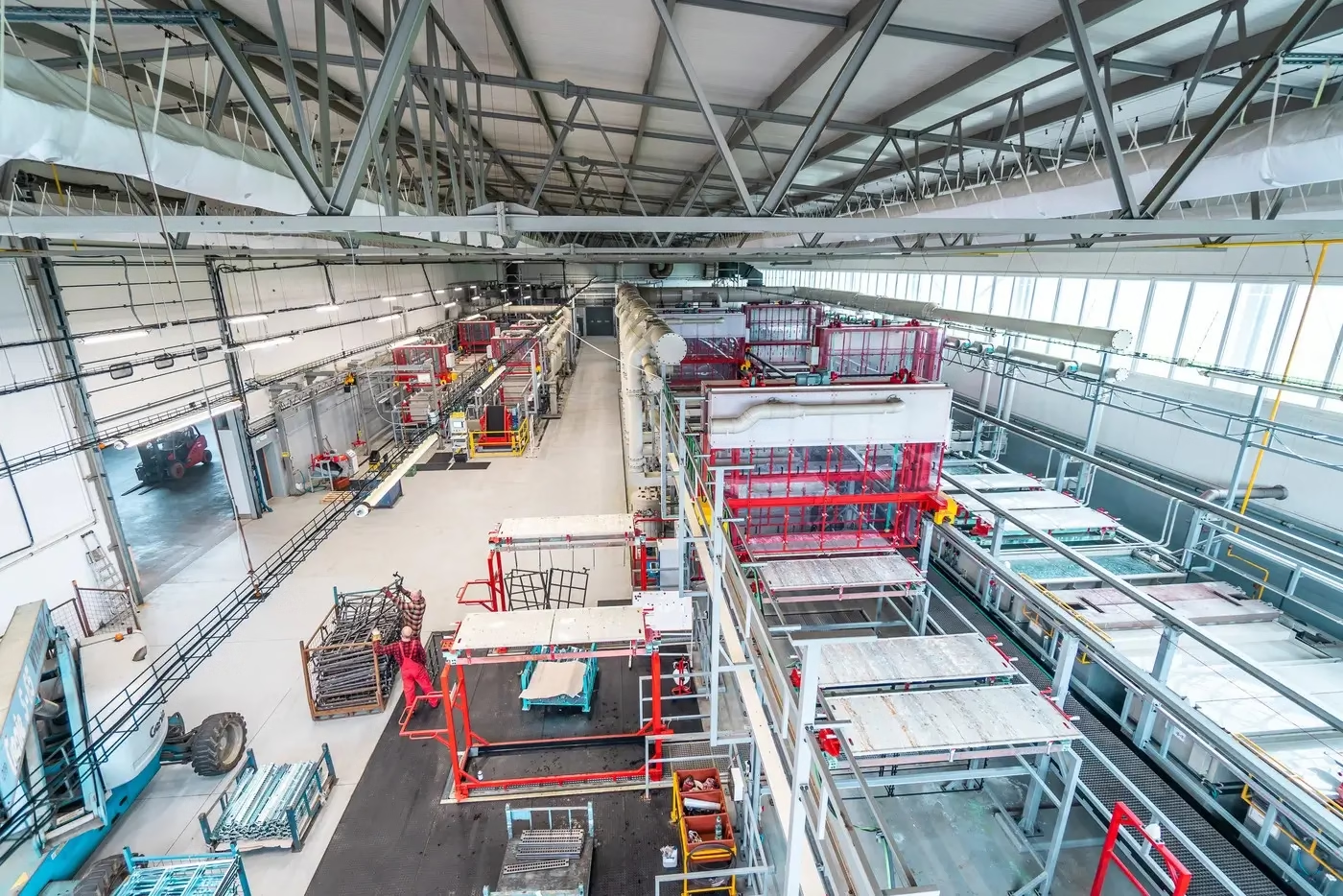
Hot-dip galvanizing This is one of the most effective methods of protecting steel from corrosion. At our plant, we treat this step as important as the production of the components themselves. The zinc coating is designed to last for decades, so we pay attention to every detail of our work. We protect structures in demanding atmospheric, industrial, and mechanical conditions, and we conduct each stage of the process with full awareness and responsibility.
Zinc is a metallic element found in air, soil, and water. It is environmentally friendly and can be recycled. These properties make the zinc layer effective in protecting steel against corrosion and safe for the environment. Below, we describe how we work and what makes the coatings we create durable, stable, and ensure long-term safety and high operational efficiency.
Surface preparation in the hot-dip galvanizing process
The steel that arrives at our plant is not yet prepared for permanent bonding with zinc. It contains residues from production processes, layers of fats and grease, mill scale, corrosion, and contamination from transportation and storage. Because none of these elements interact with zinc, the structure's surface must be precisely and evenly treated. cleansed.
The first step we perform is degreasing. The steel goes to chemical baths, where we remove residual oils, greases, and any organic substances accumulated during production, transport, or storage. This process reveals the true condition of the surface, preparing it for subsequent operations and eliminating elements that could interfere with chemical reactions in subsequent stages. The degreased steel is still unsuitable for galvanizing, but it is now sufficiently clean to proceed to the next stage of processing.
Then we conduct etching in acid solution. This step is crucial because we remove mill scale, oxidation products, and hard, difficult-to-remove layers formed during previous metalworking processes. The material thus exposed gains a structure that allows for durable and even bonding with the molten zinc. It is at this point that we can assess the actual surface quality, notice minor irregularities or cutting residues and, if necessary, correct them before moving on to the next stages.
After the digestion is finished, we move on to rinsing and fluxing. We remove any acid residue and then apply a flux, which creates a thin, even layer that protects the steel from immediate oxidation. We prepare the surface so the zinc can fully react with it, ensuring the highest quality coating. This step is invisible to the naked eye, but it's crucial, as the flux determines whether the zinc bonds evenly and permanently with the steel. Without this preparation, the coating would be unstable, with patchy areas and weakened adhesion.
Only after proper surface preparation can we proceed to the actual galvanizing process.
Hot-dip galvanizing at Strumet – zinc-steel reaction
When we prepare the elements, they go into a zinc bath at a temperature of approximately 450 °C. Under these conditions, the zinc becomes liquid and comes into direct contact with the steel surface. At this point, the zinc begins to melt. diffusion, that is, the penetration of zinc into the metal structure and the formation of alloy layers. The coating we create in this way is not simply applied to the surface. It is formed as a result reaction between zinc and steel, which gives it exceptional stability and resistance to loads that could damage other coatings. Each element gains a layered structure that is resistant to damage and weathering.
Each element reacts slightly differently during immersion. We take its specific characteristics into account and adjust the immersion time to ensure the coating is uniform and has reached the appropriate thickness. We maintain stable bath parameters and monitor the entire process, as even the slightest deviations can impact the final result. When the element is removed from the bath, the zinc begins to solidify and establish its structure. Cooling process It's essential – it can't be rushed or skipped. Proper cooling ensures the coating gains its full mechanical properties, allowing the structure to operate in harsh conditions for many years.
Quality control in the Strumet hot-dip galvanizing process
After the galvanizing process is complete, each component undergoes quality control. We do more than just verify compliance with the standard. PN-EN ISO 1461, because the standards define minimum values, and our goal is to obtain a stable coating with parameters ensuring long-term immunity. We analyze the layer thickness, uniformity, and continuity. We also check edges and areas particularly susceptible to process disturbances, such as welds and depressions. If any irregularities are detected, the part is returned for further processing or reprocessed.
Quality control We treat this as one of the most important stages of the entire process. We carefully check that each step has been performed correctly and that the coating has achieved its intended performance parameters. This is the only way to ensure that every component leaving our facility will be durable and resistant to external factors.
Durable zinc coating that will last for decades
The coatings we create through hot-dip galvanizing wear out extremely slowly. In temperate climates, annual wear is typically just 1-2 micrometers. With the coating thickness 70-100 micrometers This means protection for up to 100 years. Depending on the conditions, the structure remains fully protected for up to several decades, without the need for any intervention.
We consider the exceptional durability of the coating to be one of the greatest advantages of hot-dip galvanizing. No additional maintenance or refinishing is required. The structure can be used in full sun, under snow, in a humid or dry environment, with dynamic temperature changes, and the coating retains its properties and reliability. This level of resistance translates directly into economic benefits, as a one-time galvanizing operation eliminates the need for servicing or renovation, significantly reducing operating costs throughout the structure's lifespan.
Why is our process stable and effective?
At Strumet, we prioritize precision and repeatability at every stage of hot-dip galvanizing. We prepare the surface, pickle, flux, and dip the zinc, all while meticulously monitoring quality. Each step is crucial, and omissions or inaccuracies could impact the durability of the coating, which we always guarantee will maintain its full performance.
Our technological line allows hot-dip galvanizing to be carried out under fully controlled conditions. We monitor every step – the baths, temperature, and solution composition – and monitor steel reactions in real time. This allows us to create exceptionally resistant and durable coatings, regardless of the shape or size of the component. The result is reliable and long-lasting, and steel protected with hot-dip galvanizing retains its properties for decades. The hot-dip galvanizing process is not metallurgical, so it is not harmful to the environment. Every customer can be assured that their structures will remain intact. stable, reliable and ready to work in the harshest conditions, without the need for additional maintenance.


