Why Is Metal Protection So Important?
Corrosion is expensive. According to the World Corrosion Organization, it consumes about 3.4% of global GDP annually - in Poland, that means tens of billions of zlotys in damaged structures, installations, and machines. What makes these figures so high is not a lack of available solutions but errors in selection or the complete omission of surface protection at the production stage. Anodic and cathodic coatings have been solving this problem effectively for decades, provided you know when to reach for which.
What Are Anodic and Cathodic Coatings?
Both types protect metal against corrosion, but their mechanisms of action are completely different.
An anodic coating is a layer of aluminum oxide that grows out of the aluminum surface under the influence of an electric current in an acid bath. It is not applied from the outside; it is formed from the metal itself, which is why it is permanently bonded to it and does not chip off. A cathodic coating works the other way round: it is a foreign metal deposited by electroplating on steel, forming a tight barrier between the substrate and the environment. It works great as long as it is intact, but after mechanical damage it loses protection at that spot. Hence a simple rule: anodizing is the domain of aluminum, cathodic coatings the domain of steel.
Anodic Coatings - Characteristics, Features, and Properties
Depending on the process parameters, very different properties can be obtained. Type II anodizing gives a thin, decorative layer that readily accepts dyes, hence the anodized aluminum seen in so many colors in electronics, furniture, or lamp housings. Type III hard anodizing means a thickness of 25-150 µm and a hardness close to corundum, used wherever everyday use involves intensive abrasion, that is, in the machinery industry, hydraulics, and aviation. Type IV anodizing is a solution for truly extreme mechanical requirements.
In series production, anodizing is relatively inexpensive, requires no later maintenance, and offers a wide range of colors. Display cases, sports equipment, ventilation, and window profiles are environments in which this technology has been proving its worth for years.
Cathodic Coatings
Where conditions are extreme, cathodic coatings are hard to replace. Zinc, chromium, and nickel are the most commonly used materials, each chosen for different needs.
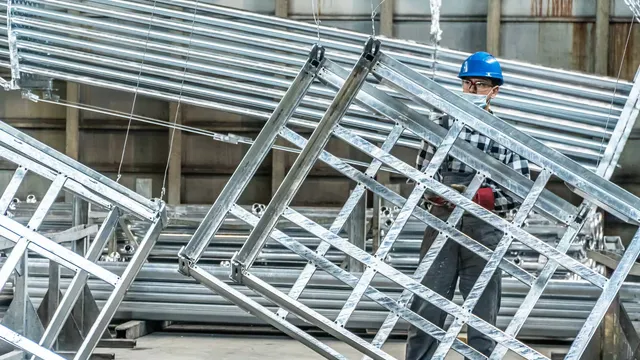
Zinc dominates the protection of structural steel, effective and inexpensive in both zinc electroplating and hot-dip galvanizing. Hard chrome has ruled in hydraulics and drives for decades, because no other material combines hardness with corrosion resistance so well. Nickel goes where both protection and aesthetics matter, that is, in fittings, precision electronics, and medicine. Cathodic electrocoating, in turn, has become the standard in the automotive industry because it is the only one that reaches every nook of the body, and it is thanks to it that modern cars rust many times more slowly than those from thirty years ago.
The weakness of cathodic coatings is their sensitivity to mechanical damage. A scratch exposes the substrate and requires quick repair, because corrosion can develop invisibly beneath it.
Key Differences Between Anodic and Cathodic Coatings
An anodic coating is part of the aluminum and retains its properties even after scratching. A cathodic coating is a barrier on steel, effective, but only as long as it is sealed. This is the most important difference in practice.
As for hardness, Type III and IV anodizing and hard chrome plating are the absolute top of commercially available solutions. Aesthetically, anodizing wins with its color flexibility, while chrome and nickel give a premium metallic shine. The cost of anodizing aluminum profiles is lower than that of chrome plating, although in aggressive operating environments a more expensive cathodic coating may prove to be a saving in the longer term.
Practical Applications: Where Are Anodic and Cathodic Coatings Used?
Anodized aluminum works best where appearance and maintenance-free resistance matter. Display cases, sports equipment, ventilation systems, and consumer electronics are areas where this technology has been the standard for years. The profiles are lightweight and durable, and everyday use does not make much of an impression on them.
Cathodic coatings are used where conditions are harsh. Ship hulls, car bodies, pipelines, and industrial tanks are environments in which exposure to salt, moisture, and chemicals is constant and intense. Here a tight barrier is not a luxury but a necessity, because the cost of the coating is a fraction of the cost of a failure.
How to Choose the Right Type of Coating?
The base material settles most cases. Aluminum means anodizing, steel means cathodic coatings. Then the operating environment and the way the part is used come into play. Aggressive conditions and constant contact with water or chemicals point to a cathodic coating. A moderate urban or industrial environment is an area where anodizing or galvanizing is entirely sufficient.
When choosing, it is worth looking at the total cost, not just the application cost. A cheaper coating that is regularly replaced can end up costing more than a better one applied once. In many cases, a combination of the two technologies also works well: zinc plating under powder coating, or anodizing with additional sealing.
The Future of Anodic and Cathodic Coatings
Hexavalent chromium is gradually being phased out by REACH regulations, which forces the industry to look for replacements. Trivalent chromium and new metallic alloys are making progress, although in some parameters they do not yet match their predecessor.
Nanotechnology opens up new possibilities here. Anodic coatings with silver nanoparticles gain antibacterial properties, and metal-ceramic nanocomposites reach hardness levels previously unattainable commercially. Self-healing coatings, which release corrosion inhibitors at the point of damage, are already working in aviation and premium automotive and will probably see wider use within a few years.
FAQ - Frequently Asked Questions About Anodic and Cathodic Coatings
- Are the coatings durable? Hard anodizing lasts for decades even in demanding conditions. Chrome and nickel coatings, with good maintenance, last for the entire life cycle of the product. What matters is matching the coating to the operating conditions.
- What is the difference in price? Anodizing a batch of profiles is one of the cheaper finishing processes. Chrome plating and nickel plating are more expensive in terms of both materials and process. Cathodic electrocoating requires a large investment in a process line and pays off with larger volumes.
- Can I combine the two types? In a single structure, yes, but care must be taken to insulate the contacts between aluminum and steel in order to avoid galvanic corrosion.
- Are the coatings environmentally friendly? Anodizing is safe; aluminum oxide is chemically inert. Chrome plating with Cr6+ is toxic and regulated, and the industry is moving away from it. Cathodic electrocoating with waterborne paints has low VOC emissions and is today the environmental standard in the automotive industry.
- How should they be maintained? Anodized aluminum only needs to be washed with a mild detergent. Chrome and nickel coatings should be cleaned of salt and dirt. When a cathodic coating is damaged, it is not worth delaying.
- Is it worth investing? The cost of the coating is a few percent of the value of the part. The cost of replacing a corroded component is many times that amount. A well-chosen coating always pays off.