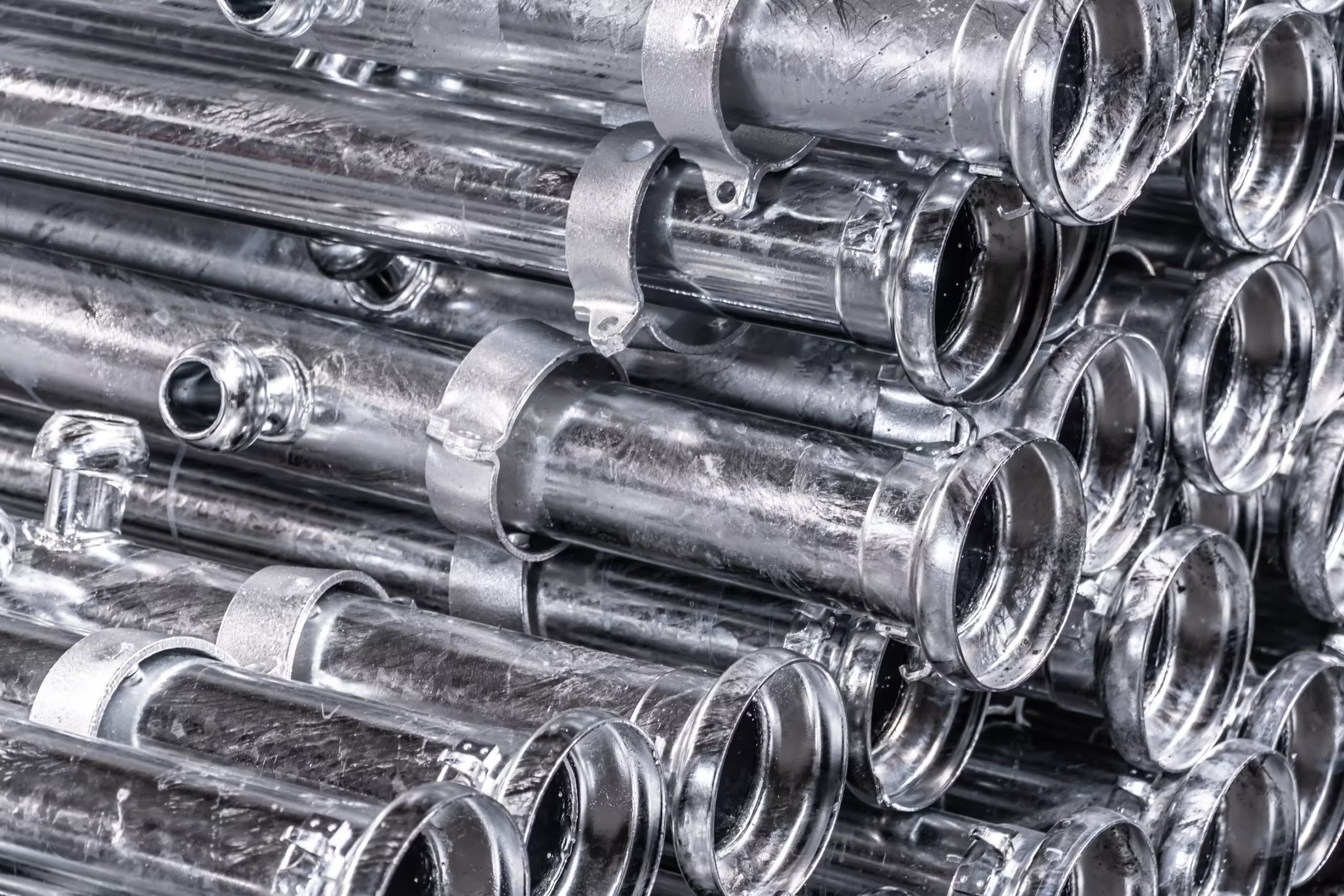
The investor chooses galvanized sheet metal This is precisely to avoid rust problems. He pays more and chooses a reliable supplier. And after a few years, a familiar reddish-brown coating appears on the facade or roof. Where does it come from?
Well done zinc coating can protect steel for 20, 30 or even 50 years. Rusting of galvanized sheet metal However, it almost always has a specific cause, whether it's poor galvanizing, an aggressive environment, an assembly error, or an unfortunate combination of metals. Understanding these causes is key to avoiding problems or effectively repairing them when they do occur.
How zinc protection works
Zinc protects steel in two ways at once, and it is this dual protection that makes it so valued. The first is physical barrier. Coating applied by the method hot-dip galvanizing at a temperature of about 450°C it creates a tight layer with a thickness of several to even 100 micrometers, which effectively separates the steel from oxygen and moisture that drive corrosion.
The second mechanism is cathodic protection. Zinc is more reactive than iron, so when exposed to a moist environment, it acts as an anode and corrodes first, protecting the underlying steel. This mechanism works even with minor scratches, although once the coating is severely damaged or the zinc has exhausted its protective capacity, rusting becomes a matter of time.
Poor quality of galvanizing – insufficient coating thickness
Standard PN-EN ISO 1461 specifies the minimum coating thickness, and for sheets above 6 mm it is at least 85 µm. However, some galvanizing plants produce coatings thinner than required, and the difference is invisible to the naked eye. Instead of 70 µm, they produce 30 µm, which means the material only lasts 25 years instead of 25 years. 5 to 7 years.
Protection against this problem is certificates of compliance with the standard and documentation confirming the coating thickness. For larger orders, it is worth commissioning an independent measurement using electromagnetic meters, because they provide hard data without having to destroy the shell.
Environmental conditions – salt, moisture and aggressive atmospheres
Zinc performs well in a typical urban or rural environment, but does less well when conditions become particularly aggressive.
The biggest enemy of zinc is chlorides, i.e. salt. Sea salt and road salt attack the coating in a similar way, as chloride ions penetrate the protective layer and initiate corrosion from within. Therefore, sheet metal installed 500 meters from the seashore ages several times faster than identical sheet metal in a mountain resort. Also posing a serious threat are sulfur and nitrogen oxides present in the air of industrial cities, which, when combined with moisture, create weak acids that shorten the life of the coating by up to 50-70%.
A separate problem are the places where water accumulates, such as horizontal sheet metal shelves or mounting recesses. Standing water prevents the zinc from drying out, which is a necessary part of its natural regeneration cycle.
Coating damage – scratches, scuffs and carelessness during processing
Sheet metal dragged across a concrete floor, cutting with a square without edge protection or welding Without subsequent weld protection, these are classic mistakes that, in a matter of minutes, destroy protection that took hours to apply. A scratch in the coating is not an aesthetic problem, but a starting point for corrosion.
The damaged area loses its physical barrier, and the electrochemical protection is so limited that rusting begins quickly in the event of extensive damage or aggressive conditions. The solution is to use soft pads during transport and immediately protect any damage. zinc paint or zinc spray, because an hour of neglect can cost months of repair work.
Galvanic connections – electrochemical rusting between metals
When two different metals come into contact in the presence of moisture, corrosion occurs. galvanic corrosion, in which the more reactive metal corrodes, protecting the less reactive one. In the case of galvanized sheet metal, zinc may be the victim.
A classic example is galvanized sheet metal connected copper screws or with stainless steel, because copper and stainless steel are much less reactive than zinc in electrochemical series. Zinc degrades rapidly near such a junction. To prevent this, insulating pads made of plastic or nylon, butyl tapes and galvanized screws instead of copper. In the warehouse, different materials should be kept separate to eliminate the risk of corrosion even during storage.
Zinc patina – natural aging or real rusting?
Freshly galvanized sheet metal loses its metallic sheen over time and becomes dull, gray, with white or yellowish spots, which is completely normal. This is not rust, but zinc patina, a thin layer of zinc oxide formed upon contact with the atmosphere. The patina seals the surface and slows down further oxidation, acting as an additional protective layer.
Distinguishing patina from rust is simple. Patina It is white or gray, does not stain fingers and does not leave marks on the surface. Rust is brown or orange, leaves marks, and the metal degradation is visible underneath. If after rubbing with a steel brush, you can see raw shiny metal, it is patina. If there are visible pitting and brown powder penetrating deep, time for intervention.
How to prevent galvanized sheet metal from rusting
The starting point is the selection of a galvanizing plant certificate of compliance with the PN-EN ISO 1461 standard, because it is the quality of the galvanizing that determines how many years the material will operate without problems. During transport, soft spacers and rubber pads protect the coating from scratches, and the material should be stored in a dry and airy place away from other metals. In a damp, closed warehouse, corrosion can occur. white rust, i.e. uncontrolled formation of zinc oxide without access to air.
During installation, any damage to the coating should be immediately repaired. zinc paint or spray, and connections between dissimilar metals are adequately insulated to eliminate the risk of galvanic corrosion. In coastal or industrial environments, additional painting is required. epoxy or polyurethane coating significantly extends the life of the sheet metal. Regular cleaning after winter removes salt and pollutants, before they can cause serious damage.
How to repair rusting galvanized sheet metal
The quicker the response, the lower the repair cost, so don't delay even if you notice minor signs of corrosion. For small rust spots, simply clean the area. steel brush, degrease with acetone and apply zinc renovation paint. However, a few winter cycles without intervention can turn minor discoloration into a costly problem, so it's worth reacting immediately.
Moderate damage requires cleaning the surface. angle grinder for clean metal and priming epoxy paint with the addition of zinc. Large areas of corrosion, however, require either rezincification by a specialist, or replacing the sheet metal. Rezincification makes sense for high-value items, while for simpler ones, replacement can be more cost-effective. In all cases, careful degreasing and cleaning the surface is absolutely essential, as paint applied to a contaminated surface will fall off after the first winter and double the cost instead of solving the problem.


