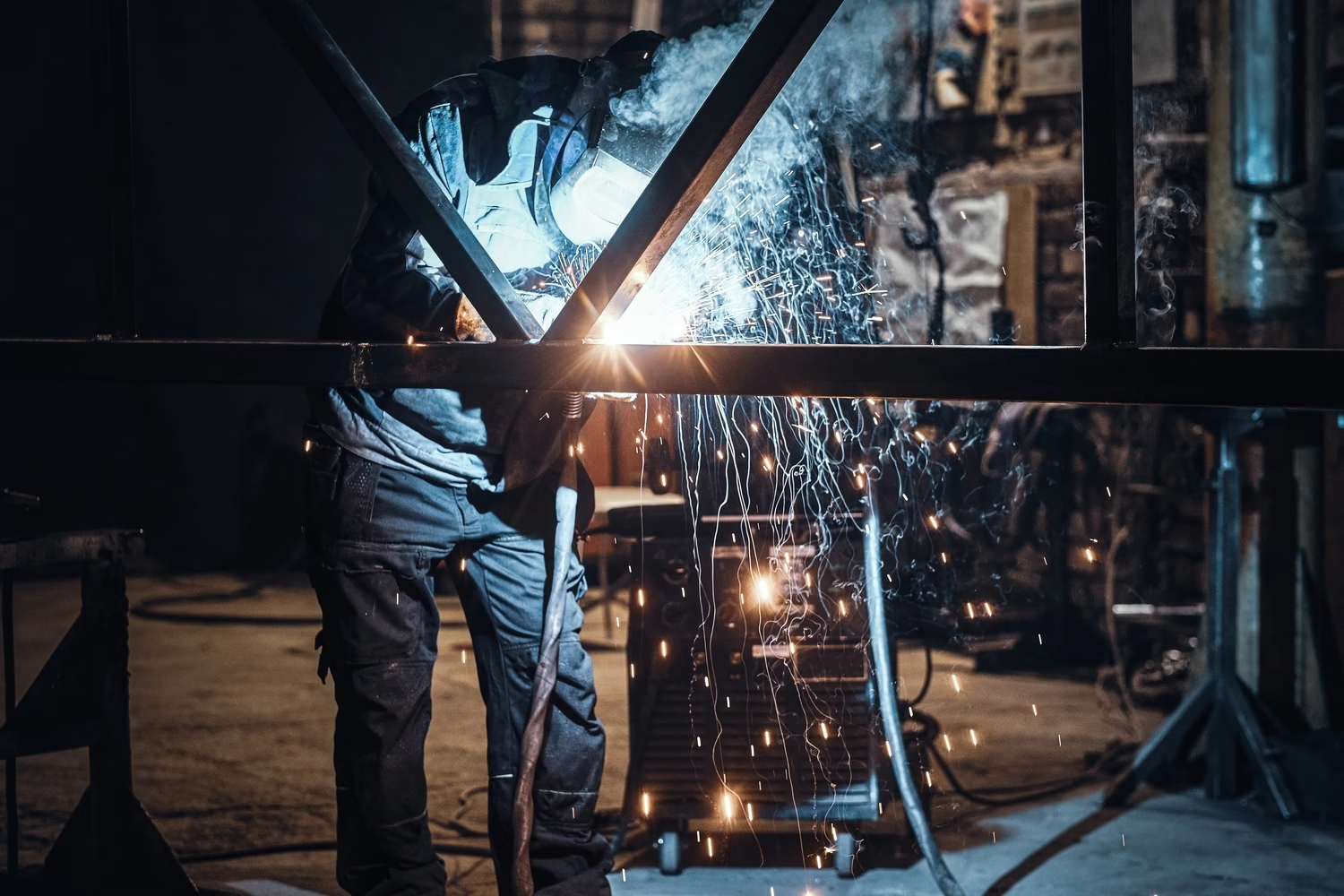
Welding galvanized steel is a classic example of a situation where two metals with extremely different properties must be combined in a single joint. Zinc vaporizes at a temperature at which steel begins to soften, and this single difference creates all the usual problems—from weld porosity, to an unstable arc, to toxic zinc oxide fumes. How can these challenges be overcome and a durable, well-protected joint be achieved?
Can galvanized steel be welded?
Yes – galvanized steel is ordinary steel covered with a layer of zinc, so it can be joined using the same methods as black steel. However, this will only work under certain additional conditions: you need remove the zinc coating from the weld zone and ensure effective ventilation. Skipping any of these steps will result in a faulty weld and a real risk to the welder's health.
Why is welding galvanized steel more difficult?
The crux of the problem is the temperature difference between zinc and steel. Zinc melts at approximately 419°C, and evaporates at approximately 907°C, while steel melts only at around 1500°C. This means that in the welding arc, the zinc boils and evaporates rapidly before the base material has a chance to melt.
The effects of this phenomenon are primarily:
- Weld porosity – zinc vapors trapped in the solidifying weld pool create gas bubbles that weaken the joint.
- Unstable arc and chipping – evaporating zinc disturbs the arc glow and deteriorates the aesthetics of the weld face.
- Toxic fumes – evaporated zinc oxidizes in air to zinc oxide (ZnO), producing characteristic white-greenish smoke.
This is why the zinc is removed from the welding zone instead of being "burned" by the arc.
Zinc fumes – health and safety hazards when welding galvanized steel
Inhaling zinc oxide smoke causes metal fever (also called zinc fever or foundry fever). a respiratory disease typical of welders, producing a flu-like syndrome: chills, fever, muscle and headache pain, and a metallic taste in the mouth. Symptoms usually appear several hours after exposure and resolve spontaneously within 24–48 hours, but with repeated exposure, they become a recurring condition.
The basic measure to reduce the concentration of harmful fumes at the welding station is mechanical ventilation. In practice, this means:
- work with local exhaust (the hood is placed behind the burner) or in a well-ventilated room;
- use of a half-mask with a dust filter, and in worse conditions – a respirator with air supply;
- when doing occasional work outdoors – position yourself so that the smoke is removed away from the respiratory tract.
How to weld galvanized steel step by step?
The process itself is not drastically different from welding black steel, but there are two additional steps: surface preparation and restoration of anti-corrosion protection.
Surface preparation - removal of zinc from the weld zone
The zinc coating should be grind in a strip approximately 1–2 cm wide on both sides of the future weld, until clean, metallic steel is exposed. An angle grinder with a flap disc or wire brush works best. After sanding, it's a good idea to degrease and dry the surface. The more thoroughly you remove the zinc, the lower the risk of porosity and the more stable the arc.
Electrode welding of galvanized steel (MMA)
Welding galvanized steel with a coated electrode is a popular method in the workshop and in the field, because it does not require gas shielding and tolerates field conditions well.
- Use rutile or basic electrodes appropriate to the steel grade.
- Lead the way short bow and a slightly slower feed to give the zinc vapors time to escape from the pool.
- For thicker elements, light swinging movements can be helpful, as they "degas" the weld.
- Carefully remove slag between stitches.
Welding of galvanized sheet metal using the MIG/MAG method
Welding galvanized sheet metal using the MIG/MAG method is most popular for thinner sections, as it provides high efficiency and a smooth finish. Recommendations for this method include:
- solid wire (e.g. G3Si1) or flux-cored wire, shielding gas with CO₂ (Ar/CO₂ mixtures);
- technique „"pulling"” torch from the weld (this moves the smoke away from the weld pool and improves fusion);
- slightly higher voltage and controlled wire feed (to reduce spatter);
- in the case of thin sheet metal, intermittent welding (spot stitches) is used to avoid burning through the material.
Method | Typical use | Key principle |
MMA (electrode) | Workshop, field work, thicker elements | Short arc, slower feed |
MIG/MAG | Thin and medium sheets, mass production | Pulling technique, splatter control |
How to restore the zinc coating after welding?
A zinc-depleted weld is the weakest point in the entire structure's corrosion protection – the exposed steel begins to rust exactly where the coating has been removed and vaporized. Therefore, after welding, the coating must be recreated. zinc coating. According to the EN ISO 1461 standard, three repair methods are used:
- Zinc paints and pastes – applied by brush or spray, most convenient on the construction site; should contain a high proportion of zinc (around 80% and more in the dry coating).
- Spray metallization (thermal zinc spraying according to ISO 2063) – durable but economical, mainly in factory conditions,
- Zinc sticks low melting point – for minor corrections on horizontal surfaces.
Industry guidelines (including those of EGGA Galvanizers Association) indicate that the reconstructed coating should have thickness of at least 100 µm, and the total repair area should not exceed 0.5% of the element surface - in case of larger losses, the element should be re-galvanized.
Welding before or after galvanizing – which is more profitable?
In most steel structures it is best to first weld the entire element and only then galvanize it in its entirety. This approach has advantages over welding pre-fabricated, galvanized profiles:
- the welds are zinc-coated along with the rest of the structure, so there are no exposed "weak spots";
- the coating is uniform and continuous, even in nooks and crannies and inside closed profiles;
- there is no need for labor-intensive zinc removal, fume extraction and manual restoration of protection.
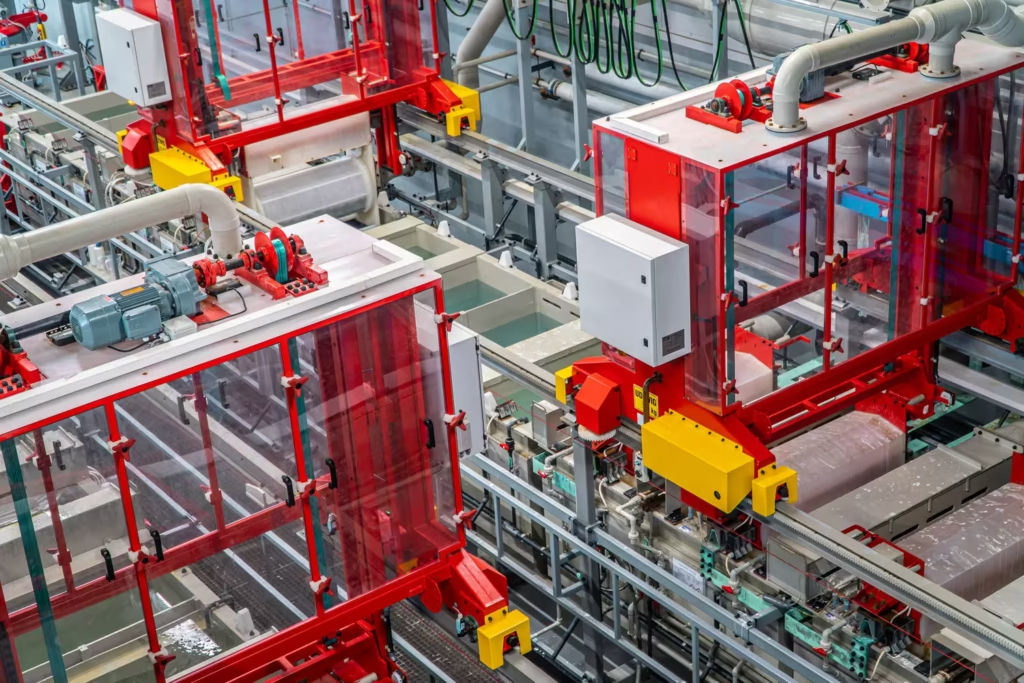
For load-bearing structures and components used outdoors, hot-dip galvanizing of the finished structure is standard, with all welds also covered. You can have this done at Strumet – we offer the largest hot-dip galvanizing plant in the Podbeskidzie region. The dip-applied coating covers the entire structure and has an average durability of 30 years.
FAQ – frequently asked questions about welding galvanized steel
Can galvanized steel be welded?
Yes. Galvanized steel is steel with a zinc coating, so it can be welded using standard methods, provided the zinc is removed from the weld zone and ventilation is provided.
How to weld galvanized steel?
Most often, it's done with a coated electrode (MMA) or the MIG/MAG method. The choice of method depends on the material thickness and working conditions – MMA is the winner in the field, while MIG/MAG is the winner on thin sheets.
How to weld galvanized steel with a mig machine (MIG/MAG)?
Grind the zinc, use a pulling technique (away from the weld) and control the welding parameters to minimize spatter. For thin sheet metal, weld intermittently to avoid burning through the material.
How to weld galvanized steel with an electrode?
After removing the zinc, weld with a short arc and a slightly slower feed rate, giving the zinc vapor time to escape from the weld pool. Carefully remove the slag between passes.
How to protect the weld after welding galvanized sheet metal?
Restore the zinc coating with high-zinc paint or zinc paste, or by thermal spraying, to a thickness of at least 100 µm. An exposed weld will quickly corrode.