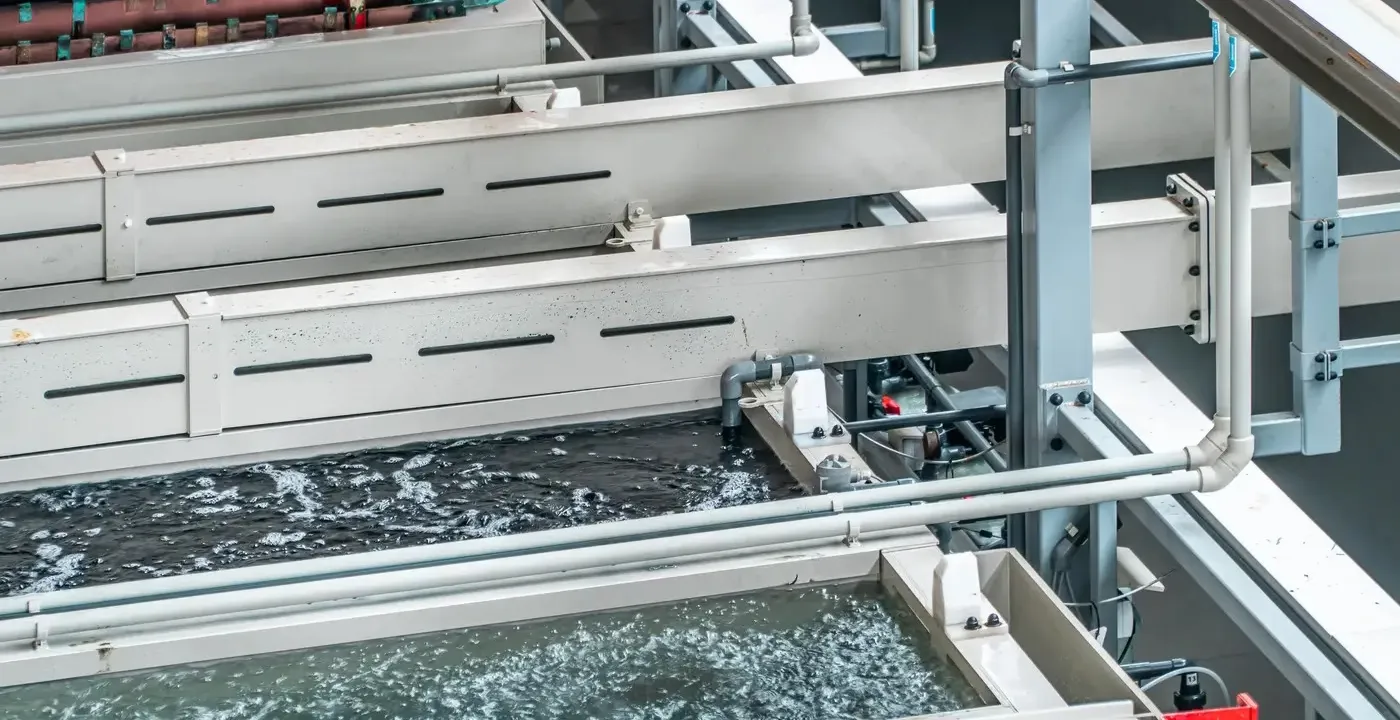
Two zinc coatings of the same nominal thickness can differ in corrosion resistance by a factor of several - and this is no coincidence. Whether zinc deposits as a compact, fine-grained layer that protects steel for years, or as a porous structure that starts cracking at the first deformation, is determined by the composition of the electroplating bath and the precision with which its parameters are maintained. Zinc ion concentration, electrolyte pH, bath temperature, current density, the type and amount of organic additives - each of these variables affects the coating microstructure in a measurable and predictable way. Let us look at the relationships involved and how they translate into the practical durability of zinc-plated components.
The Electroplating Bath - Composition and Its Role in Corrosion Protection
An electroplating bath is an electrolytic solution in which, under the influence of electric current, zinc ions are deposited on the surface of a metal part, forming a compact protective coating. In a typical zinc bath, three groups of components can be distinguished:
- Electrolyte - most often a solution of potassium chloride or sodium hydroxide (in alkaline baths), providing the ionic conductivity of the solution.
- Source of zinc ions - zinc sulfate (ZnSO₄) in acid baths or sodium zincate in alkaline ones.
- Organic and inorganic additives - brighteners, leveling agents and wetting agents, responsible for the coating microstructure, gloss and deposition uniformity.
In the process of metal electroplating, a precisely set bath composition is the foundation of effective corrosion protection. Even a small deviation (a shortage of leveling agent, an excess of organic contaminants, too few zinc ions) can result in a porous, brittle or uneven coating. Such a coating, although visually acceptable, will not fulfill its protective function where durability matters.

How Do Electroplating Bath Parameters Affect Zinc Coating Thickness?
Coating thickness is not a matter of chance, nor even of the experience of the staff of an electroplating shop. It is the result of specific, measurable process parameters - and each of them works differently.
Current and Plating Time
Current density (A/dm²) is the main regulator of the zinc deposition rate. The higher it is, the faster the coating grows. Typical thicknesses of electrodeposited zinc coatings are in the range of 3-25 µm:
- 3-8 µm - decorative and lightly corrosive applications,
- 8-15 µm - standard in the automotive and machinery industries,
- 15-25 µm - environments with increased corrosive aggressiveness.
Too high a current density (exceeding the limiting cathodic current) leads to so-called coating burn - deposition of loose, dendritic zinc with low adhesion. The right current density is always a compromise between efficiency and quality. This relationship is confirmed, among others, by research published in MDPI Coatings (2024), which showed that electrolyte composition and plating time jointly determine the optimal coating thickness, and that theoretical formulas for calculating it have limited accuracy - actual results consistently deviate from predictions in favor of thicker deposits.
Electrolyte Temperature and pH
Bath temperature affects electrolyte conductivity and ion diffusion. In acid baths the process is carried out at 18-35°C, in alkaline ones at 20-30°C. A higher temperature accelerates ionic mobility and improves deposition uniformity, but may destabilize organic additives.
pH is a critical parameter. Optimal values are 5.5-6.5 for chloride baths and above 12 for alkaline ones. A deviation of even 0.5 units can lead to increased coating porosity, poorer adhesion or precipitation of sludge that blocks the anodes.
Zinc Concentration in the Solution
Zinc concentration (g/l) affects the availability of ions for deposition and shapes the coating structure. In chloride baths the typical ZnCl₂ concentration is 50-80 g/l, in alkaline ones approx. 8-14 g/l expressed as metallic zinc.
Too low a concentration results in uneven deposition, especially in recesses and holes, and in increased coating brittleness. Too high a concentration leads to a coarse-grained structure and reduced ductility, which is undesirable for components that are deformed after zinc plating. As research by the Fraunhofer Institute IPA published in MDPI Nanomaterials (2020) showed, the optimal ratio of zinc to sodium hydroxide in an alkaline bath (Zn:NaOH in the range of 0.067-0.092) provides even and compact deposits at a moderate deposition rate and low internal stresses in the coating.
Metal Electroplating and Coating Durability - What Cannot Be Seen with the Naked Eye?
The actual durability of a zinc coating is determined by its microstructural properties. A coating deposited from a well-balanced bath has a fine-grained, compact crystalline structure (lower porosity, better barrier properties), high thickness uniformity, including at edges and in holes, and good adhesion to the steel substrate.
The next stage that strengthens durability is passivation. When electroplating steel in industrial environments, the choice of its type is just as important as the thickness of the coating itself.
| Passivation type | Color | Properties |
| Clear (chromium-free) | Colorless / milky | Basic protection, environmentally friendly |
| Yellow (Cr³⁺) | Yellow-gold | Increased corrosion resistance, RoHS compliant |
| Titanium | Silvery blue | Aesthetic, good resistance |
| Black | Black | Decorative applications |
Quality Control in Professional Electroplating - The Laboratory as the Foundation of the Process
In electroplating shops with a low level of automation, bath composition is sometimes controlled irregularly. In professional plants the standard is different: an analytical laboratory carries out regular analyses of zinc concentration, pH and additive content; a computer system monitors parameters in real time; automated conveyors ensure repeatable immersion times.
The electroplating shop in Silesia owned by Strumet meets these requirements - the rack and barrel lines are fully automated, and the chemists of the analytical laboratory continuously monitor the composition of the solutions. Process solutions operate in a closed system, which eliminates industrial wastewater.

When Is Zinc Electroplating the Best Choice in the Fight Against Corrosion?
Zinc electroplating works best for:
- small parts and components with complex geometry - barrel plating makes it possible to zinc-plate small components (bolts, nuts, springs) effectively while maintaining uniform coating thickness,
- precisely controlled thickness - electroplating makes it possible to obtain thickness with a tolerance of ±1-2 µm, which the hot-dip method does not provide,
- combining protection with aesthetics - a bright coating with passivation is widely used in the automotive, electronics and construction industries,
- series production with high requirements - automation ensures repeatability that is impossible to achieve manually.
FAQ - Most Frequently Asked Questions About the Electroplating Bath
What is the difference between an alkaline and an acid bath in the metal electroplating process?
An acid bath provides high current efficiency and a good decorative effect, but is less tolerant of changes in parameters. An alkaline bath covers parts with complex geometry better thanks to higher throwing power, but requires tighter control of zinc concentration.
What zinc coating thickness effectively protects steel against corrosion?
The minimum thickness providing real protection is approx. 8 µm; below this value the coating protects only in the short term. In aggressive environments 15-25 µm is used, usually with additional passivation.
Does the composition of the electroplating bath have to be adjusted to the type of component being plated?
Yes - part geometry, steel type and required thickness affect the choice of bath, current density and passivation. A professional zinc electroplating plant has at least two lines and the ability to select parameters individually.
How long does a zinc coating applied by electroplating protect against corrosion?
A 12 µm coating with yellow passivation withstands over 200 hours in a salt spray test (ISO 9227). In real conditions - in an urban or industrial environment - it effectively protects steel for several to a dozen or so years.
If you are looking for a reliable partner for zinc electroplating, contact Strumet. We offer services on modern, automated lines with laboratory quality control and short lead times.