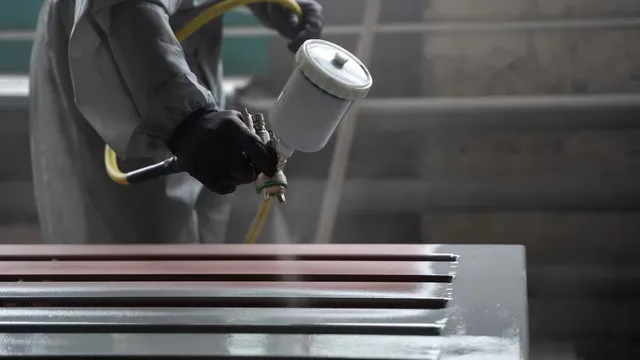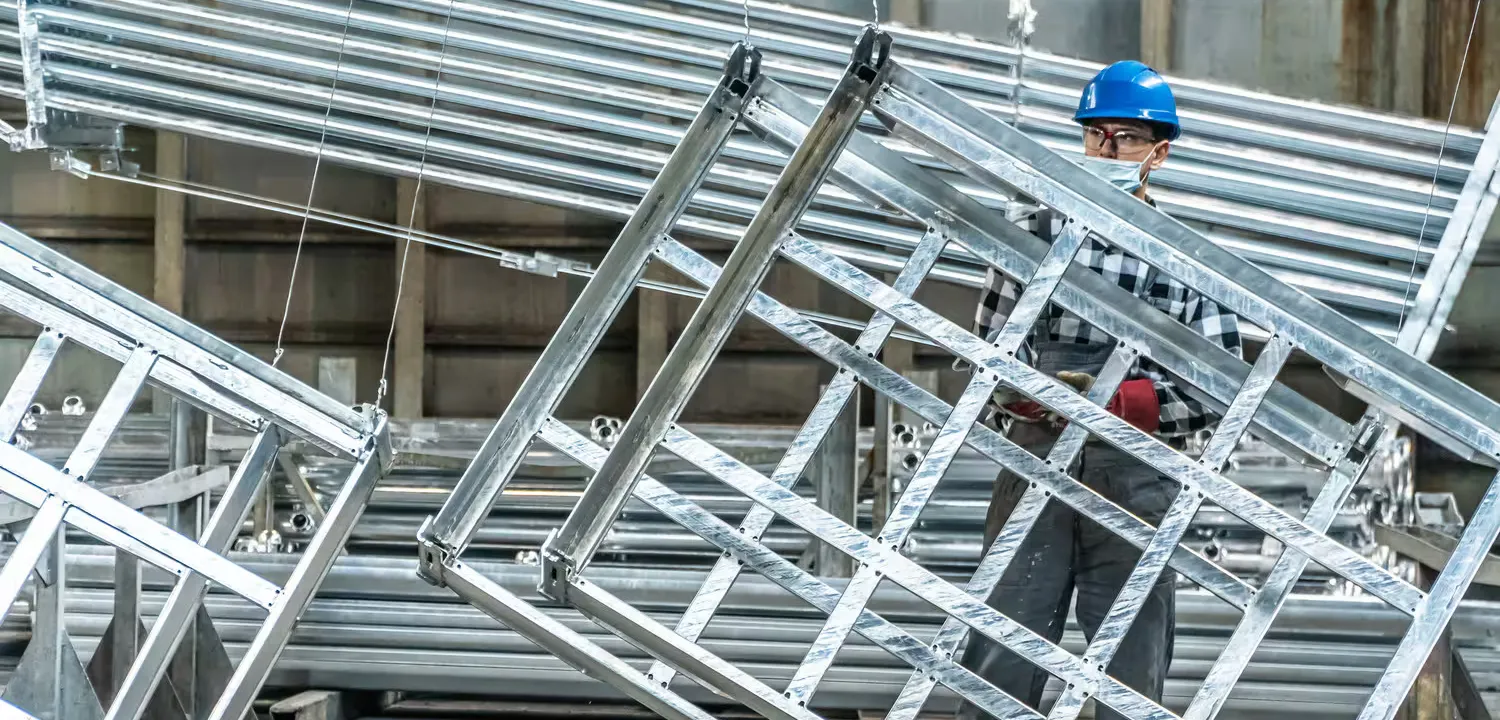
In procurement processes in the automotive, rail and defense industries, EN 1090 works as a pass/fail criterion: a supplier without a factory production control certificate is rejected before prices are even compared. The requirement applies to load-bearing structural components placed on the EU market as construction products and comes with CE marking, mandatory since July 1, 2014. The scope of the certificate covers the execution class (EXC), the type of material and the welding technologies. What matters to the buyer is therefore the scope of the document, the date of the last surveillance audit and the declaration of performance issued for the specific product.
What is the EN 1090 standard?
An EN 1090 certificate for steel structures confirms that the manufacturer has implemented and maintains a conformity assessment system in line with the harmonized European standard governing the execution of load-bearing steel and aluminum structures. Formally, a notified body issues a certificate of factory production control under assessment and verification of constancy of performance (AVCP) system 2+. Only this document allows the manufacturer to issue a declaration of performance and affix CE marking to a structural component placed on the European Union market, and without it a load-bearing steel structure cannot legally be placed on the market in the EU.
It is worth distinguishing the individual parts of the standard:
- EN 1090-1 – governs the assessment and verification of constancy of performance, the declaration of performance (DoP) and the rules for CE marking. This is the part on the basis of which the notified body issues the certificate.
- EN 1090-2 – describes the technical requirements for the execution of steel structures themselves: welding, tolerances, materials, inspection.
- EN 1090-3 – the counterpart of part two for aluminum structures.
The key element certified by the notified body is the implemented and supervised Factory Production Control (FPC) system. It is the FPC system, confirmed by the notified body, that distinguishes a certified manufacturer from a plant that merely declares quality.
EN 1090 requirements have applied across the entire EU since July 1, 2014, after the transition period ended. The legal environment of the standard is changing, however. The basis for CE marking has so far been Regulation (EU) No 305/2011 (CPR), which is being replaced by Regulation (EU) 2024/3110 from January 8, 2026. Harmonized standards published under the old regulation, including EN 1090-1, remain valid during the transition period, so nothing changes for the buyer for now: they still ask for an EN 1090 certificate and a declaration of performance.
Execution classes EXC1–EXC4 – what do they mean for the buyer?
The standard divides structures into four execution classes: from EXC1 (lowest) to EXC4 (highest). The class is assigned based on three factors: the consequence class of a potential failure (risk to life, economic loss), the service category related to the nature of the loads (static, fatigue, seismic) and the production category linked to the welding technology and the complexity of the product. The higher the class, the stricter the requirements for welder qualifications, the scope of non-destructive testing of joints and the level of detail in the documentation.
The supplier's certificate must cover a class equal to or higher than the one required for the structure being ordered. An EXC2 certificate does not authorize the production of components in class EXC3.
| Class | Typical application | Inspection requirement level |
| EXC1 | Low-risk components, agricultural buildings, secondary structures | Basic – visual inspection |
| EXC2 | Typical buildings, halls, floors, most construction structures | Standard – random NDT |
| EXC3 | Bridges, fatigue-loaded structures, cranes, high-rise buildings | Enhanced – extensive NDT |
| EXC4 | Structures with critical failure consequences (large bridges, special-purpose facilities) | Highest – full documentation and 100% inspection |
If the technical specification is silent on the execution class, the standard requires EXC2 to be assumed. Adding a single symbol to a request for quotation is therefore often cheaper than a dispute over the scope of testing at the acceptance stage. The higher the EXC class, the more rigorous the supplier's FPC system must also be: requirements for material traceability, welding procedures and supervision increase. That is why the scope of the certificate is just as important as the fact that it exists.
Why do the automotive, rail and defense industries require EN 1090 from suppliers?
In these industries, EN 1090 acts as an entry gate to the procurement process. The reason is structural: the end manufacturer – whether an automotive group or a rolling stock integrator – bears full responsibility for the final product, and with it for every component coming from the supply chain. It therefore passes the normative rigor on to sub-suppliers, demanding documented compliance instead of assurances. Without a certificate, an offer does not even pass the qualification stage, regardless of price.
Automotive and rail – why is one certificate rarely enough?
The mechanical quality of a structure alone is no longer a sufficient argument in a conversation with the purchasing department. In the automotive industry, a TISAX certificate counts at the same time, confirming the maturity of the information security system, because the supplier processes the customer's development and prototype data. In the rail industry, on the other hand, the key document is the EN 15085 standard, covering the welding of railway vehicles and their components. It divides plants into certification levels from CL1 to CL4, depending on the scope of and responsibility for welded joints, and supplements the general EN 1090 requirements with the specifics of rolling stock. Such a complete set makes it possible to qualify a single contractor as a multi-industry supplier.
Strumet combines an EN 1090 certificate with EN ISO 3834-2, EN 15085 and TISAX, so the buyer does not have to collect compliance confirmations from several different sub-suppliers.
EN 1090 certificate and the hot-dip galvanizing standard PN-EN ISO 1461
These are two separate but complementary standards. EN 1090 ensures that the load-bearing structure is made correctly: geometrically, in terms of welding and in terms of materials. The hot-dip galvanizing standard PN-EN ISO 1461, in turn, governs the quality and thickness of the zinc coating that protects this structure against corrosion. A correctly made frame without proper corrosion protection will not reach its expected service life, and the best coating will not fix execution defects. Only together do they guarantee the durability of the product for decades.
PN-EN ISO 1461 specifies minimum coating thicknesses depending on the thickness of the galvanized steel. According to the requirements described by the Galvanizers Association, for non-centrifuged articles made of steel thicker than 6 mm, the minimum mean coating thickness is 85 µm (610 g/m²) and the local value is 70 µm (505 g/m²). For the range above 3 mm up to 6 mm, these are 70 µm and 55 µm respectively. The thicker the material, the thicker the required coating.
This is particularly important for hot-dip galvanizing of large-size structures, where the element must fit in the galvanizing bath and the uniformity of the coating on long profiles can be a technological challenge. At the design stage, it is also worth settling the protection method itself, because the choice of coating is determined by the corrosivity category of the environment and the thickness of the detail.

How can you check whether a supplier actually holds a valid EN 1090 certificate?
Before you qualify a supplier, go through a simple verification checklist:
- Check the certificate number and the notified body. The certificate is issued by a notified body with a four-digit NB number. Verify its status in the NANDO database of notified bodies, maintained by the European Commission as part of the Single Market Compliance Space portal. If the body is not listed there, the certificate is worthless or forged.
- Verify the scope of the certificate. Check which execution class (EXC) it covers, which type of material and which welding technologies. The scope must cover your order. If you commission several processes from one contractor as part of industrial cooperation, review the documents for each of them separately.
- Check the expiry date and audit history. The FPC system is subject to periodic surveillance by the notified body. Ask for the current certificate together with the date of the last surveillance audit.
- Request the declaration of performance (DoP). This is a document the manufacturer must issue for a specific product together with CE marking. Its absence signals that the certification process is not genuinely implemented.
Such verification protects you from a situation in which the structure is rejected at final acceptance by your customer, and the costs of corrections and delays burden your contract.
EN 1090 at Strumet – what does cooperation with a certified supplier look like?
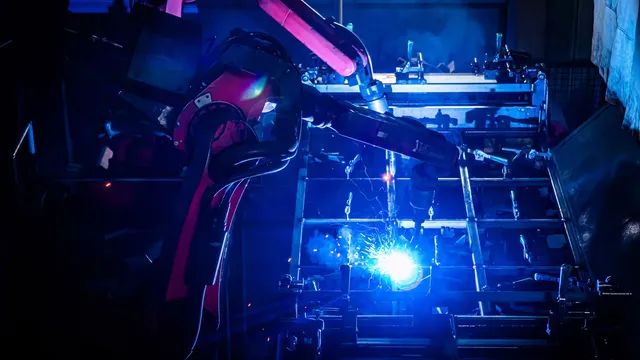
Cooperation starts with a request for quotation in which you specify the intended use of the structure and the required execution class. At this stage, we confirm that the scope matches our EN 1090 certificate and advise on the choice of solutions if the specification leaves some room. Production follows: manual and robotic welding, quality control within the FPC system, and then corrosion protection.
At Strumet, metal processing, welding and quality control as well as hot-dip galvanizing all take place in one plant, with no logistics between sub-suppliers and no dilution of responsibility for quality. For a purchasing manager, this means one contract, one point of contact and one compliance chain instead of several.
If you are planning to order a load-bearing structure that requires EN 1090, contact our sales department. Send us the technical documentation and the EXC class, and we will prepare a quote tailored to the requirements of your industry.
FAQ – the most common questions about the EN 1090 certificate
How does an EN 1090 certificate differ from an ordinary steel manufacturer's declaration of conformity?
A steel manufacturer's declaration concerns the properties of the material itself (e.g., conformity with EN 10025). An EN 1090 certificate, on the other hand, confirms that the finished structure was made in a supervised Factory Production Control system and can receive CE marking as a construction product.
Does every steel structure need an EN 1090 certificate, or only selected components?
The requirement applies to load-bearing structural components placed on the EU market as construction products. Non-structural components or those made to individual order at the installation site may be subject to different rules, but series-produced load-bearing components require CE marking in accordance with EN 1090.
What are execution classes EXC1–EXC4?
These are four levels of execution rigor, from EXC1 (lowest) to EXC4 (highest), depending on the consequences of failure and the operating conditions. The supplier must hold a certificate covering a class equal to or higher than the one required for your structure. If the specification does not indicate a class, EXC2 is assumed by default.
Can a company without an EN 1090 certificate legally make and sell a steel structure on the EU market?
No. For load-bearing structures covered by the standard, CE marking based on EN 1090 has been mandatory since July 1, 2014. Placing such a product on the market without certification violates EU law.
How long does it take to obtain an EN 1090 certificate and how often is it audited?
Implementing the FPC system and certification usually take from several to a dozen or so months, depending on the size of the plant. After the certificate is issued, the notified body conducts periodic surveillance audits to confirm that the production control system is being maintained.