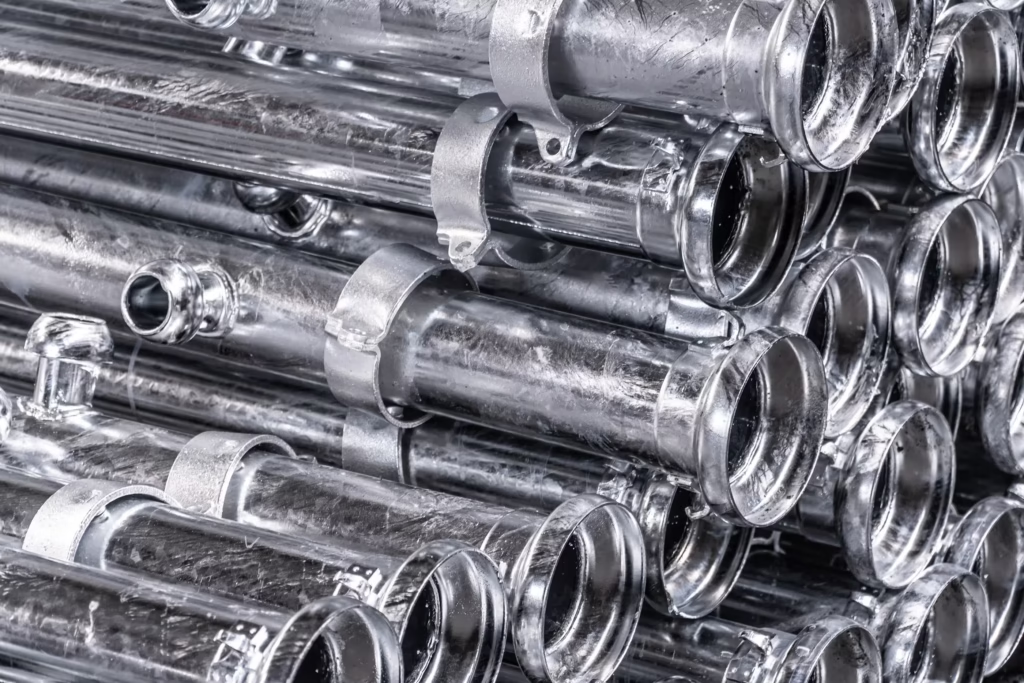
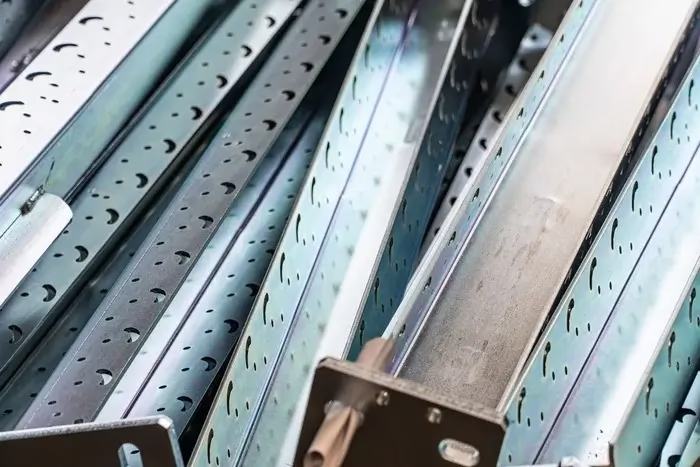
Electrolytic galvanizing is a thin layer of zinc applied to steel in an electrolytic bath, which protects the metal against corrosion but does not change its shape or dimensions.
The coating is created evenly and precisely reproduces the surface of the element, so it works well for details that must fit together and look aesthetically pleasing even after protection.
The process is conducted electrochemically, without heating the steel to high temperatures. The steel element acts as a cathode, and zinc is deposited on its surface from an electrolyte solution. The lack of thermal stress eliminates the risk of deformation and structural changes in the material, which is particularly important for thin-walled, threaded, and precision components. This is one of the main differences compared to hot-dip galvanizing and, at the same time, one of the greatest advantages of this technology.
How does electrochemical zinc deposition on steel work?
During electrolytic galvanizing, zinc ions Zn²⁺ They move in the electric field towards the surface of the part and are reduced. Zinc is deposited in the form of crystallites, which gradually build a compact protective layer. Unlike hot-dip galvanizing, no diffusion reactions occur here. Fe-Zn, therefore the coating does not become part of the steel structure, but remains a deposited layer with precisely controlled thickness.
The typical thickness of the zinc coating obtained by electrolytic method is in the range 5-15 µm, although it can be modified depending on technical requirements. This range allows for maintaining dimensional tolerances of threads, fits, and mating surfaces, which is crucial in many applications.
Current density and its effect on the quality of the zinc coating
Throughout the entire process, the key factor is current density. It determines the rate of growth of the coating and what its structure looks like. With properly selected values, most often in the range from 1 to 5 A/dm², zinc is deposited evenly and forms a compact, fine-crystalline layer without excessive stress. Current density too high causes excessive zinc build-up on edges and corners. Increased internal stresses occur and the coating becomes more susceptible to white corrosion. On the other hand too low current density leads to the formation of porous deposits, which are less bound to the substrate and less resistant to operation. In practice, this is current control determines the smooth and repeatable course of galvanizing.
The uniformity of the coating is also influenced by current shading. This phenomenon results from detail geometry and the distribution of the electric field in the bath. Current always reaches the edges more easily than the recesses, therefore method of hanging the element or his work in the drum have a direct impact on the final effect. Well-planned detail exposure allows you to limit this phenomenon and achieve an even layer of zinc on the entire surface.
Zinc baths and their importance in the process
In practice, most often work is done on alkaline baths and acid baths, and the choice between them depends on the type of detail and the expected effect. Alkaline baths They handle current distribution well and allow for uniform coating of elements with complex geometry. They operate in a high pH range, usually from 12-14, at a moderate temperature of the order of 20–30°C. This is a stable and predictable solution, especially for more difficult shapes.
Acid baths are chosen where surface appearance is important. They allow for very smooth, fine-crystalline coatings, especially valued for visible and precise elements. They work at lower pH, most often in the range 4.5–5.5, at similar temperatures as alkaline baths. However, they require greater control because they are more sensitive to local current overloads and react more quickly to parameter deviations. The bath composition is supplemented by brighteners and levelers, which are responsible for the crystalline structure, gloss, and evenness of the surface. Even small changes in their concentration can significantly change the character of the coating. For this reason, baths must be regularly analyzed and corrected, because it is the chemistry in the background that largely determines the final effect of galvanizing.
Preparation of steel surface before electrolytic galvanizing
In electrolytic galvanizing, it's impossible to hide errors from earlier stages. Any traces of grease, silicone, scale, or machining residue quickly surface as localized coating defects or uneven zinc deposition. This is the point at which the process clearly demonstrates whether the steel has been prepared as intended.
That's why the whole cycle always starts with thorough surface preparation. Degreasing, pickling, rinsing, and activation are not add-ons, but the foundation for further work. Each of these steps is selected based on the type of steel and its actual condition, as machining requires a different approach than cutting or bending. It is this step that has the greatest impact on uniformity of the coating and its behavior over time. Especially in the initial period of use, when the zinc begins to work in real-world conditions, a well-prepared surface determines whether the coating will remain stable or begin to reveal its weak points.
Passivation of the zinc coating and its corrosion resistance
After galvanizing, we perform passivation, which stabilizes the newly deposited zinc and limits its reactivity. Modern processes use chromium-free passivation, based on titanium and zirconium compounds, which improve resistance to white corrosion and meet current environmental requirements.
In moderate environments, the average wear rate of the zinc coating is 1-2 µm per year, which, with appropriately selected thickness, allows for long-term protection of steel elements. In more aggressive environments, the quality of passivation and the stability of the entire galvanizing process are crucial.
Application of electrolytically deposited zinc coatings
- threaded elements where maintaining accurate dimensions and correct fit is important,
- precision mechanisms, where an even and thin coating cannot affect the work of the detail,
- automotive components requiring repeatability and aesthetic finishing,
- electrical components in which anti-corrosion protection must not impair function,
- small construction details that must be secured without geometric changes,
- applications in dry and moderately humid environments where stable, predictable corrosion protection is important.
How we carry out electrolytic galvanizing at Strumet
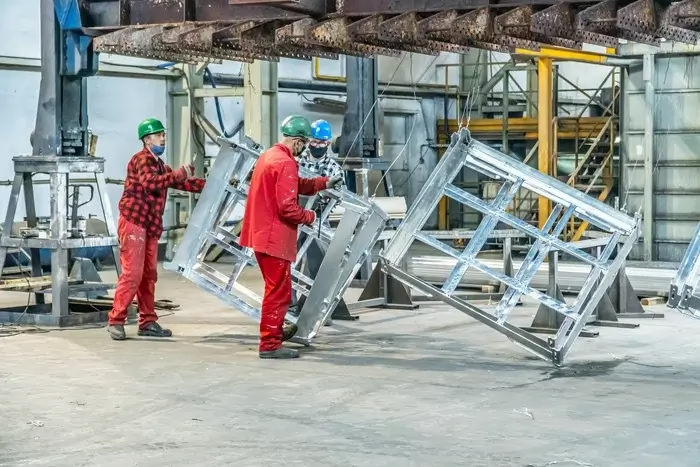
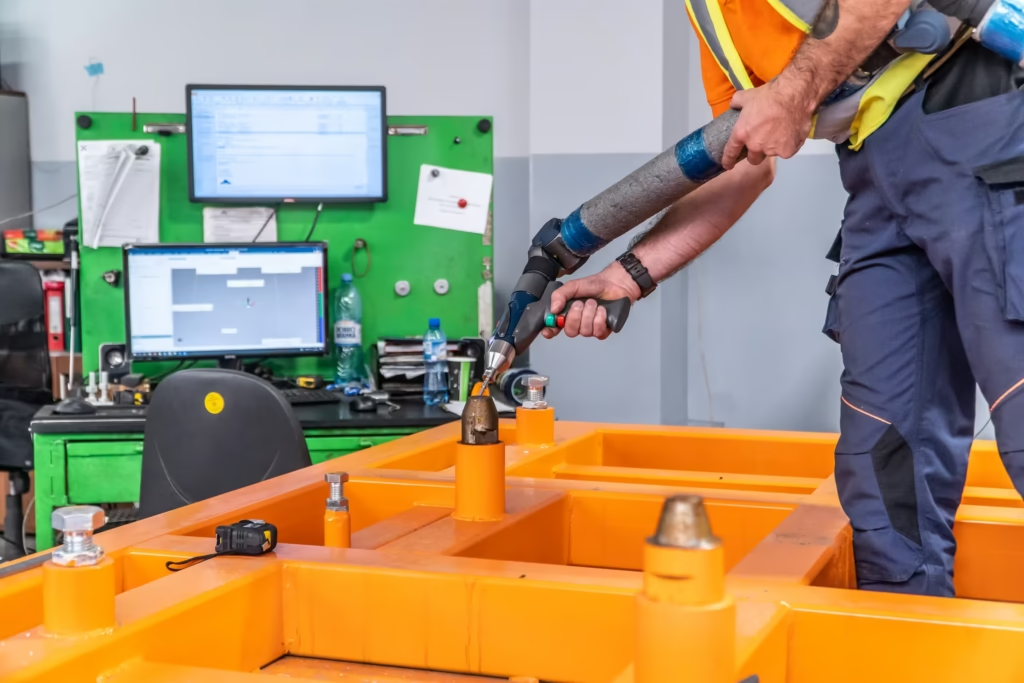
At Strumet, we treat electrolytic galvanizing as a process that must be stable and repeatable, regardless of batch size or part type. We prepare each element with its shape and intended use in mind, which is why we operate both a hanger line for larger elements and a drum line for small details. This allows us to tailor the technology precisely to the specific application. We constantly monitor bath composition, pH, temperature and current density, because it is these parameters that determine the structure of the coating and its durability. We complete the whole chrome-free passivation, thanks to which the coating retains its properties even after a long period of use.
Electrolytic galvanizing in practice – process control and stable results
Electrogalvanizing is a technology that clearly demonstrates whether the process is under control. With a well-managed line, the result is even, stable, and predictable, and the coating simply fulfills its function in the daily operation of the component. At Strumet, we focus on ensuring that every part leaves the process in exactly the condition it should be.
Thanks to consistent parameter control and a smooth process, the coating retains its properties even after extended use. Components continue to be processed without any surprises, and galvanizing is no longer a subject for analysis or corrections.