Steel is one of the pillars of modern construction and industry – but only when it is properly protected against corrosion. Without this, metal, when exposed to moisture, salts, or aggressive gases, loses its mechanical properties faster than design and maintenance schedules dictate. The chosen corrosion protection technology therefore determines not only the durability of the structure but also the safety of users and the overall life-cycle costs of the investment.
Galvanizing is the most widely used method of protecting steel today – cheaper than epoxy coating or stainless steel, and much more effective than painting alone. However, this term also covers several very different technologies, which differ in coating thickness, application method, range of applications and price.
Why is choosing the right corrosion protection method so important?
Corrosion is responsible for billions of dollars in industrial losses worldwide, destroying bridges, production halls, tanks, pipes, and supporting structures. In Poland, according to industry estimates, the costs of corrosion degradation consume several percent of GDP annually. For engineers and investment managers, this means one thing: selecting the right method for protecting steel surfaces should be strategic decision.
One of the most effective and most frequently used methods of protection is galvanizing of steel, a technology based on applying a layer of zinc to the surface of an element. Zinc plays a dual role: it creates physical barrier separating the metal from the aggressive environment and acting as sacrificial anode, electrochemically protecting the substrate even where the coating is damaged. However, for this protection to be effective and economically viable, it is crucial to select the appropriate technology for the specific operating conditions.
The most popular types of galvanizing – a list of technologies
There are several basic types of galvanizing: hot-dip galvanizing, electroplating, spray galvanizing, and powder coating. Each method has its advantages – the decisive ones are operating parameters: temperature, humidity, presence of chemicals and required service life.
Galvanic (electrolytic) zinc plating
In the galvanization process electrolytic galvanizing is applied using electric current in an electrolytic bath. This method allows for obtaining coatings with a thickness of 3–25 μm, characterized by very good uniformity and aesthetic appearance. It performs excellently on small components such as connectors, screws, bolts and electrical components exposed to low to moderate corrosive environments (ISO 9223 categories C1–C2).

Spray galvanizing (metallization)
Metallization involves spraying molten zinc or zinc wire onto a previously prepared, blast-cleaned surface. The coating thickness can reach 100–200 μm, making this method particularly valuable for renovation of large structures in the field (bridges, tanks, masts), where transporting the element to galvanizing plant is impossible or uneconomical. Adhesion to the substrate is very good due to the mechanical anchoring of the zinc in the rough surface.
Powder galvanizing
In the powder method (sherardization), steel elements are placed together with zinc powder in a rotating drum and exposed to temperatures of approximately 320–500°C. zinc-iron diffusion coating It is characterized by higher hardness and abrasion resistance than other methods; however, it is also a comparatively more expensive solution. It is primarily used to secure fasteners, nails, chains, and small, complex-shaped details.
Hot-dip galvanizing (dipping)
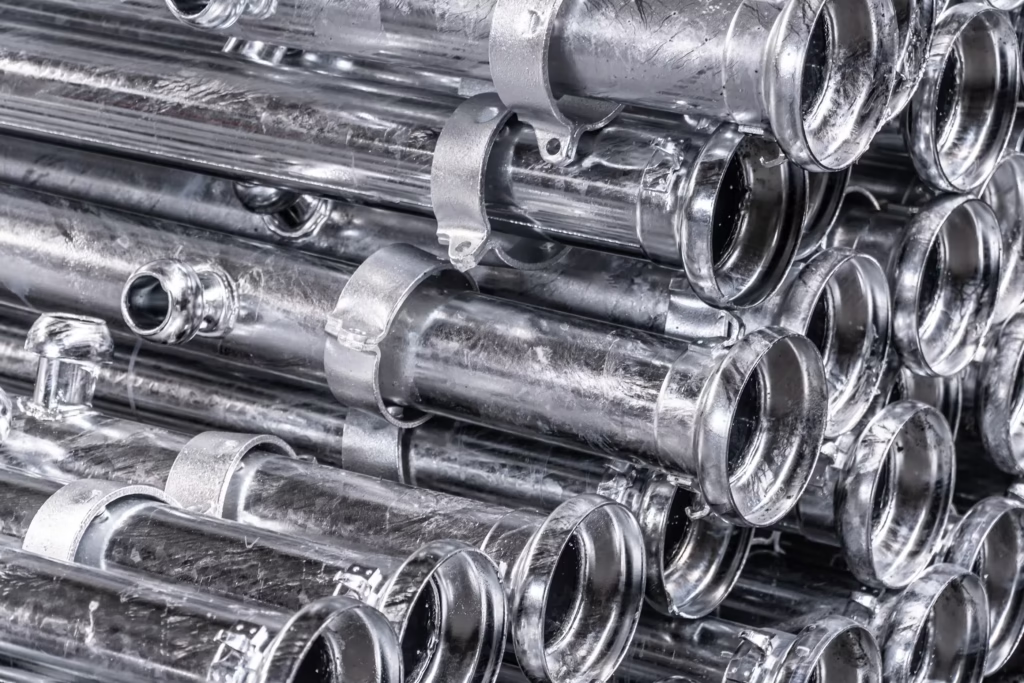
This the dominant technology in industrial corrosion protection. The steel element is immersed in a bath of molten zinc at a temperature of approximately 450°C. This creates a multi-layer zinc-iron coating (eta, zeta, delta and gamma phases) with a thickness depending on the chemical composition of the steel and the immersion time – from 50 to 100 μm, and even thicker in the case of reactive steels. The method is standardized by PN-EN ISO 1461 – a Polish standard implemented on the basis of a European standard, which precisely defines the minimum coating thicknesses, appearance requirements, test methods and acceptance conditions.

Hot-dip galvanizing vs. electroplating – which method to choose?
The answer to the question about hot-dip galvanizing and electroplating – specifically which of these solutions will be recommended in a given case – depends on several factors.
Galvanic zinc plating prevails when the priorities are:
- small-sized detail,
- dimensional precision (thinner coating does not affect tolerance),
- aesthetics,
- lower unit cost for large production runs.
In terms of coating thickness and durability, hot-dip galvanizing is unmatched in environmental conditions of class C3 and higher (urban environments with moderate pollution, industrial, coastal environments). Hot-dip galvanizing at a thickness of 85 μm can provide protection for 50 or more years without maintenance – which is confirmed not only by producers, but also scientific research.
FAQ – frequently asked questions about types of galvanizing
Which method gives better results in terms of resistance: hot-dip galvanizing or electroplating?
Hot-dip galvanizing produces a coating several times thicker than electroplating, which translates directly into a significantly longer service life in harsh environments. The hot-dip galvanizing coating also has a metallurgical bond with the substrate – it is part of the steel structure, not merely applied to its surface. This makes it more resistant to mechanical damage, and in the event of scratching, the zinc continues to electrochemically protect the exposed iron. The electroplating method, on the other hand, is more precise and economical for small components exposed to mild conditions.
Is so-called cold galvanizing a full-fledged alternative to a zinc bath?
Cold galvanizing is the colloquial term for applying zinc-rich coatings using a brush, roller, or aerosol, without heating the part or the bath. The zinc content of such preparations is typically 85–961 TP3T in the dry film. This method has its applications – it is ideal for repairing damaged hot-dip coatings or as a temporary solution in the field where full galvanizing is not possible. However, it should not be considered a full-fledged substitute for zinc baths. The lack of metallurgical diffusion, the uneven thickness of manual application, and poorer adhesion properties result in significantly lower coating durability, especially in the C3–C5 corrosivity categories.
For which industries will specific types of galvanizing be most optimal?
- Building and infrastructure construction – hot-dip galvanizing as standard, often required by construction projects.
- Energy and mining industry – fire due to corrosivity categories C4–C5.
- Automotive and household appliances – galvanic or powder coating for dimensional precision and aesthetics.
- Agriculture and water and sewage management – hot-dip galvanizing ensuring long-term durability without maintenance.
How long does a fire-retardant coating last?
The service life of a hot-dip galvanized coating depends primarily on the coating thickness and the environmental corrosivity category. According to ISO 9223 and industry data, an 85 μm coating can protect for over 70 years in a C2 environment (rural, low humidity), 30–50 years in a C3 environment (urban, moderate pollution), 15–25 years in a C4 environment (industrial, coastal), and 7–15 years in a C5 environment (very aggressive). These estimates assume no mechanical damage and proper surface preparation before galvanizing, in accordance with the requirements of the PN-EN ISO 1461 standard.
If you are looking for a proven partner to carry out galvanizing orders – regardless of the series size and dimensions of the elements – Strumet offers comprehensive services. Our extensive experience in the construction, energy, and industrial sectors allows us to precisely tailor our technology to the requirements of each project.