Railings on a production hall a hundred meters from the sea, painted with a decent epoxy paint, can show the first blooms of rust after just three seasons. The same steel, previously dipped in liquid zinc, will last decades in that spot without intervention. The difference does not lie in workmanship, but in whether the protection mechanism was matched to the environment... or not matched at all. The cost of such a mistake rarely ends with renovating the coating - you have to add dismantling, downtime, transport and the loss of load-bearing capacity of elements that have already lost cross-section. That is why the decision on the protection technology has to be made as early as possible, ideally in parallel with the structural design, not after the structure has been welded.
Effective Corrosion Protection of Steel - What You Need to Know Before Placing an Order
When it comes to protecting steel against corrosion, industry realistically turns to four solutions: hot-dip galvanizing, zinc electroplating, the duplex system and anti-corrosion painting without a zinc layer. We have ranked them from the most durable and "heaviest" technologically to the lightest and cheapest upfront - but, contrary to appearances, this is not a quality ranking. The criteria for choosing a method are always the same:
- environmental corrosivity category according to the ISO 12944 standard,
- the size and type of the structure,
- the budget weighed against the expected service life.
Effective corrosion protection of steel starts with an honest answer to the question of where the component will operate and how long it is supposed to last there, and only then with choosing a method from the available technologies. The reverse order - first the price per square meter, then an analysis of the environment - is the most common cause of the complaints that reach galvanizing plants.
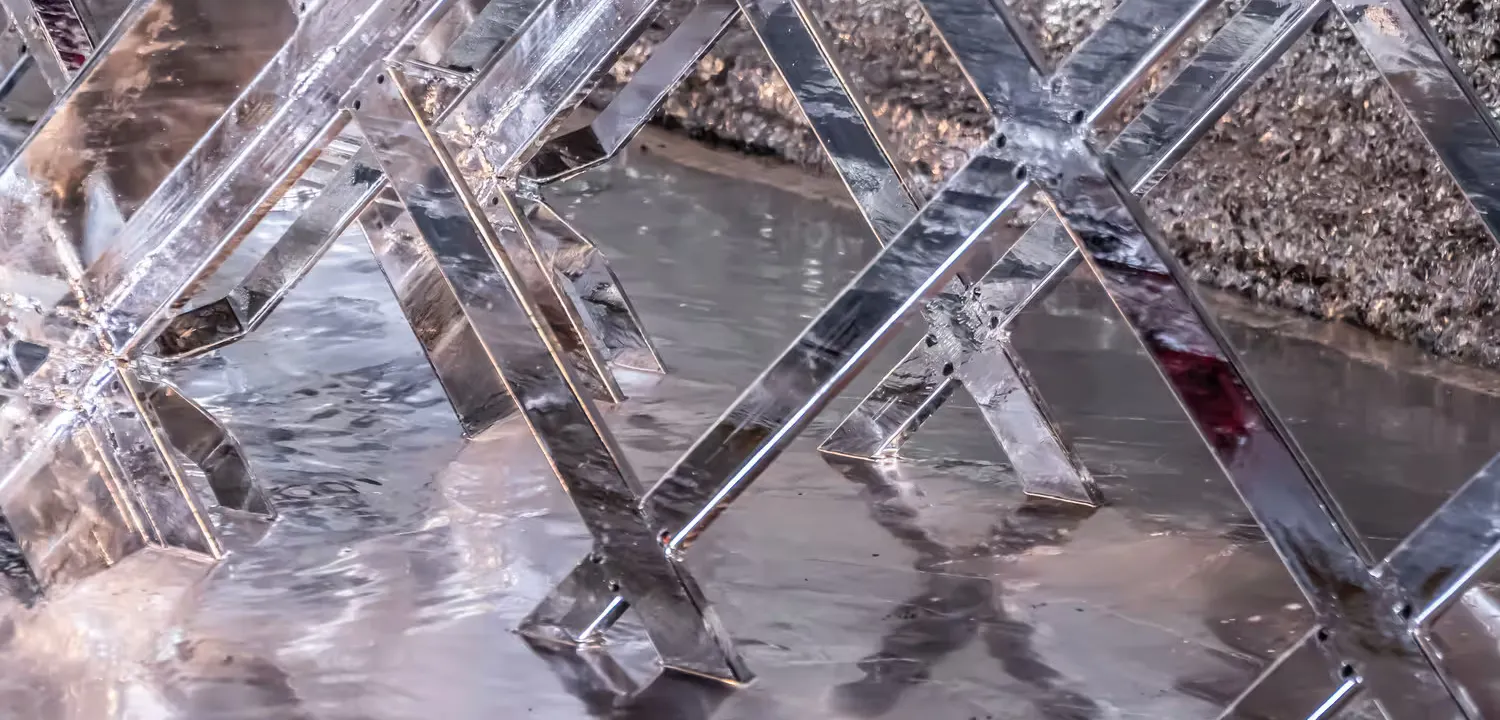
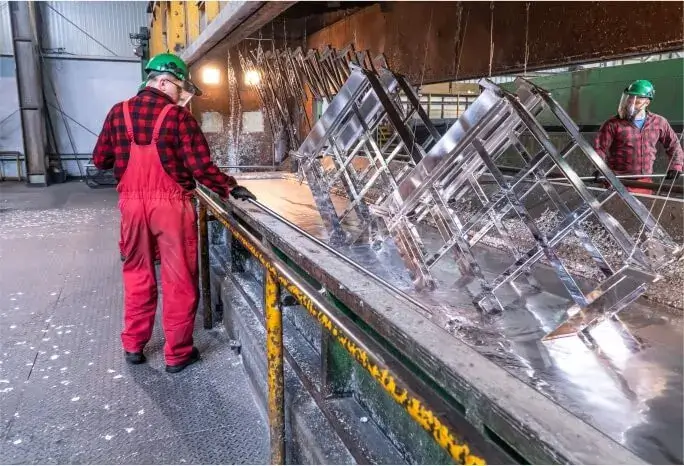
1. Hot-Dip Galvanizing - Highest Durability for Large Structures
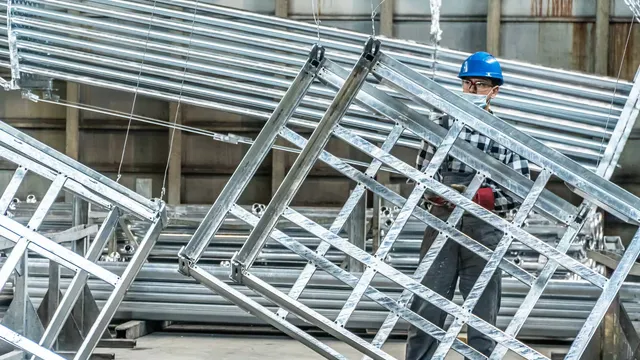
Who is it for? Immersion hot-dip galvanizing is the solution for large structures used outdoors: steel halls, trestles, support structures, road barriers, scaffolding or infrastructure elements operating in corrosivity categories C4-C5. It works wherever access to the structure after installation is costly or practically impossible.
Key advantages. The zinc coating works in two ways: it is a physical barrier and at the same time protects cathodically, "sacrificing itself" electrochemically at places of mechanical damage and on cut edges. Thanks to its metallurgical bond with the substrate, it does not chip like paint, and its durability in typical outdoor conditions is counted in decades, without maintenance throughout that period. The thickness and quality of the zinc coating are not a matter of discretion - they are regulated by the international standard ISO 1461:2022, which specifies requirements and test methods for coatings applied by immersion.
What to watch out for? The component has to fit in the galvanizing bath, and this is a hard dimensional limit - larger structures must be divided into segments bolted together after galvanizing. Closed profiles and spaces require process holes and vents, otherwise zinc will not flow inside, and in an extreme case trapped air will burst the profile in the bath. Thin-walled, asymmetric components can also distort when immersed at a temperature of about 450°C, so it is worth consulting the galvanizing plant on their geometry before welding.
2. Zinc Electroplating - Precision for Small Components
Who is it for? Zinc electroplating answers the needs of small and medium-sized components where dimensional tolerances matter: bolts, nuts, fittings, pins, clamps, small stamped and turned parts, components assembled into tight-fit assemblies.
Key advantages. An electrolytically applied coating is thin and very even, so it practically does not change the dimensions of the part - a thread remains a thread, and a hole keeps its diameter. The finish is smooth and attractive, which matters for parts visible in the final product, and the process is easy to automate for large batches of small parts.
What to watch out for? The price of precision is thickness: an electroplated layer is many times thinner than a hot-dip one and withstands mechanical loads and abrasion less well. In outdoor environments with high corrosivity, its service life is clearly inferior to an immersion coating, so it is usually not suitable for facade or road applications without additional passivation and sealing. Anyone wavering between the two technologies can start by reading our article comparing hot-dip galvanizing and electroplating, because the differences concern not only thickness but also the way the surface is prepared.

3. The Duplex System - Double Protection for the Most Aggressive Environments
Who is it for? The duplex system, that is, a paint coating applied to previously galvanized steel, is intended for structures operating in categories C5 and CX - in an industrial environment with a high SO₂ concentration, in a coastal zone, near treatment plants or chemical plants. It is also the only sensible solution where an architect specifies a particular RAL color.
Key advantages. The two layers do not add up linearly but work synergistically: the paint slows the consumption of zinc, and the zinc protects the steel where the paint coating is breached. In practice, the total durability of the system significantly exceeds the sum of the service lives of both layers used separately, while giving complete freedom of color and a uniform appearance of the entire structure.
What to watch out for? The upfront cost is the highest of the compared methods, because you pay for two processes. What is key - and unfortunately too often neglected - is preparing the zinc for painting: the zinc surface requires cleaning of white corrosion products, degreasing and roughening. A paint intended specifically for zinc must also be selected. Skipping this stage ends with the paint coating peeling off in flakes, even though the zinc itself remains intact.
4. Anti-Corrosion Painting Without Zinc - When It Is a Sufficient Solution
Who is it for? Painting alone remains a rational choice for indoor structures and elements operating in environments of categories C1-C3: heated halls, load-bearing structures inside buildings, warehouse equipment, as well as projects where low entry cost or a short planned service life is decisive.
Key advantages. It is the cheapest of all the methods, does not require transport to a galvanizing plant and is not limited by bath size. It gives complete freedom of color, allows structures of any size to be painted at the installation site and makes spot repair easy - damage is touched up locally, without interfering with the whole.
What to watch out for? A paint coating protects only as a barrier, so every abrasion down to the steel becomes a focus of under-film corrosion, which spreads beneath the paint. This requires regular inspections and periodic renewal. In a calculation of the entire life cycle, corrosion protection of steel structures based solely on paint is therefore sometimes more expensive than galvanizing.

How to Choose the Right Corrosion Protection for a Steel Structure?
The easiest way to make the decision is to go through four questions in a fixed order:
- Environmental corrosivity category. C1-C3 allow painting alone, C4-C5 require zinc, C5/CX favor the duplex system.
- Dimensions and geometry of the component. Check whether the structure fits in the galvanizing bath, whether it has closed profiles and whether dimensional tolerances allow a thick coating.
- Aesthetic requirements. A specified RAL color almost always means duplex or painting.
- Budget versus service life. Compare cost over the entire period of use, not the unit price per square meter.
Well-planned corrosion protection of steel costs the least when the technology is chosen before the structure is built, still at the drawing-board stage. If you want to verify the assumptions for a specific project or need a quote for hot-dip galvanizing or electroplating, contact the Strumet team - we will assess the geometry of the components, indicate the necessary process holes and propose a solution matched to the operating conditions of the structure.
FAQ - Most Frequently Asked Questions About Corrosion Protection of Steel
Which method of corrosion protection of steel works best outside a building?
Outdoors, hot-dip galvanizing is the standard, because it provides cathodic protection and essentially requires no maintenance for decades. In particularly aggressive environments, industrial or coastal, the duplex system will be the better choice.
How many years does corrosion protection last after hot-dip galvanizing?
In typical outdoor conditions, an immersion coating protects steel for several decades (30 on average, but it can reach as much as 100) without the need for renewal. The exact period depends on the corrosivity category of the environment and the coating thickness used.
What is the difference between hot-dip galvanizing and zinc electroplating?
Hot-dip galvanizing involves immersing the component in liquid zinc; it gives a thick, durable coating metallurgically bonded to the steel. Zinc electroplating applies zinc electrolytically - the layer is thinner and uniform, does not change the dimensions of the part, but protects less well in harsh outdoor conditions.
What is the duplex system and when is it worth using?
It is a combination of a zinc coating with a paint coating applied over it, which work synergistically and together protect for longer than separately. It is worth using in corrosivity categories C5 and CX and whenever the structure must have a specific color.
How to select corrosion protection for steel structures for corrosivity category C4 or C5?
For C4, hot-dip galvanizing with a coating thickness compliant with the standard is usually a sufficient solution. For C5, especially in an industrial or coastal environment, the duplex system is recommended, which significantly extends the time to first renovation.