Rust streaks around the welds of a 1.4301 stainless steel tank, appearing a few weeks after installation, are among the most common reasons for complaints about stainless structures. In such cases, the steel grade itself is usually flawless. What corrodes are iron particles transferred to the surface from grinding discs, clamps, and workbenches, as well as the zone next to the weld, where high temperature has depleted the surface layer of chromium. Both causes lead to the same place: a damaged passive layer, the oxide barrier just a few nanometers thick on which the entire corrosion resistance of stainless steel depends.
What Is Stainless Steel Passivation?
Stainless steel passivation is a chemical treatment, most often carried out in a nitric or citric acid solution, that removes free iron and other contaminants from the surface and supports the rebuilding of a passive layer rich in chromium oxides. An oxidizing acid dissolves iron more readily than chromium, so after treatment the passive layer contains relatively more chromium, and the surface is uniform and free of corrosion sites.
Keep in mind that stainless steel also passivates on its own. All it takes is for a clean surface to come into contact with oxygen from the air or aerated water. The prerequisite is the alloy composition: according to EN 10088-1, stainless steel must contain at least 10.5% chromium and no more than 1.2% carbon.
The authors of the Euro Inox guide recommend using acid passivation only in exceptional cases. Steel from a reputable supplier arrives at the plant fully passivated; the protective layer is only compromised by cutting, grinding, welding, and contact with tools.
At the same time, passivation does not change the resistance provided by the grade itself. 1.4301 (AISI 304) steel will remain susceptible to pitting corrosion in chloride-rich environments, even if it has been passivated to perfection. The passive layer also loses stability wherever oxygen is lacking: in crevices, mechanical joints, and under deposits, which promotes crevice corrosion (see our article on the types of metal corrosion). Under such conditions, durability depends on grade selection, e.g., 1.4404 or duplex steel, while surface treatment simply allows the grade to perform to its full potential.
When Is Passivation Necessary, and When Is Self-Passivation Enough?
The decision to use chemical passivation depends on the part’s processing history and the environment it will operate in. The treatment is particularly justified in several situations:
- After mechanical processing: cutting, grinding, and bending with tools previously used on carbon steel leave free iron on the surface. The risk also applies to machined parts with complex shapes, where oxygen access to freshly exposed surfaces is limited and self-passivation proceeds more slowly.
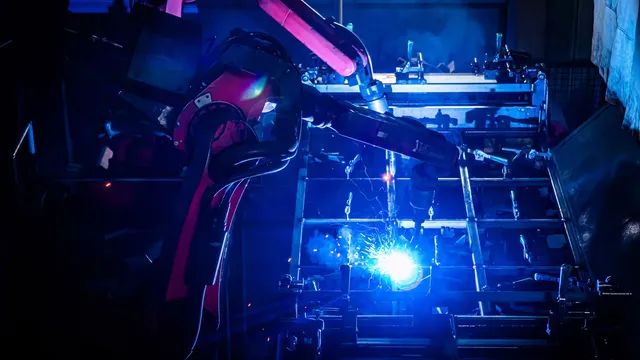
- After welding: heat tint and the chromium-depleted layer around the weld are typical corrosion sites. Here, passivation alone is not enough. The discoloration must first be removed by pickling or mechanically, and only then can the surface be passivated. Laser welding, which introduces less heat into the material, produces a narrower heat-tint zone, yet it still requires cleaning.
- In the food, pharmaceutical, and medical industries: surface cleanliness is a hygiene requirement here, and acceptance specifications often explicitly reference ASTM A967 or ASTM A380.
- In humid, saline, and chemically aggressive environments: every free iron site quickly turns into visible rust and initiates corrosion of the steel underneath.
If a part operates in a mild, dry environment and its surface is clean and undamaged, self-passivation is usually entirely sufficient. Ordering passivation „just in case” then raises costs with no real gain in durability. Deciding which side of this line a specific part falls on therefore requires knowing its entire path through production.

Signs of Missing Passivation: Flash Rust and Discoloration
A warning sign is flash rust caused by free iron contamination. It takes the form of small reddish-brown spots and streaks scattered unevenly across the surface, often at points of contact with tools or supports. Around welds, in turn, you can see heat tint, ranging from straw yellow to blue, which indicates that the surface layer has overheated.
The presence of free iron, before it turns into corrosion, can be revealed by methods such as the ferroxyl test, which detects even trace contamination.
Where Does Free Iron on Stainless Steel Come From?
The most common source of contamination is a workshop where black steel and stainless steel are processed side by side. Filings and sparks from cutting carbon steel settle on nearby parts, grinding discs and wire brushes carry iron particles from one material to the other, and steel racks, forklift tines, and slings leave marks at contact points. The cheapest protection against flash rust is segregation: separate workstations, tools marked for stainless steel use only, and plastic or wooden spacers during storage and transport.
Passivation vs. Pickling of Stainless Steel
Both treatments use acids and often follow one another, which is why they are sometimes confused. Their purpose and intensity, however, are different. Pickling stainless steel, usually carried out in a mixture of nitric and hydrofluoric acid, removes a thin layer of metal along with scale, heat tint, and the chromium-depleted zone. Passivation takes place in a milder solution without hydrofluoric acid, and practically no material is lost: it removes free iron and creates oxidizing conditions in which the passive layer quickly rebuilds.
This distinction has an important practical consequence: nitric acid alone will not remove post-weld discoloration. A freshly pickled surface does passivate on its own once the acid is rinsed off; even so, in demanding applications pickling is followed by passivation to make sure no free iron remains on the surface.
The Stainless Steel Passivation Process Step by Step
Professional passivation is a sequence of controlled stages, each depending on the quality of the one before it. A bath applied to a greasy or scaled surface will not work fully, which is why preparation usually takes longer than the treatment itself.
- Cleaning and degreasing: removing oils, coolants, lubricants, and dust that would block contact between the acid and the metal and produce an uneven result.
- Removing scale and discoloration: if heat tint or scale is present on the surface, pickling or mechanical treatment with tools dedicated exclusively to stainless steel is used.
- Passivation bath: immersion in a nitric acid solution (per ASTM A967, 20–55% by volume, for 20–30 minutes at 21–60°C, depending on the variant) or a citric acid solution (4–10% by weight, from 4 minutes at approx. 60–71°C to 20 minutes at 21–49°C).
- Rinsing: thoroughly removing bath residue immediately after the part is taken out of the solution, preferably with demineralized water, so that no streaks or salt deposits are left behind.
- Drying: controlled drying of the surface.
- Quality control: verifying effectiveness with the tests described in ASTM A967: water immersion, high humidity, salt spray, copper sulfate, or the ferroxyl test. All of them are designed to detect residual free iron.
Passivation Methods: Nitric or Citric Acid?
The two dominant technologies differ in chemistry, risk profile, and cost. The reference point for bath parameters and acceptance tests is ASTM A967/A967M, which permits both types of acid.
| Criterion | Nitric acid (HNO₃) | Citric acid |
|---|---|---|
| Bath concentration per ASTM A967 | 20–55% by volume | 4–10% by weight |
| Temperature and minimum time | from 30 min at 21–32°C to 20 min at 49–60°C | from 20 min at 21–49°C to 4 min at 60–71°C |
| Austenitic and duplex steels | Effective, industry standard | Effective |
| Martensitic, ferritic, and free-machining steels | Proven, often in a variant with sodium dichromate to reduce the risk of over-etching | Requires careful selection of parameters, higher risk of flash attack |
| Health, safety, and environment | NOx fumes, ventilation and wastewater neutralization required; the dichromate variant contains chromium(VI) compounds | No NOx emissions, lower risk to workers, easier disposal |
| Cost | Cheaper medium, higher safety and disposal costs | More expensive medium, lower environmental costs |
| Typical applications | General industry, structural components | Food, pharmaceutical, and medical industries |
Citric acid is gaining popularity wherever worker safety and environmental footprint matter, and at higher temperatures it can shorten the bath to just a few minutes. Nitric acid remains a versatile and highly predictable solution for a wide range of grades.
Not every stainless steel can be safely passivated with acid. ASTM A967 notes that high-carbon martensitic steels such as 440C may suffer flash attack or hydrogen embrittlement and therefore require a different approach.
Stainless Steel Passivation vs. Passivation of Zinc Coatings
In industry, the term „passivation” has two different meanings, which can cause misunderstandings in orders and specifications. For stainless steel, it refers to strengthening the metal’s own oxide layer. In an electroplating plant, on the other hand, passivation means a conversion treatment of a zinc coating applied to carbon steel. At Strumet, these are white, yellow, and titanium passivations, which increase the resistance of the zinc and improve paint adhesion.
Stainless steel is not galvanized, because its corrosion protection comes from its chromium content. Carbon steel, in turn, does not form a self-healing oxide barrier and requires coatings: zinc, paint, or a combination of both.
Stainless Steel Surface Treatment: Plan It Together with Production
Three factors determine the effectiveness of passivation: the steel grade (austenitic, ferritic, martensitic, duplex), the part’s function, and the operating environment. Skipping the treatment where it was needed shortens the service life of the structure and ends in complaints, while performing it unnecessarily generates avoidable costs. That is why it pays to write the requirements for pickling, passivation, and the acceptance method into the specification before production begins.
As part of its contract manufacturing services, Strumet performs laser cutting and welding of stainless steel parts for the automotive, rail, and defense industries, and provides corrosion protection for carbon steel in its electroplating and hot-dip galvanizing plants. If you are planning a structure that combines different materials or series production of stainless steel parts, contact us. We will help you choose the manufacturing and protection technology to suit the conditions in which the part will operate.
FAQ: Frequently Asked Questions About Stainless Steel Passivation
Does stainless steel passivate on its own, without chemicals?
Yes. On contact with oxygen from the air or aerated water, the chromium in the alloy spontaneously forms a protective passive layer. Chemical passivation is needed when the surface has been contaminated with free iron or thermally damaged, because self-passivation cannot cope with such defects.
Does stainless steel always need passivation after welding?
In most applications, welds require treatment, but passivation alone is not enough. Heat tint and the chromium-depleted layer are removed by pickling or mechanically, and only then is the surface passivated. Skipping these steps is the most common cause of post-weld corrosion.
How long does stainless steel passivation take, and what determines its cost?
Per ASTM A967, the bath itself takes from a few minutes (citric acid at elevated temperature) to about 30 minutes (nitric acid at ambient temperature). With cleaning, rinsing, drying, and inspection, the whole process takes longer. The cost depends on the steel grade, the method, the size and number of parts, and the required tests, which is why it is quoted individually.
How can you check whether passivation was done correctly?
The tests from ASTM A967 are used: water immersion, high humidity, salt spray, copper sulfate, and the ferroxyl test. All of them detect residual free iron. A visual inspection helps as a first step: a properly passivated surface is clean, uniform, and free of reddish-brown deposits.
Does passivated stainless steel need to be passivated again?
The passive layer rebuilds itself as long as the surface is clean and has access to oxygen, so repeat treatment is not needed in normal service. It becomes necessary again after further mechanical processing, repair welding, or iron contamination during installation and transport.