Steel is a fundamental construction material in dozens of industries. However, its greatest weakness is corrosion – and this is where galvanizing steel proves to be not only useful, but also essential. What exactly does this method involve, where is it used, and how does electrogalvanizing differ from hot-dip galvanizing?
Galvanized steel – what exactly is it and how does it differ from raw steel?
Galvanization is the electrochemical process of depositing metal on the surface of another material. In the case of steel, the most common protective metal used is zinc – applied electrolytically, i.e. by flowing direct current through a galvanic bath in which the steel object acts as a cathode.
The result of the process is galvanized steel, a material coated with a thin, uniform layer of zinc. The zinc coating protects the steel substrate in two ways: mechanically (a physical barrier that prevents oxygen and moisture from entering) and electrochemically (zinc, being a more active metal, corrodes instead of steel). Metal galvanization It is therefore a controlled modification of the surface, not just an aesthetic outer layer.
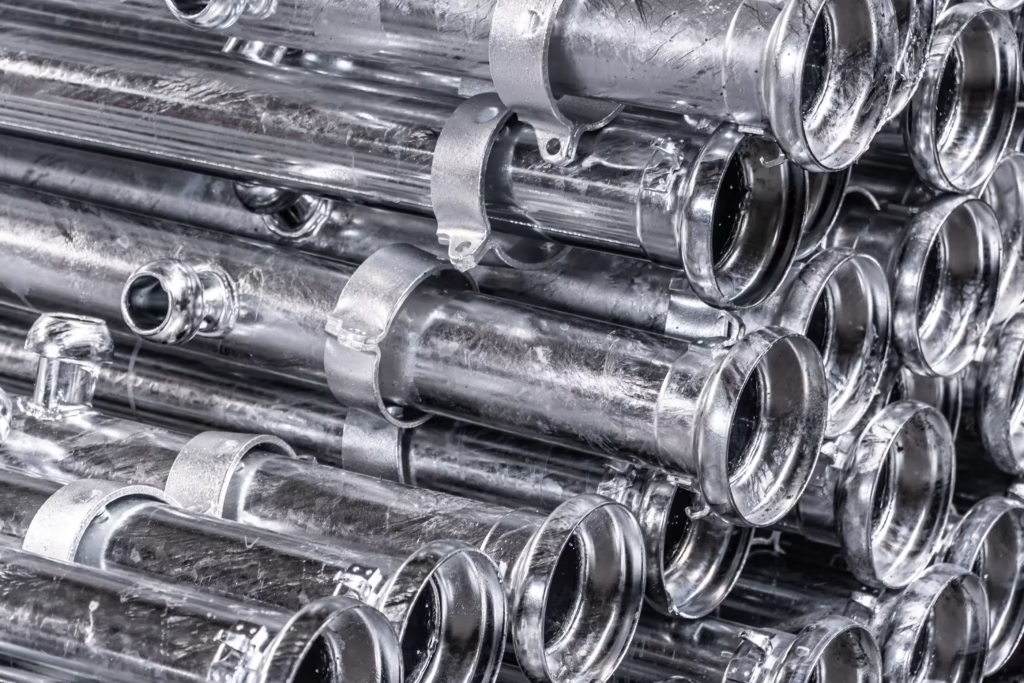
The difference between galvanized and raw steel is fundamental – and visible to the naked eye. Galvanized steel has a distinctive, bright and even surface, while raw steel exhibits heterogeneity and quickly becomes covered with oxide deposits. However, the most important practical considerations remain, as raw steel rusts after just a few days when exposed to moisture and oxygen. In industrial practice, unprotected steel is used only for temporary applications.
Where is galvanized steel used? Overview of industries and applications.
Systematic review of the electroplating process from 2024. indicates that galvanizing remains one of the most widely used metal protection processes in modern industry, from decorative applications to heavy construction. In fact, it's difficult to find an industrial sector that doesn't use galvanized steel; the range of applications is simply enormous. Whenever steel operates in conditions increased humidity, is exposed to contact with chemicals or variable temperatures, zinc coating is standard. Importantly, electrogalvanizing works well for both larger structural components and mass-produced small details – this flexibility of the technology means it is used by manufacturers from a wide range of sectors.
Construction and steel structures
Galvanized steel elements are commonly used wherever steel details – anchors, connectors, screws, profiles, facade elements, installation pipes – are in contact with the atmosphere or ground. It's worth noting that electro-galvanized construction joints maintain dimensional precision, which is crucial during installation. prefabricated systems.
Automotive and transport
The automotive industry is one of the largest consumers of electro-galvanized components: bodywork elements, By electrical connectors, after springs and brake calipers. Electroplating in the automotive industry It encompasses hundreds of different types of parts, often with complex geometries, where both corrosion protection and consistent coating thickness are crucial. Electrolysis allows for both requirements to be met simultaneously. Electrogalvanized components have also found applications in aviation, maritime, and rail transport.
Machine industry
Machines operating in changing environmental conditions, exposed to moisture, oils, chemical agents, etc., require components with durable surface protection. Screws, nuts, shafts, brackets and thousands of other small details made of galvanized steel are commonplace in the machinery industry. It's worth mentioning that electrolytic galvanizing is one of the few methods that allows for the protection of very small components without the risk of sticking or deformation—something that the hot-dip method precludes. These possibilities are also the basis for the use electroplating in electronics.
Galvanized and zinc-plated steel – are they the same?
In everyday language, the terms "galvanization" and "zinc plating" are sometimes used interchangeably, but technically they describe different processes. Consequently, galvanized and hot-dip galvanized steel are two different products with different properties and applications.
Galvanic zinc plating (commonly referred to as galvanization) involves the electrolytic deposition of zinc from a water bath at room temperature. This allows for precise coating thickness control within a range of 3–25 µm and guarantees exceptional surface uniformity and aesthetics. This method is preferred wherever dimensional accuracy and final appearance are important.
Hot-dip galvanizing (Immersion) plating, on the other hand, involves immersing the component in liquid zinc at a temperature of approximately 450°C. The coating is thicker (typically around 50 µm or more), making it significantly more durable, but less uniform. The high process temperature can also deform thin details or precision components.
Does galvanized steel rust? Durability and limits of corrosion protection.
The answer to the question about galvanized steel—whether it rusts and what level of durability can be expected using this technology—is yes, but only after the zinc layer is worn away. As a more electrochemically active metal, zinc corrodes instead of steel, creating so-called white rust (zinc hydroxide), which then transforms into zinc stannate and zinc oxide, creating a relatively tight passive layer. As long as zinc is present, the steel remains intact.
The durability of the coating depends on its thickness, operating conditions and environment. In standard rural and urban environments, an 8–12 µm thick zinc coating can protect steel components for several to a dozen years. In industrial or marine environments, wear is more rapid. Research published in the journal "Coatings"„ in 2018 confirm that electrolytically deposited zinc coatings demonstrate high anti-corrosion effectiveness on steel substrates and are one of the most economically justified methods of their protection.
Professional steel galvanizing – how does this process work in a modern galvanizing plant?
Galvanic zinc plating in modern technology electroplating plant It involves several stages: degreasing, etching, surface activation, actual electrolytic deposition in a controlled bath, passivation, and final quality control. Each step must be monitored – bath temperature, current density, solution pH, and process time directly impact the coating's quality.
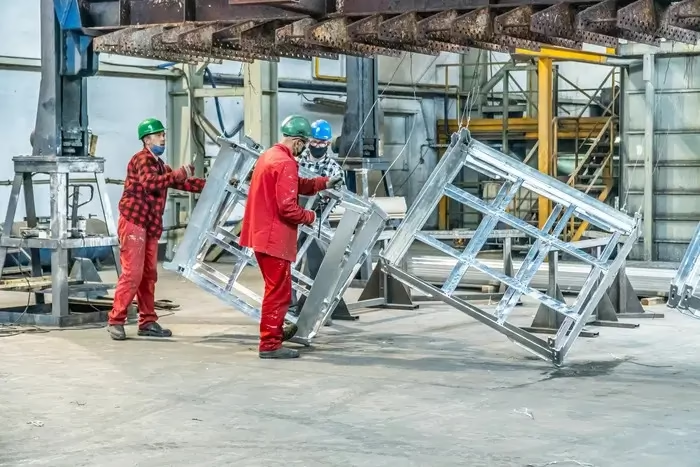
In Strumet, electroplating plant in Silesia Serving both local and national customers, the entire process is carried out on fully automated production lines. Two technological lines are available: pendant – for elements up to 2.8 m long – and drum, designed for mass galvanizing of small parts. The plant is equipped with its own quality control laboratory, and wastewater management is based on a closed circuit – without discharging industrial wastewater into the environment. Order completion times are agreed individually, depending on the volume and specific details (e.g., for batches weighing up to 100 kg, the service is completed within 24 hours).
FAQ – frequently asked questions about galvanized steel
What is the difference between galvanized and hot-dip galvanized steel?
Galvanized steel is electrolytically produced at room temperature, producing a uniform, smooth coating of 3–25 µm. Hot-dip galvanized steel has a thicker, rougher coating – very durable but less precise. The electrolytic method is preferred where dimensional accuracy and aesthetics are important.
What is the maximum thickness of the zinc coating when galvanizing?
Electrogalvanizing typically achieves a thickness of 3–25 µm, depending on customer requirements and the component's intended use. Thicker coatings are possible but are less commonly used due to process economics.
Can galvanized steel be painted?
Yes, galvanized steel components are ideal for painting – both powder and liquid. The zinc coating provides an excellent adhesive base and also acts as an anti-corrosion layer, increasing the durability of the entire paint system.
How long does galvanizing take and what does the completion date depend on?
Lead time depends on batch size, component type (hanger vs. drum), and current production line load. For standard orders, lead times are typically as follows:
- up to 100 kg – up to 24 hours,
- from 100 kg to 1 t – up to 48 hours,
- up to 1 to 3 t – up to 75 h.
For larger volumes, please contact our sales department directly. The Strumet galvanizing plant's daily throughput is 20,000 kg.