A powder coating applied to raw hot-rolled steel adheres to the mill scale, which itself bonds poorly to the metal. Mill scale is brittle and cracks under bending, impact, and temperature changes, and where it cracks, it accelerates corrosion because it is electrochemically more noble than the steel underneath. When it flakes off, it takes the paint with it, often after just the first season in service. That is why the Sa cleanliness grade and the surface profile of the substrate affect coating durability as much as the type and thickness of the powder itself, and they should be specified just as precisely in the purchase order.
What is sandblasting and how does it work?
Sandblasting is the common name for abrasive blasting, a process in which abrasive media accelerated to high velocity strike the metal surface. The stream is generated by compressed air in blast rooms and nozzles, or by turbine wheels in pass-through shot blasting machines used for series production. The abrasive removes rust, mill scale, old coatings, and other contaminants while giving the surface a roughness that later anchors the paint.
Despite the name, natural quartz sand is rarely used today, partly because of harmful silica dust. It has been replaced by aluminum oxide, copper slag, garnet, glass beads, or steel shot; when steel shot is used, the process is called shot blasting. The choice of abrasive depends on the material, the surface condition, and the required profile.
When combined with powder coating, sandblasting is the surface preparation stage. Powder is applied electrostatically to the cleaned metal and then cured in an oven. Sandblasting and powder coating are combined primarily when the input material is raw black (uncoated carbon) steel or a part showing signs of corrosion.
Why won’t powder coating stick to uncleaned steel?
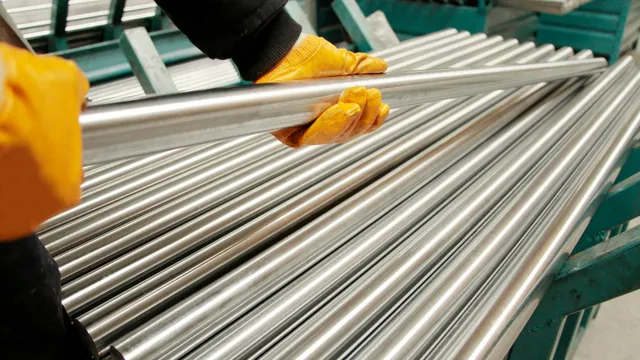
Powder coating bonds to metal through adhesion, meaning its grip on a surface that must be both clean and suitably rough. The surface of raw black steel meets neither condition. It is covered with mill scale, a layer of iron oxides formed during hot rolling, and after extended storage, with rust as well.
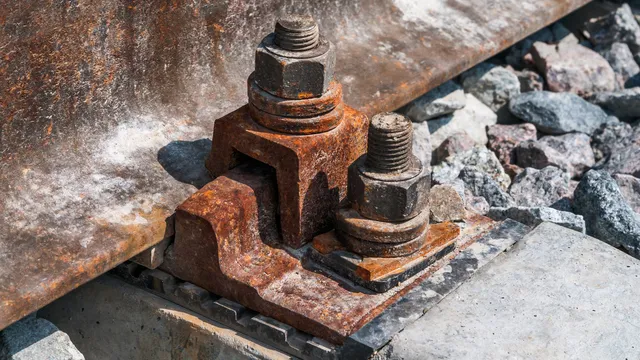
Rust behaves much like mill scale but creates an additional problem. Under a sealed powder coating, corrosion keeps progressing and lifts the paint from below. The result is always the same: flaking, blistering, and premature loss of protection. Sandblasting removes both layers down to sound metal, and only on that surface can a durable bond form.
Surface profile and powder coating adhesion
A clean surface alone is not enough; its microgeometry matters too. The abrasive stream leaves a network of microscopic peaks and valleys on the steel, into which the powder flows as it melts in the oven. This mechanism is called mechanical anchoring of the coating: a larger contact area and the „interlocking” of the layer with the substrate translate directly into adhesion.
The profile must, however, stay within a specified range. A profile that is too shallow provides no anchoring, while one that is too deep may leave the peaks insufficiently covered by paint, turning them into starting points for corrosion. The required range is given by the powder manufacturer in the system’s technical data sheet. On the shop floor, the profile is most often assessed with the comparator method from ISO 8503-2: the surface is compared against a reference comparator and classified as fine, medium, or coarse. The type of abrasive matters as well. Angular steel grit or mineral grain produces a sharp-edged profile that anchors the coating better than the rounded profile left by spherical shot.
Sa cleanliness grades and corrosivity categories: how to specify requirements in your order
The degree of surface cleaning is described by the Sa scale, defined in ISO 8501-1, the standard for visual assessment of steel substrate cleanliness before painting. Instead of a vague „thoroughly cleaned,” the order should state a specific grade. Every grade assumes a surface free of visible oil, grease, and dirt; they differ in how much residual mill scale and rust is permitted.
| Grade | Degree of cleaning per ISO 8501-1 | Use before powder coating |
|---|---|---|
| Sa 1 | Light: only loosely adhering mill scale, rust, and coatings removed | Usually insufficient, as firmly bonded mill scale remains under the paint |
| Sa 2 | Thorough: most mill scale and rust removed; any residues must be firmly adhering | Indoor parts with low requirements |
| Sa 2½ | Very thorough: any remaining traces visible only as slight stains in the form of spots or stripes | The most common requirement for black steel under powder coating |
| Sa 3 | To visually clean steel: uniform metallic color across the surface | Highly corrosive environments, the most demanding requirements |
In industrial practice, Sa 2½ is generally accepted as a sensible compromise between cost and durability for black steel under powder coating.
The other half of the specification is the environment in which the part will operate. It is described by corrosivity categories C1–C5 along with category CX, ranging from heated interiors to industrial atmospheres and coastal zones. The harsher the environment, the higher the required Sa grade and the less room there is for skipping abrasive blasting.
The ISO 12944 series, which is the source of the corrosivity categories, does not formally cover powder coatings. For powder coatings on steel, requirements are set out in documents such as the Qualisteelcoat technical specifications, which use the same categories and distinguish between mechanical and chemical surface preparation.
On black steel, systems designed for higher corrosivity categories are usually two-coat systems consisting of a powder primer and a topcoat.
When should you combine sandblasting with powder coating, and when is powder coating alone enough?
The decision depends primarily on the type of substrate and secondarily on the part’s operating conditions. The same powder coating requires entirely different preparation on hot-rolled steel, cold-rolled sheet, galvanized steel, and aluminum.
Hot-rolled steel: blasting is the rule
Hot-rolled sections, heavy plates, and profiles arrive at the plant covered with mill scale and, after storage, a layer of rust as well. No chemical method removes these layers effectively, so abrasive blasting is practically mandatory here. Skipping sandblasting is the most common cause of early coating delamination on black steel parts.
Cold-rolled sheet: chemical pretreatment is often enough
Cold-rolled sheet has no mill scale, and its surface is smooth and usually just protected with oil. In this case, powder coating is preceded only by chemical pretreatment: degreasing and conversion coating, such as phosphating. This is how enclosures, cabinets, and small sheet metal parts intended for mild conditions are typically prepared. Where corrosion requirements are higher or rust is visible, abrasive blasting is used here as well.
Galvanized steel: sweep blasting instead of sandblasting (duplex system)
A hot-dip galvanized surface is not blasted the way raw steel is, because aggressive abrasive would strip off the zinc coating. Before painting, the surface is degreased, chemically activated, or lightly sweep blasted with abrasive at a low angle, which only dulls the zinc. Combining these two forms of protection creates a duplex system that pairs hot-dip galvanizing with powder coating, in which the paint shields the zinc and the zinc protects the steel wherever the paint is damaged.

Aluminum and nonferrous metals: chemical pretreatment comes first
Aluminum protects itself with an oxide layer, which also makes it harder for paint to bond, so degreasing and conversion coating form the foundation. If aluminum is blasted at all, only nonmetallic abrasives such as aluminum oxide are used. Steel shot particles embedded in the soft surface could cause galvanic corrosion under the coating.
How do sandblasting and powder coating work, step by step?
Coating quality depends on the individual stages as well as on their sequence and the time between them. Here is a typical process for black steel parts:
- Degreasing: oil and grease are removed before abrasive blasting, since the abrasive stream would otherwise spread them across the entire surface.
- Sandblasting or shot blasting: a stream of abrasive (mineral grain, aluminum oxide, or steel shot) removes mill scale, rust, and old coatings while giving the substrate its surface profile.
- Dust removal: dust and abrasive residue are cleared from the surface, as they would weaken adhesion if trapped under the paint.
- Cleanliness and profile inspection: the achieved Sa grade and surface profile are checked, because they determine whether the substrate meets the coating system’s requirements.
- Powder application in the booth: electrostatically charged powder particles settle on the grounded part, evenly covering edges and hard-to-reach areas as well.
- Oven curing: at a temperature of typically about 160–200°C (320–390°F), for the time specified in the powder’s technical data sheet, the powder melts and cross-links into a uniform coating with the target hardness and resistance.
Freshly blasted steel has no protection at all. In humid air, flash rust can form on it within a few hours, so painting should follow blasting as soon as possible. That is one reason why moving parts between a blasting shop and a separate paint shop is risky: every day of delay is another chance for the substrate to become contaminated and corrode again.
What to look for when outsourcing sandblasting and powder coating
When choosing a contractor, the most important factor is the ability to perform both processes under one roof. Transferring parts between facilities lengthens lead times, increases the risk of corrosion on the cleaned substrate, and blurs responsibility for quality. The second criterion is documented quality control at every stage: a verified Sa grade, surface profile assessment, and coating thickness measurement. The third is a realistic lead time for large batches, since that determines whether delivery schedules are met.
As part of its surface treatment services, Strumet combines shot blasting, powder coating, hot-dip galvanizing, and zinc electroplating. We coat large parts in our manual paint shop and smaller components on an automated line. Because everything happens on site at our plant, surface preparation, the powder coating and, when the environment calls for it, hot-dip galvanizing are carried out within a single process and a single quality control system.
FAQ: common questions about sandblasting and powder coating
Does all steel need to be sandblasted before powder coating?
Not all of it. Hot-rolled steel with mill scale or rust almost always requires abrasive blasting. Clean cold-rolled sheet intended for mild conditions usually only needs degreasing and conversion coating, while galvanized parts are prepared using other methods.
What is the difference between sandblasting and shot blasting?
The difference lies in the type of abrasive. Sandblasting uses mineral grain, while shot blasting uses steel shot, either spherical shot or angular grit. Spherical shot leaves a rounded profile, whereas angular grit and mineral grain create a sharp-edged profile that anchors the coating better. Shot blasting is usually more efficient for series production because the shot can be recovered and reused many times.
Can degreasing or phosphating replace sandblasting before powder coating?
Not on hot-rolled steel with mill scale and rust, because chemical methods neither remove brittle oxide layers nor create a surface profile. Chemical pretreatment works well on clean cold-rolled sheet, galvanized steel, and aluminum, but on black steel it can only complement abrasive blasting.
Do galvanized parts need to be sandblasted before powder coating?
Not in the conventional sense, because aggressive blasting would strip off the zinc coating. Before painting, the surface is degreased, chemically activated, or lightly sweep blasted with abrasive, which only dulls the zinc surface.
How long does it take to sandblast and powder coat a batch of steel parts?
It depends on the size and number of parts, the required cleanliness grade, and the number of coats. Having both processes done by a single contractor shortens lead time because it eliminates transport between facilities and waiting for an open slot with a second supplier.