The choice between black steel and galvanized steel is usually made at the material specification stage, and it determines whether an S235 or S355 structure in corrosivity category C3 or C4 lasts a few years or several decades. Unprotected carbon steel starts to corrode the moment it comes into contact with moisture, and the more aggressive the environment, the faster it loses material. A hot-dip zinc coating applied in accordance with EN ISO 1461 changes this balance, but it raises the upfront cost of the part and makes welding more complicated. Since galvanized steel is most often made from black steel in the first place, the practical question comes down to one thing: does a given part need zinc protection, and will it pay off over its entire service life.
Black Steel and Galvanized Steel: Definitions, Grades, and Designations
Both terms have been used in the industry for decades, although neither is a standardized designation. It is worth clarifying exactly what each of them means.
What Is Black Steel?
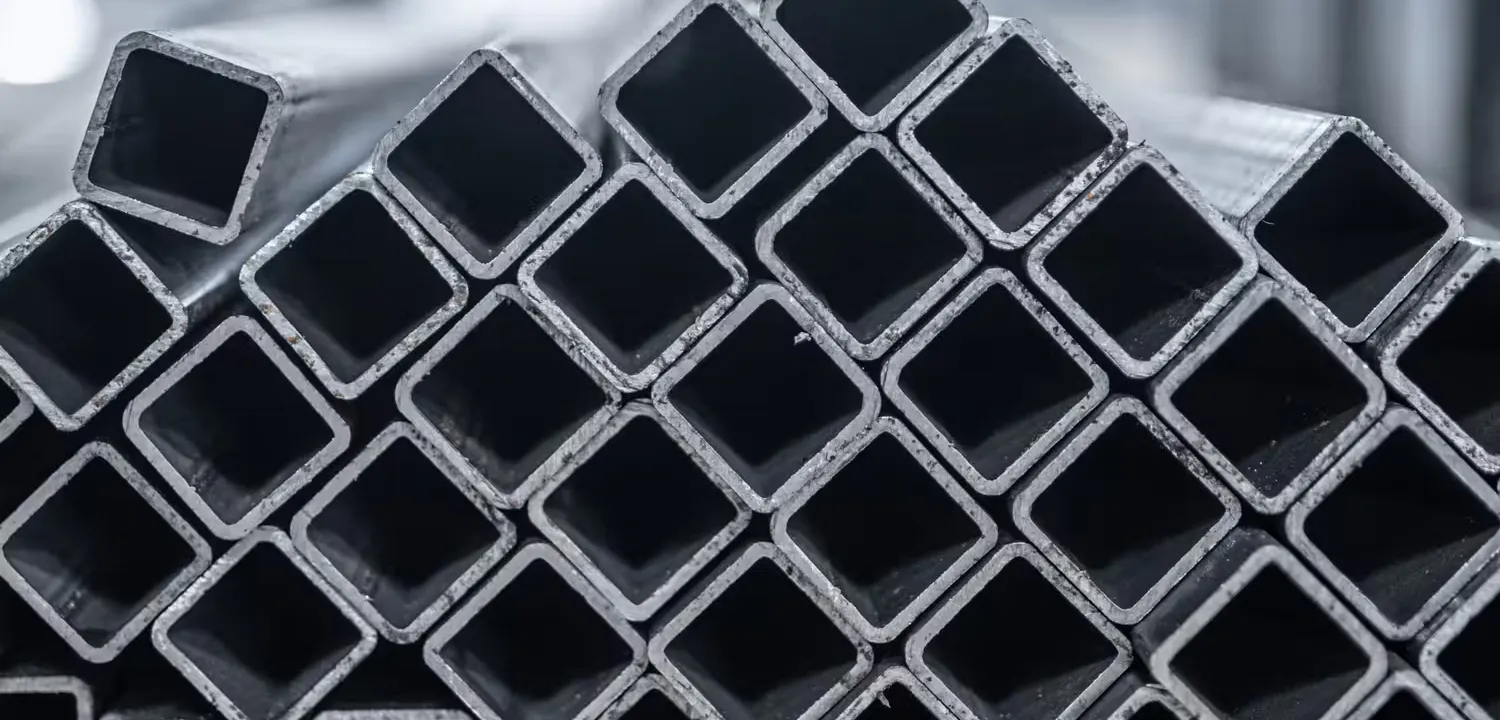
Black steel (also called carbon steel) is an informal term for non-alloy or low-alloy steel without a protective coating. In most cases, it refers to structural steels according to EN 10025-2, designated as S235JR or S355J2, among others. The letter S stands for structural steel, the number indicates the minimum yield strength in MPa, and the final symbols specify the required impact toughness at a given temperature. Black steel is supplied as plates and sheets, bars, sections, hollow sections, and pipes.
The name comes from the dark gray, matte layer of mill scale, which consists of iron oxides that form on the surface during hot rolling. Mill scale does not provide lasting protection: it cracks and flakes off, and where it cracks, it can even accelerate corrosion. Cold-rolled products have a smoother, lighter surface, but like hot-rolled sheets, they have no protection of their own against rust. That is why in most applications, black steel needs to be painted, coated, or otherwise protected.
Black steel differs from stainless steel in its chemical composition. Stainless steel contains at least about 10.5% chromium, which forms a self-healing passive layer on the surface. Black steel has no such layer, but it is significantly cheaper and easier to machine and fabricate.
What Is Galvanized Steel?
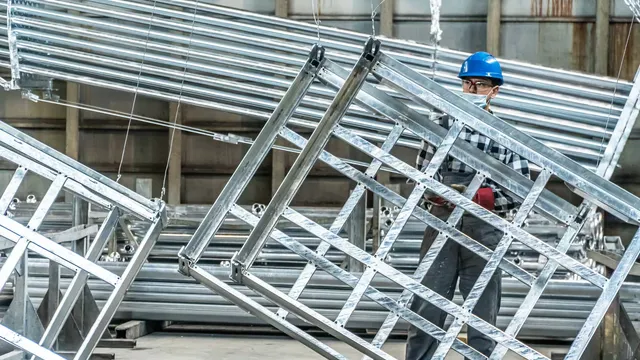
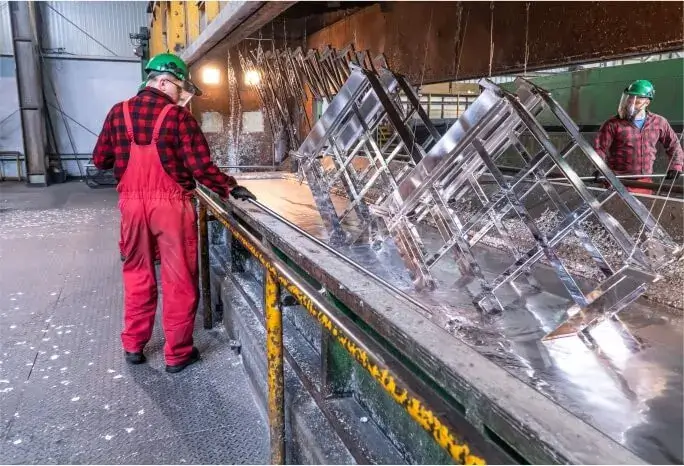
Galvanized steel is usually the same structural steel covered with a layer of zinc. The coating is most often applied by hot-dip galvanizing, where the finished part is immersed in a bath of molten zinc at about 450°C (842°F), or by electrogalvanizing (zinc electroplating).
Zinc forms a physical barrier and also protects steel electrochemically, including at spots where the coating has minor damage. However, the galvanizing method determines the coating thickness and the practical properties of galvanized steel. Hot-dip coatings typically range from several dozen to over 100 µm and allow a part to be used outdoors without painting. Thin electroplated coatings (usually around 3–25 µm) work best in milder conditions, as shown in detail in our comparison of electroplated and hot-dip galvanizing in terms of applications and durability. Throughout the rest of this article, „galvanized steel” refers primarily to hot-dip galvanized steel.

Bare Black Steel vs. Galvanized Steel: Comparison
| Criterion | Bare black steel | Hot-dip galvanized steel |
|---|---|---|
| Corrosion protection | None of its own; rust appears after contact with moisture | High: barrier, cathodic protection, and zinc patina |
| Durability without additional protection | Low: surface rust appears quickly, and the rate of material loss depends on the environment | Several decades, over 70 years in favorable conditions |
| Purchase price | Lower | Higher by the cost of galvanizing |
| Total cost of ownership (TCO) | Higher for long-term outdoor use | Usually lower thanks to minimal maintenance |
| Maintenance | Periodic repainting and coating repairs | Minimal: periodic inspections |
| Surface appearance | Dark, matte (mill scale), requires finishing | Metallic sheen or matte gray patina |
| Welding | No coating removal needed; standard cleaning is enough | Requires removing zinc from the weld area and repairing the coating after welding |
| Painting | After removing rust and mill scale | Possible as a duplex system, after proper surface preparation |
| Typical applications | Indoor and temporary parts, parts intended for painting | Outdoor structures, automotive, rail, agriculture, logistics |
Black steel wins in two categories: upfront price and ease of welding. Galvanized steel comes out ahead in corrosion resistance, durability, life-cycle cost, and maintenance.
Why Black Steel Rusts and How Zinc Protects It
Corrosion is where the two materials differ the most. Black steel has no defense mechanism at all: iron reacts with oxygen and water to form porous rust, which adheres poorly to the base metal and gradually exposes deeper layers. The process does not stop on its own and, in extreme cases, eats all the way through the part. Its rate depends on the surroundings and varies greatly between a dry warehouse, a road treated with de-icing salt, and a coastal area.
Zinc protects steel in three ways. First, it forms a tight barrier that seals the steel off from moisture and oxygen. Second, when the coating is scratched down to bare metal, zinc, being less noble than iron, corrodes first and cathodically protects the exposed steel. Third, over time a patina forms on the surface, a layer of stable zinc corrosion products that further slows down coating wear. According to the American Galvanizers Association, steel hot-dip galvanized to ASTM standards often provides more than 70 years of protection with minimal maintenance (this figure applies to favorable conditions; in aggressive environments, the protection period is shorter).
Galvanized steel is not indestructible. With prolonged exposure to water and limited air circulation, white rust may form on the coating, and once the zinc is used up, the steel itself starts to corrode. Rust on galvanized sheet metal usually has specific causes, such as storage in damp conditions, mechanical damage, or a coating too thin for the environment.
Durability depends primarily on the thickness of the zinc coating. Minimum values for hot-dip galvanized products and the methods for testing them are specified in EN ISO 1461, and the required thickness increases with the wall thickness of the part. EN ISO 14713-1, in turn, makes it possible to estimate how many years a given coating will last in a specific corrosivity category. Galvanizing is just one of several steel corrosion protection methods, and some projects are better served by painting or a combination of both technologies.
Purchase Price vs. Total Cost: What Really Pays Off?
If you look only at the invoice, black steel seems cheaper, and at the time of purchase, it really is. But the price per pound is only the first line in the calculation. For parts used outdoors, you also need to factor in:
- surface preparation and painting before installation,
- periodic recoating,
- cleaning and repairing areas where corrosion has appeared,
- replacing parts that have rusted through,
- downtime and the cost of accessing the structure during maintenance work.
Over a period of a decade or more, these expenses usually exceed the initial savings. That is why, for parts with a long service life, the decision should be based on the total cost of ownership (TCO).
Galvanized steel reverses this pattern. You pay more upfront because the price of the part includes the cost of galvanizing, but later on you have virtually no maintenance costs. Hot-dip galvanizing pays for itself fastest where a part is used outdoors, in damp conditions, or in an aggressive environment, and its planned service life is measured in decades. For short-lived or sheltered parts, on the other hand, the numbers may favor black steel, even when painted.
Welding and Fabrication: Where Black Steel Has the Edge
When it comes to fabrication, black steel is simply more convenient. It can be welded without removing any coating. Standard cleaning of rust, mill scale, and contaminants from the joint area is enough, and the weld does not require any subsequent protective coating repair.
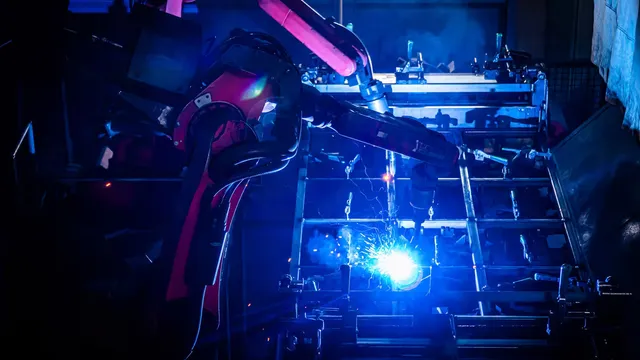
Galvanized steel comes with specific requirements. Zinc must be removed from the weld area mechanically or thermally, because as it vaporizes, it causes weld porosity and reduces joint quality. Welding galvanized steel releases fumes containing zinc oxide, and inhaling them can cause metal fume fever, so effective fume extraction and respiratory protection are essential. After welding, the exposed area must be protected again, most often with zinc-rich paint (known as cold galvanizing), to prevent it from becoming a source of corrosion.
For welded structures, it is therefore often better to weld the part from black steel first and then hot-dip galvanize the finished product, so that the coating covers the welds as well. Keep in mind, however, the need for vent and drain holes in hollow sections and the thorough removal of welding slag, among other things.
When Is Black Steel Enough, and When Is It Better to Galvanize?
The choice depends on operating conditions, planned service life, and how the part will be finished.
Black steel works well when:
- the part is used indoors, in a dry space,
- it is temporary or a prototype,
- it will be painted, coated, or enclosed anyway,
- the lowest possible purchase price is the priority and service life is secondary.
Galvanized steel is the right choice when:
- the structure is used outdoors or in damp conditions,
- long-term, maintenance-free durability matters,
- the part is intended for the automotive, rail, defense, or agricultural industry,
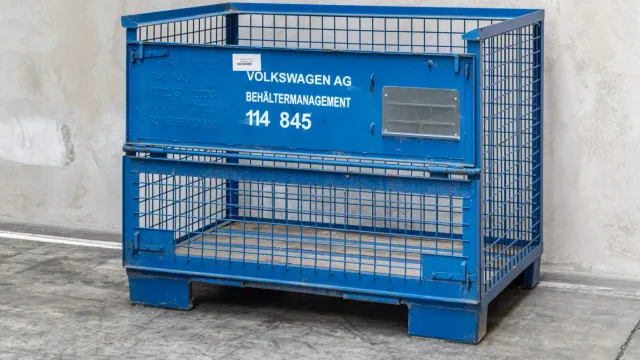
- it is a reusable container, transport pallet, or gitterbox container that stays in circulation for years and is exposed to mechanical damage.
If a structure has to withstand a harsh environment and also come in a specific color, the solution is a duplex system, which combines hot-dip galvanizing with painting.
Want to choose the right protection for your project? Contact Strumet. We galvanize customer-supplied parts using both hot-dip and electroplating methods, and as part of our full range of galvanizing and metalworking services, we match the technology to the operating environment and applicable standards.
FAQ: Common Questions About Bare Black Steel vs. Galvanized Steel
What is black steel?
It is an informal name for carbon steel (non-alloy or low-alloy) without any protective coating, such as S235 or S355 structural steel. The term comes from the dark mill scale that covers hot-rolled products.
Does black steel need to be painted to prevent rust?
In most applications, yes. Bare black steel has no protection and corrodes on contact with moisture. Without painting, coating, or other protection, it is suitable only for indoor or temporary parts, or for parts that will undergo further processing.
Can black steel be galvanized?
Yes. Most hot-dip galvanized steel starts out as black steel. The chemical composition of the steel, especially its silicon and phosphorus content, has a significant effect on the galvanizing process, so it is worth specifying the exact material grade when placing an order.
Does galvanized steel rust?
Much more slowly than black steel, but it is not completely corrosion-proof. In damp conditions with limited air circulation, white rust may form on the coating, and once the zinc is used up, the steel starts to corrode. The rate of this process depends on the coating thickness and the corrosivity category of the environment.
How much more expensive is hot-dip galvanizing than leaving black steel uncoated?
Galvanizing increases the upfront cost of a part by the price of the coating, and the exact difference depends on the part’s size, thickness, and required zinc thickness. Over many years of service, this extra cost usually still works out cheaper than periodically repainting and repairing black steel.
How long does galvanized steel last outdoors compared to black steel?
Unprotected black steel starts rusting outdoors almost immediately (the rate of material loss depends on the environment). Hot-dip galvanized steel can last for decades, and in favorable conditions with an adequate coating thickness, up to 100 years.