Every steel structure project involving hot-dip galvanizing sooner or later raises the question of the order of work. Welding before galvanizing gives a continuous coating on the welds as well, but requires preparing the element for immersion in liquid zinc at about 450°C. Welding after galvanizing is sometimes unavoidable - during on-site assembly, or when the structure does not fit in the kettle - and means additional work to remove and restore the coating. We show how to plan both scenarios so that neither the weld nor the zinc coating loses durability.
Can Galvanized Steel Be Welded?
Yes, galvanized steel can be welded. The conditions are removing the zinc coating from the weld zone, adapting the welding technique, and effective fume extraction, because zinc vaporizes at about 907°C, which is much lower than the arc temperature. From the standpoint of corrosion protection durability, however, it is best to weld before hot-dip galvanizing - the welds are then coated with zinc together with the entire structure.
The technique for welding already galvanized elements, that is, the choice of method, parameters, and protection against zinc fumes, is described in detail in our practical guide to welding galvanized steel. In this article, we focus on how to combine welding with hot-dip galvanizing in a single, well-planned process.
Weld Before or After Hot-Dip Galvanizing?
The order of processes determines how long the structure will be protected against corrosion. For new products, the standard is to weld on bare steel and galvanize the finished element as a whole. Welding after galvanizing is used when it cannot be avoided. We have compared the differences between the two approaches in a table.
| Criterion | Welding before galvanizing | Welding after galvanizing |
|---|---|---|
| Weld protection | Welds covered with the dip coating together with the whole element | The weld requires local coating repair (zinc-rich paint or paste, thermal spraying) |
| Coating continuity | Uniform, including in recesses and inside sections | Interrupted in the weld zone, locally less durable |
| Additional work | Removal of slag and spatter, design of process holes | Zinc removal, fume extraction, coating restoration |
| Main limitations | Galvanizing kettle dimensions, risk of distortion | On-site working conditions, welder health and safety |
| Typical application | New structures, prefabrication in the plant | Assembly, repairs, modifications, elements larger than the kettle |
Welding after galvanizing is justified primarily when the finished structure exceeds the dimensions of the galvanizing kettle (at the Strumet galvanizing plant, the working dimensions of the kettle are 10.2 × 1.4 × 2.7 m), when elements are joined only at the construction site, or when an existing structure is being modified. It is worth considering bolted connections as an alternative - joining galvanized segments with bolts does not damage the coating and does not require its later repair.
How to Prepare a Welded Structure for Hot-Dip Galvanizing
The zinc bath ruthlessly exposes mistakes made during welding, and most coating defects near welds originate back in the weld shop. General principles of designing for galvanizing, such as choosing the steel grade or venting closed sections, are discussed in the article on preparing steel for galvanizing. Below we focus on issues directly related to welding.
Remove Weld Slag and Spatter
The degreasing baths and acid pickling that every element goes through before immersion in zinc do not remove slag or flux residues. Zinc will not bond to such a substrate, so an uncoated spot will form where the slag was left. Slag must therefore be removed mechanically - with a wire brush, by chipping, grinding, or abrasive blasting.
Slag is formed in stick electrode welding, flux-cored wire welding, and submerged arc welding. Gas-shielded methods, that is, MIG/MAG with solid wire and TIG, produce virtually none, which is why they are preferred for structures intended for galvanizing. It is also worth removing any adhering spatter - it will be galvanized together with the element and remain on the surface as rough build-ups.
Beware of Anti-Spatter Products
Products that protect the surface from spatter form a thin film, often invisible to the naked eye. Silicone-based and oil-based agents are a particular problem, as they can burn onto the steel under heat. Standard surface preparation at the galvanizing plant does not remove such a layer, and the result is uncoated areas right next to the weld. If an anti-spatter product is essential, choose a water-based one that will dissolve in the pretreatment bath, and if in doubt, consult the galvanizing plant on your choice.
Choose a Filler Metal with a Composition Close to the Base Material
Silicon accelerates the reaction of steel with liquid zinc - this applies to both the base material and the weld metal. A weld made with a high-silicon filler may become covered with a distinctly thicker coating that differs in color from the rest of the element: darker and matte, or lighter and shiny. The galvanizing plant has no influence on this phenomenon. If the appearance of the welds matters, for example in exposed structures, use a low-silicon filler with a composition as close as possible to the steel the element is made of.
Design Lap Joints with the Zinc Bath in Mind
Lap joints are among the riskiest details in structures intended for galvanizing. Air, moisture, or solutions from the surface preparation stage trapped between the plates turn into superheated steam in the bath at about 450°C. This can cause the weld to rupture, and even molten zinc to be ejected from the kettle. Zinc will not flow into a gap up to about 2.5 mm wide, although pretreatment solutions penetrate it without obstruction.
The EN ISO 14713-2 standard gives recommendations for venting lap joints depending on their area:
| Lap area | Recommended solution |
|---|---|
| Up to 100 cm² | Sealed perimeter weld; elements dry, smooth, and assembled without gaps |
| From 100 to 1000 cm² | 2 holes Ø12 mm in opposite corners or 2 gaps in the weld about 25 mm long |
| From 1000 to 2500 cm² | 4 holes Ø12 mm in the corners or 4 gaps in the weld about 25 mm long |
An area of 100 cm² corresponds, for example, to a 10 × 10 cm or 20 × 5 cm lap. A sealed perimeter weld must be free of porosity, because even a tiny leak will let solutions into the enclosed space. An intermittent weld makes venting easier, but solutions left between the plates may later leak out and form rusty stains.
Very large laps are best avoided at the design stage, and any unusual case is worth agreeing on with the galvanizing plant.
Limit Welding Stresses
Immersing an element in zinc at about 450°C releases the stresses introduced during welding and forming of the steel. If a structure distorts in the bath, the cause almost always lies in how it was fabricated, not in the galvanizing process itself. The risk of distortion is reduced by:
- a symmetrical, balanced welding sequence,
- joining elements of similar thicknesses - the thickness ratio of the welded materials should not exceed 4:1,
- avoiding large, flat surfaces of thin sheet, which tend to warp,
- in justified cases, stress-relief annealing before galvanizing.
Plan Process Holes
Every enclosed space created by welding, for example the inside of a section capped with an end plate, must have holes that allow zinc to flow in and out and gases to escape. Their placement is worth determining at the shop drawing stage, before the element goes to the weld shop. The holes ensure safety during immersion and at the same time allow the inner surfaces of sections to be coated with zinc as well.
Welding a Structure That Is Already Galvanized
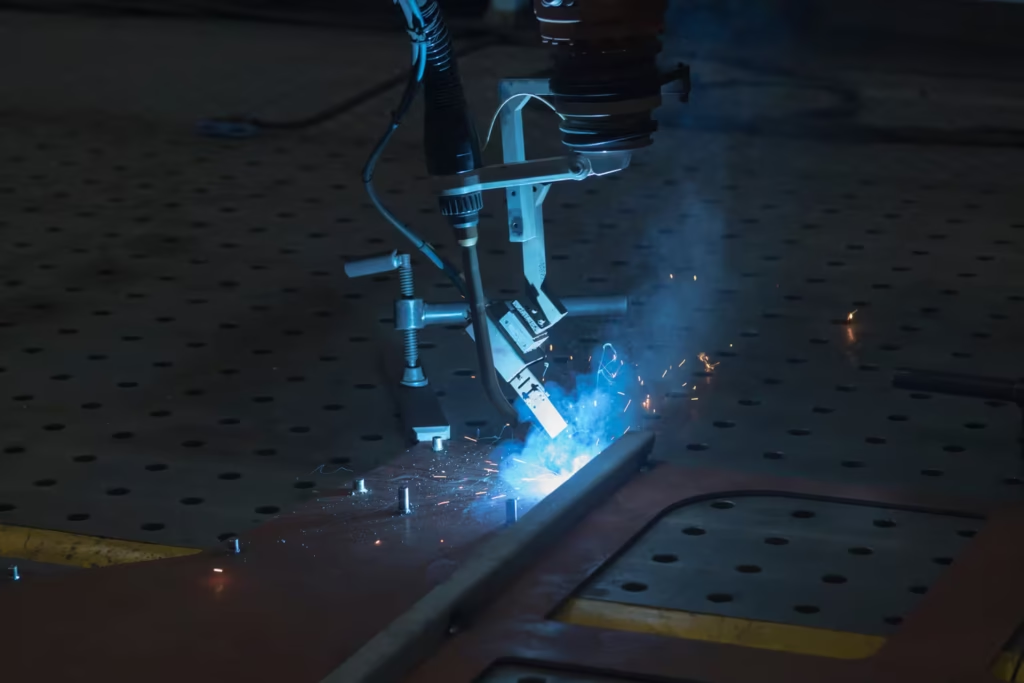
If welding after galvanizing cannot be avoided, the work should be preceded by removal of the zinc coating from the weld zone - we describe the methods in the article on ways to remove zinc coating from steel. Welding itself requires good ventilation, because vaporizing zinc produces zinc oxide fume, the inhalation of which causes metal fume fever.
After welding, the exposed steel must be protected again using one of the repair methods permitted by the PN-EN ISO 1461 standard. A local repair usually provides shorter protection than a dip coating, so for elements exposed to harsh service conditions it is worth considering a duplex system, that is, a combination of galvanizing and painting, which additionally protects the repaired areas.
Standards: PN-EN ISO 1461, EN ISO 14713-2, and EN 1090
Combining welding with hot-dip galvanizing is governed by three standards documents, each responsible for a different stage of execution.
The PN-EN ISO 1461 standard specifies the requirements and test methods for zinc coatings applied by dipping onto steel and cast iron products. Among other things, it sets minimum mean coating thicknesses depending on the steel thickness - from 45 µm for elements thinner than 1.5 mm to 85 µm for elements thicker than 6 mm. In practice, coatings are often thicker than these minimums. The standard also regulates the rules for repairing uncoated or damaged areas.
The EN ISO 14713-2 standard contains guidelines for designing products intended for hot-dip galvanizing, including the placement of process holes and venting of lap joints. It is worth consulting already at the structural drawing stage.
The EN 1090 certificate for steel structures concerns the execution of welded structures, which the standard divides into execution classes from EXC1 to EXC4: from the least to the most stringent requirements. Meeting all these requirements at once calls for close coordination between the weld shop and the galvanizing plant - the weld must be correct with regard to EN 1090 and at the same time prepared so that the coating meets the criteria of PN-EN ISO 1461. When one contractor carries out both processes, this coordination takes place within a single plant.
Welding and Hot-Dip Galvanizing Under One Roof at Strumet
Commissioning welding and galvanizing from a single contractor translates into tangible benefits. The element does not travel between plants, so lead time is shorter, double transport and the risk of damage in transit are eliminated, and quality control runs consistently at every stage - from the weld to the coating thickness. The weld shop prepares the structure from the outset in line with the galvanizing plant's requirements, which eliminates rework resulting from leftover slag, poorly vented laps, or an incorrectly selected filler metal.
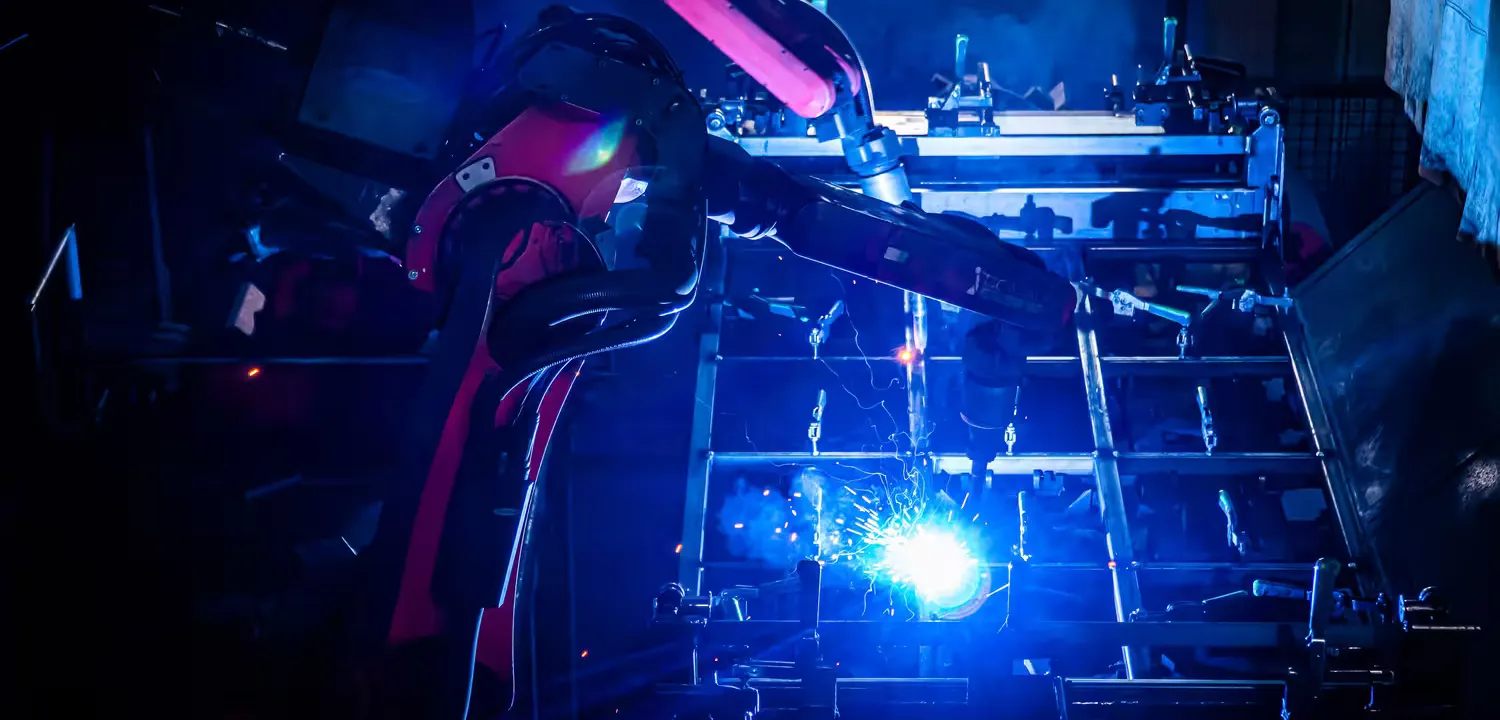
Strumet combines the production of welded structures, carried out in accordance with the EN 1090 certificate, with the largest hot-dip galvanizing plant in the Podbeskidzie region. In one plant we perform manual and robotic welding, precision laser welding, as well as hot-dip galvanizing and zinc electroplating. Need to coordinate both processes in a single order? Contact us for a quote.
FAQ - Most Common Questions About Welding Galvanized Steel
Can an already galvanized steel structure be welded?
Yes, but at the weld location the zinc coating must first be removed, and after welding the exposed steel must be protected again, for example with a high-zinc-content paint or paste. Such a repair locally reduces the durability of the protection compared with a dip-applied coating.
Does weld slag have to be removed before hot-dip galvanizing?
Yes. The pretreatment baths at the galvanizing plant do not remove slag or flux residues, so in those places zinc will not bond to the steel and uncoated spots will appear. Slag is removed mechanically, for example with a wire brush, by chipping, or by abrasive blasting.
Why does a weld have a different color than the rest of the element after galvanizing?
The most common cause is a high silicon content in the filler metal, which accelerates the reaction of the weld metal with zinc. A thicker coating of a different shade then forms over the weld. The effect is reduced by using a low-silicon filler with a composition close to the base material.
Can lap joints be hot-dip galvanized?
Yes, provided they are properly designed. Small laps are closed with a sealed perimeter weld, while larger ones require vent holes or gaps in the weld in accordance with EN ISO 14713-2. An unvented lap may rupture in the zinc bath.
What should be done when a structure does not fit in the galvanizing kettle?
The structure is divided into segments that are galvanized separately and then joined with bolts or welded at the assembly site, with the coating repaired in the weld zones. The split is best planned at the design stage, taking into account the kettle dimensions of the chosen galvanizing plant.